
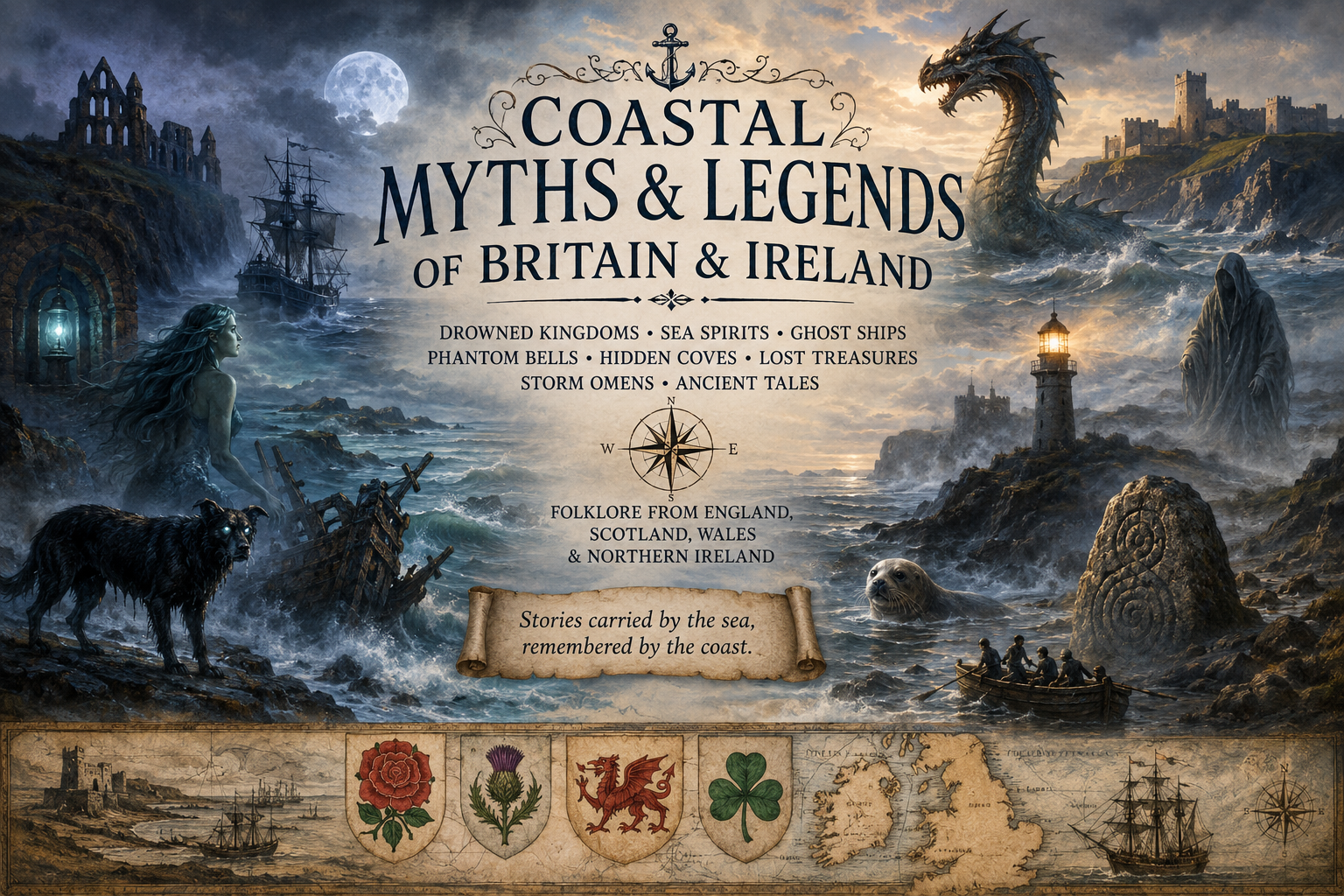


The north-eastern coastline of Scotland along the Aberdeenshire frontage is fully exposed to the North Sea and shaped by long-standing fishing activity, variable weather systems, and comparatively shallow offshore waters. Within this setting there are occasional references in local speech and informal tradition to a figure known as the “Mither o’ the Sea”, expressed in Scots dialect as a maternal personification of the sea. The term is not consistently recorded in formal folklore collections and appears instead as a fragmentary or situational expression rather than a defined narrative tradition. It is therefore best treated with caution, as a regional idiom reflecting maritime attitudes rather than a structured legend.
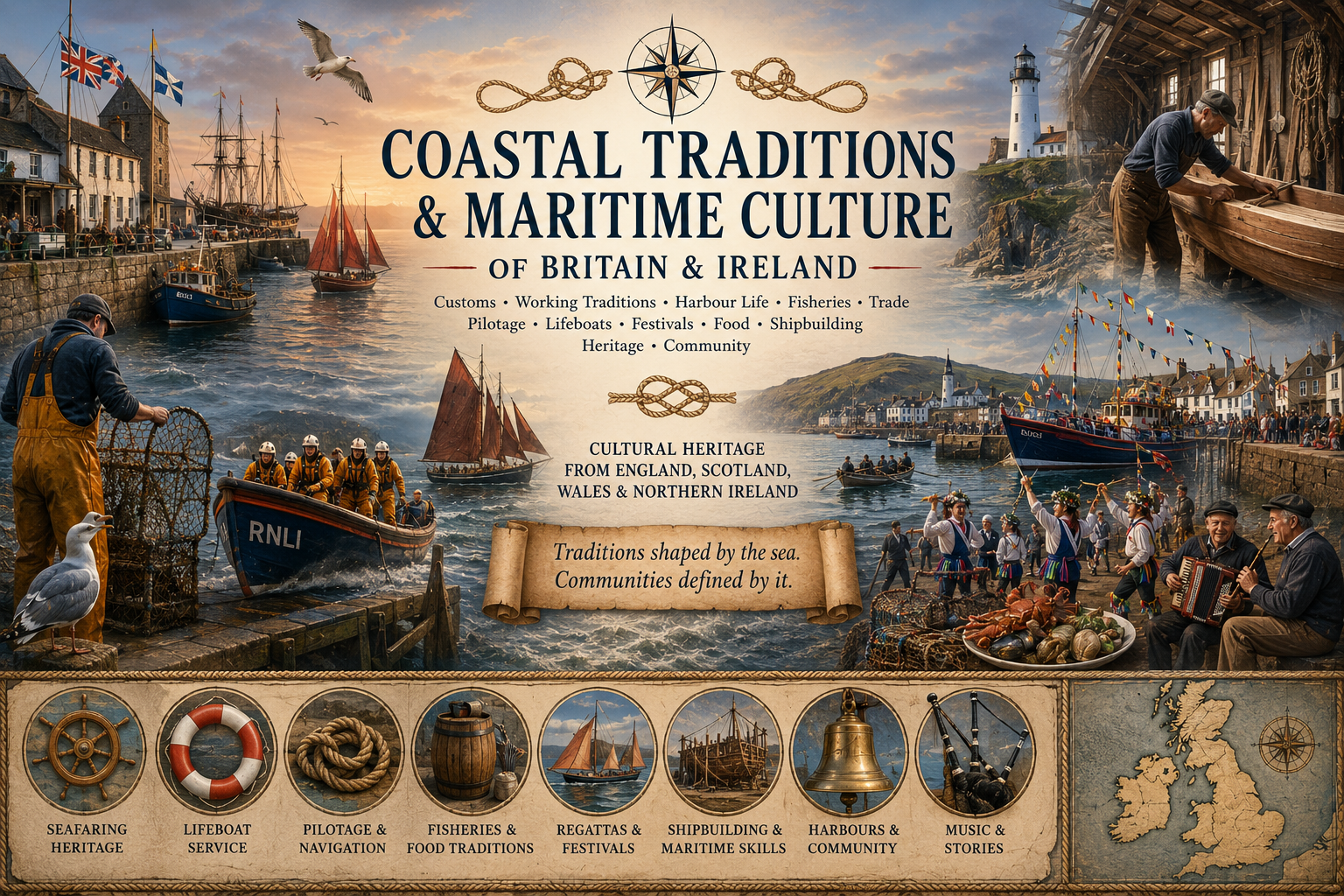
Historically, coastal communities between the Moray Firth and the Buchan coast have developed a rich vocabulary for describing the behaviour of the sea, shaped by direct dependence on fishing grounds and the hazards of offshore work. Ports such as Peterhead and Fraserburgh, alongside smaller inlets and landings, have long operated in conditions where sudden changes in wind direction and sea state are common. In such an environment, the attribution of human qualities to the sea is a familiar linguistic device, helping to communicate experience across crews and generations. The “Mither o’ the Sea”, where it appears in oral usage, can be understood in this context as a vernacular way of acknowledging the sea’s dual role as provider and risk factor, rather than as a personified deity or mythic figure in a formal sense.
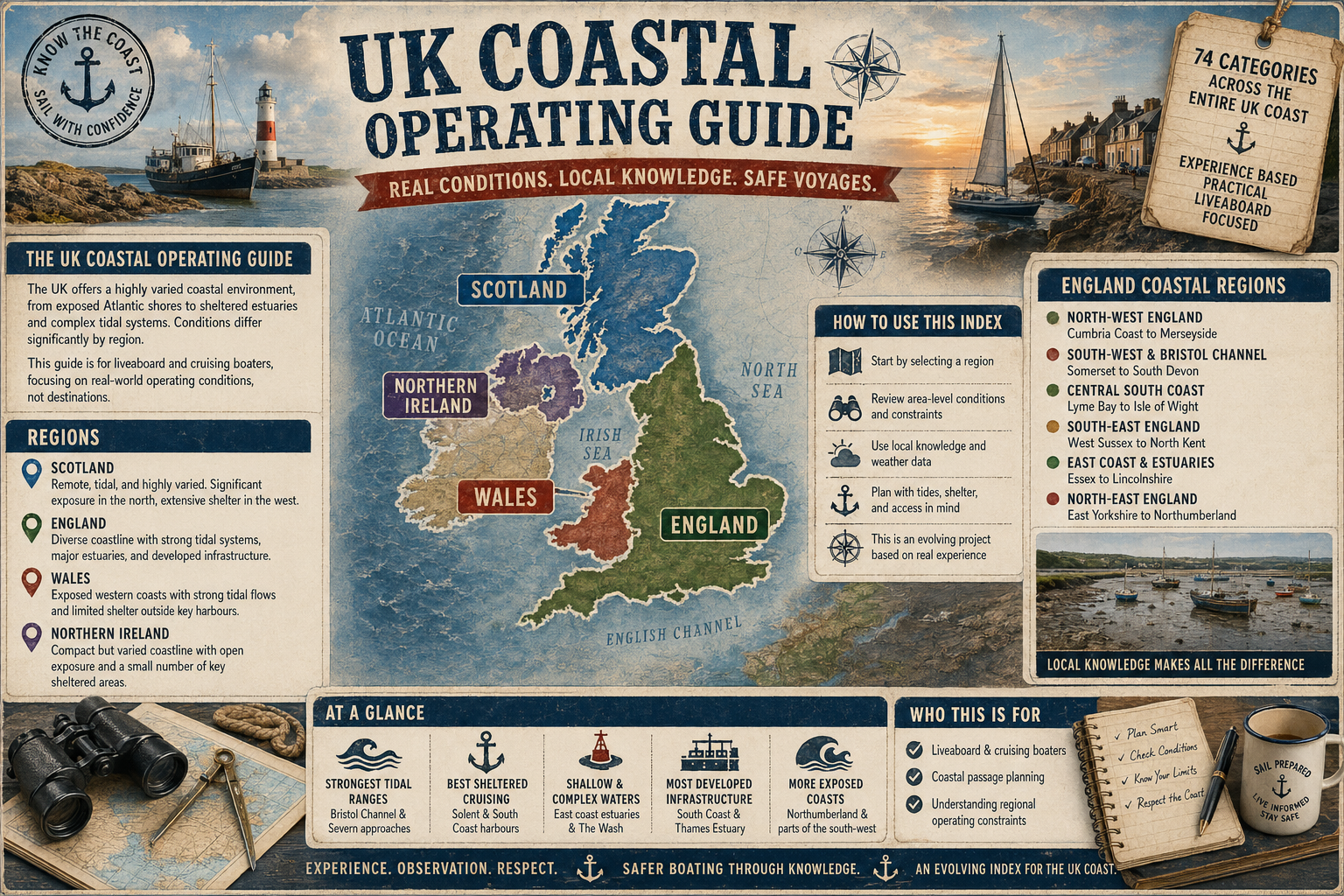
From a maritime perspective, the waters off the Aberdeenshire coast present a combination of tidal streams, offshore banks, and frequent interaction between local wind systems and broader North Sea weather patterns. The transition between moderate conditions and steep, short seas can be rapid, particularly where wind opposes tide or where shallow shoals influence wave formation. In such circumstances, traditional expressions such as “the Mither o’ the Sea” may be used informally among seafarers to describe conditions that are perceived as capricious or demanding close attention. This usage aligns with a wider pattern in coastal communities, where environmental forces are described in human terms to convey unpredictability and respect for the sea’s authority.
The seasonal rhythm of fishing activity has also influenced how such expressions persist. During periods of intensive herring or whitefish fishing, crews operating far offshore would have relied heavily on shared language to describe evolving conditions, particularly before the widespread availability of modern forecasting and electronic navigation aids. Even in contemporary practice, where instrumentation and forecasting are central to voyage planning, remnants of traditional speech occasionally remain in informal conversation ashore. The phrase in question should not be interpreted as a navigational concept or belief system, but rather as part of the cultural background against which seamanship in this region developed.
Environmental factors reinforce the practical tone of such traditions. The open aspect of the Aberdeenshire coastline to easterly and north-easterly winds can produce prolonged periods of difficult working conditions at sea, with limited shelter outside established harbours. Visibility may deteriorate rapidly in sea fog or precipitation driven in from the North Sea, and tidal sets near headlands require careful allowance. In this context, language that personifies the sea serves less to mythologise it than to compress shared experience into concise, communicable form.
In summary, the “Mither o’ the Sea” should be regarded as an uncertain but locally resonant expression embedded within the broader maritime culture of the Aberdeenshire coast. It reflects the long-standing tendency of seafaring communities to describe environmental forces in human terms while maintaining practical awareness of real and often demanding coastal conditions. The coastline itself, open, productive, and occasionally severe, provides a fitting backdrop for such understated traditions of speech.


Comments