


The Ribble Estuary forms a broad tidal inlet between the Lancashire and Sefton shores, extending westward from Preston towards the Irish Sea. Its maritime character has long been shaped less by deep-water seafaring than by shallow estuarial navigation, fisheries, marshland use and the practical demands of moving vessels through shifting channels. The extensive mudflats and salt marshes, together with strong tidal streams and unstable banks, produced a working environment in which local knowledge remained essential. Although much commercial traffic has declined from former levels, several maritime customs and occupational practices retain a degree of continuity along the estuary margins.
Historically, the lower Ribble supported small-scale fisheries directed mainly at estuarial and inshore species. Shrimping was of particular local importance, especially from Southport and the banks adjoining the estuary mouth, where horse-drawn carts were formerly employed to reach the sands at low water. Cockling and mussel gathering also occurred intermittently, subject to the condition of the beds and periodic regulation. Salmon fisheries once formed a recognised part of estuary life, with stake nets and putcher-type arrangements recorded in earlier centuries, though many such methods declined under changing legislation and stock pressures. By the nineteenth century, fishing activity was generally undertaken by part-time coastal workers rather than large dedicated fleets.
The navigational difficulties of the Ribble gave rise to established pilotage traditions. Access to Preston Dock and the upper reaches depended upon accurate tidal timing and familiarity with channels that altered after storms and winter floods. Local pilots were long employed to guide coastal traders, dredgers and smaller steam vessels through the estuary approaches. Before extensive dredging works, the route across the sands was regarded as uncertain even for comparatively shallow craft. Buoyage and beacon systems were therefore of considerable local importance, and the maintenance of channels formed part of the wider estuarial economy. Though modern navigation systems have reduced dependence upon traditional pilotage skills, local harbour knowledge remains relevant in the remaining commercial and recreational use of the river approaches.
Marshland wildfowling has also contributed to the distinct maritime culture of the Ribble. The outer salt marshes and tidal creeks supported long-established shooting practices carried out from punts, creek edges and fixed marsh positions. Such activity was historically tied to winter subsistence and supplementary income rather than organised sport alone. Conditions on the estuary required close attention to tides, weather and soft ground, and local understanding of safe routes across the marshes became part of the working knowledge passed between generations. Wildfowling clubs and regulated shooting rights continue in some areas, although under stricter environmental oversight than formerly.
The estuary’s ports and landing places supported a varied coastal trade during the eighteenth and nineteenth centuries. Preston handled timber, coal and manufactured goods, while smaller river settlements maintained modest boatyards, ferries and cargo wharves. Flat-bottomed craft suitable for shallow water were commonly employed in the upper estuary, and local boatbuilding adapted accordingly. At Hesketh Bank, Freckleton and other riverside communities, maritime employment frequently overlapped with farming and marsh work. Seasonal labour patterns reflected the practical realities of estuary life rather than a wholly separate seafaring economy.
Customs associated with the sea survive in restrained form. Local sailing clubs continue estuarial racing and small-boat activity, particularly in the lower reaches near Lytham and Southport, where tidal conditions still govern launching and navigation. Traditional shrimping survives on a limited commercial scale, though mechanisation and regulatory controls have altered older methods. The rescue services and lifeboat stations associated with the outer estuary retain practical significance owing to the extensive sands and rapid tidal inundation for which the district is known. Public warnings concerning the danger of incoming tides remain a routine feature of the coastline.
Elements of maritime food culture persist in local markets and coastal settlements, notably the continued association of the district with brown shrimps and estuarial shellfish. However, many former occupational communities have become smaller or more mixed in character, with commuting and recreational boating replacing much direct dependence upon the estuary. Conservation designations affecting bird habitats and marshland ecology have also modified patterns of access and working use.
The Ribble Estuary therefore retains a recognisable maritime identity rooted in tidal navigation, marshland use and inshore fisheries, though with moderate continuity rather than complete survival of older practices. Its present character remains closely tied to the practical demands of the sands, channels and tides, which continue to shape local activity much as they did for earlier estuary workers and pilots.
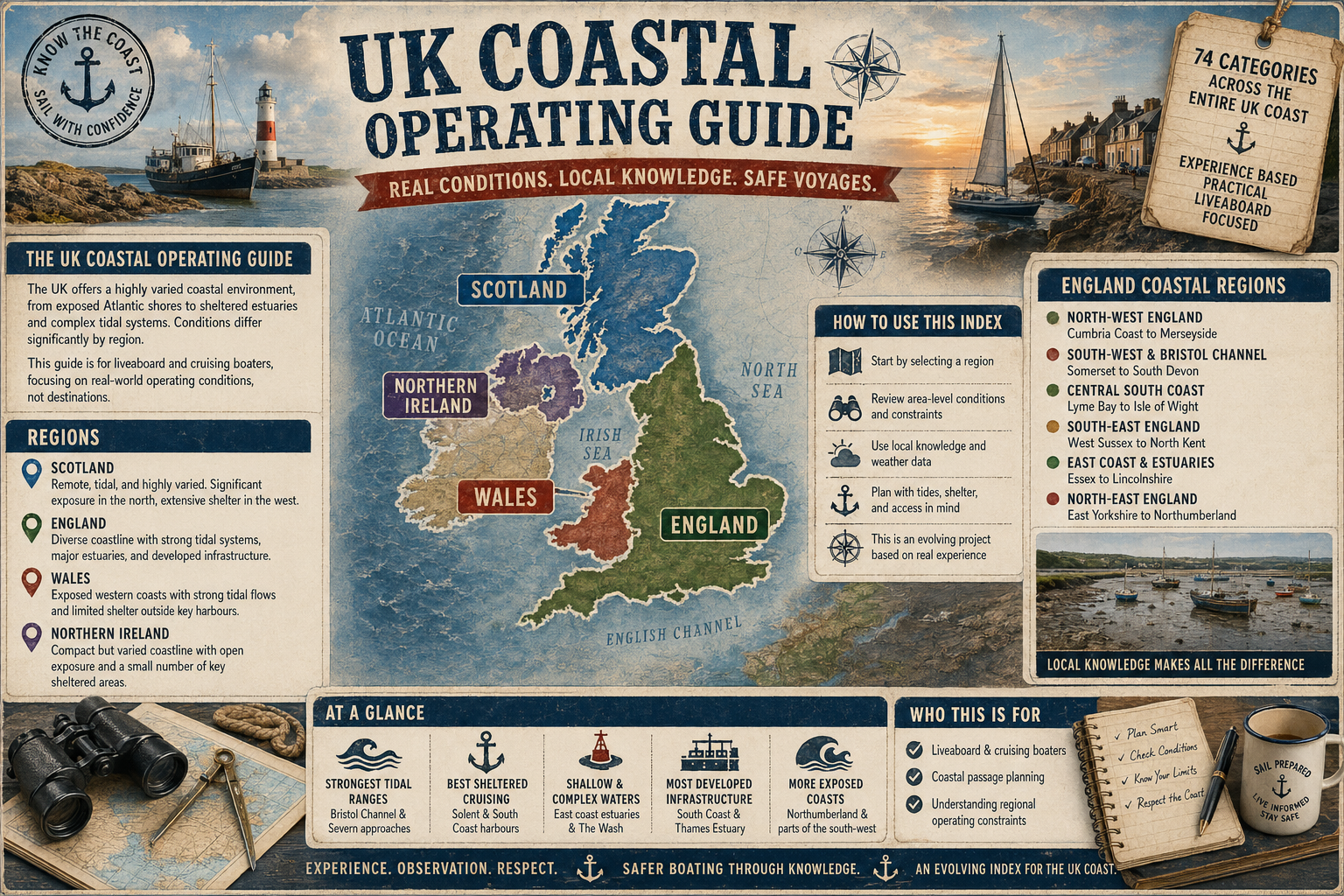
- The UK Coastal Operating Guide
- Coastal Traditions & Maritime Culture of Britain and Northern Ireland
- Coastal Myths & Legends of Britain & Northern Ireland


Comments