


The coast between St Ives and Land’s End in West Cornwall is exposed to the full fetch of the North Atlantic, with a broken line of granite cliffs, low headlands, and offshore reefs subject to heavy swell and frequent Atlantic weather systems. Within this stretch lies the parish of Zennor, where a long-standing local tradition concerns the so-called Mermaid of Zennor. The account is generally regarded as folklore, though it has been recorded in parish lore and local antiquarian notes for several centuries and remains closely associated with the church and immediate shoreline.
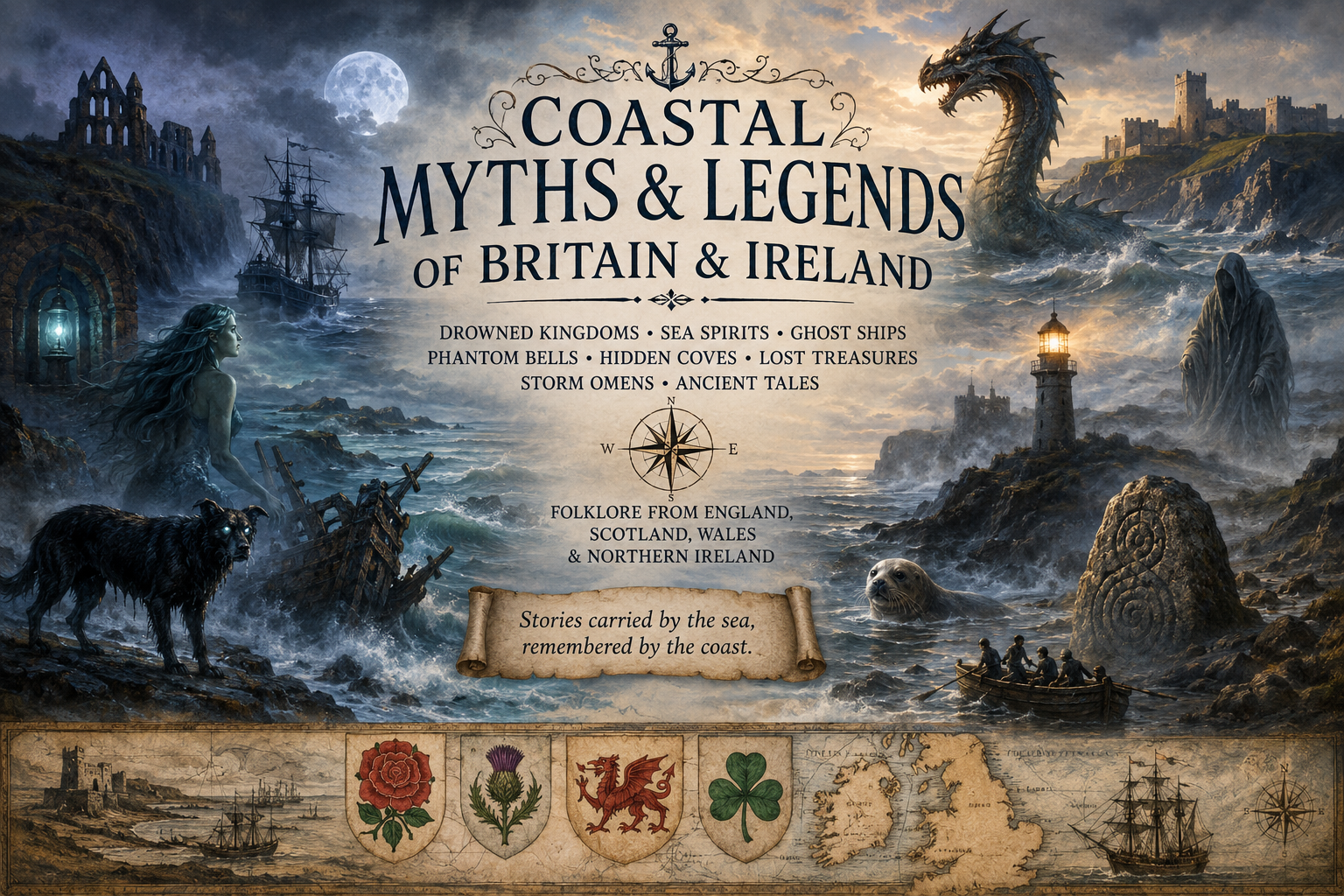
The best-known form of the tale centres on the parish church at Zennor, set slightly inland above the cliffs. According to tradition, a woman of striking appearance was observed attending services intermittently over a period of time, showing particular interest in the singing. She is said to have formed an attachment to a local parish singer, commonly named in later retellings as Matthew Trewhella or Trewhela, though the historical record is not conclusive. One account relates that she requested his company beyond the cliff paths towards the sea, after which neither he nor she was seen again in the parish. Shortly thereafter, a vessel reported sighting a mermaid-like figure in nearby waters, prompting speculation that the woman was in fact of marine origin and had returned to the sea. The carved bench end in Zennor Church, depicting a mermaid holding a comb and mirror, is often cited in connection with this narrative, though its precise dating and intention remain open to interpretation.
From a maritime standpoint, the association between Zennor and mermaid lore may be understood in the context of a coastline long familiar to inshore fishing craft and coastal traders working between St Ives Bay, Pendeen, and the approaches to Land’s End. The waters off this part of the Cornish coast are known for sudden changes in sea state, with Atlantic swell refracting around the headlands and producing confused seas over shallow granite ground. In earlier centuries, when local fishing and small-boat traffic were more prevalent, such conditions would have contributed to a body of seafaring tradition in which unusual sightings at sea were interpreted within existing cultural frameworks.
There is no reliable navigational evidence linking the legend to any specific maritime incident, and most accounts are considered retrospective folklore rather than contemporary reports. Nevertheless, sailors operating close inshore have historically treated this stretch with respect, particularly in poor visibility when the cliffs of the Penwith peninsula can be obscured by rain or sea mist. The interplay of offshore reefs, tidal sets, and breaking swell has long required careful pilotage, especially when rounding the headlands west of St Ives Bay or making passage towards Cape Cornwall and the approaches to the western entrance of the English Channel.
It is also worth noting that the cultural landscape of West Cornwall preserves a number of similar narratives in which human and maritime elements are intertwined. These are typically localised, varying between parishes, and often attached to specific church carvings, stones, or coastal features rather than forming a single coherent myth system. In the case of Zennor, the persistence of the mermaid story is likely reinforced by its physical anchoring in the church fabric and its proximity to a working coastline still shaped by weather, tide, and seasonal fishing activity.
For present-day navigation, the folklore carries no operational significance, though it remains a recognised element of local maritime heritage. The coastal character of Zennor is defined far more by its exposed Atlantic aspect, steep cliff approaches, and limited landing opportunities than by any traditional narrative attached to it. Nonetheless, the Mermaid of Zennor remains a notable example of how coastal communities have historically interpreted the meeting of land and sea along this rugged sector of the Cornish coast.
In summary, the tradition is best regarded as a parish-based maritime legend rooted in West Cornwall’s exposed coastal environment, reflecting the longstanding relationship between seafarers, shoreline communities, and the often unpredictable conditions of the Atlantic approaches.

Comments