
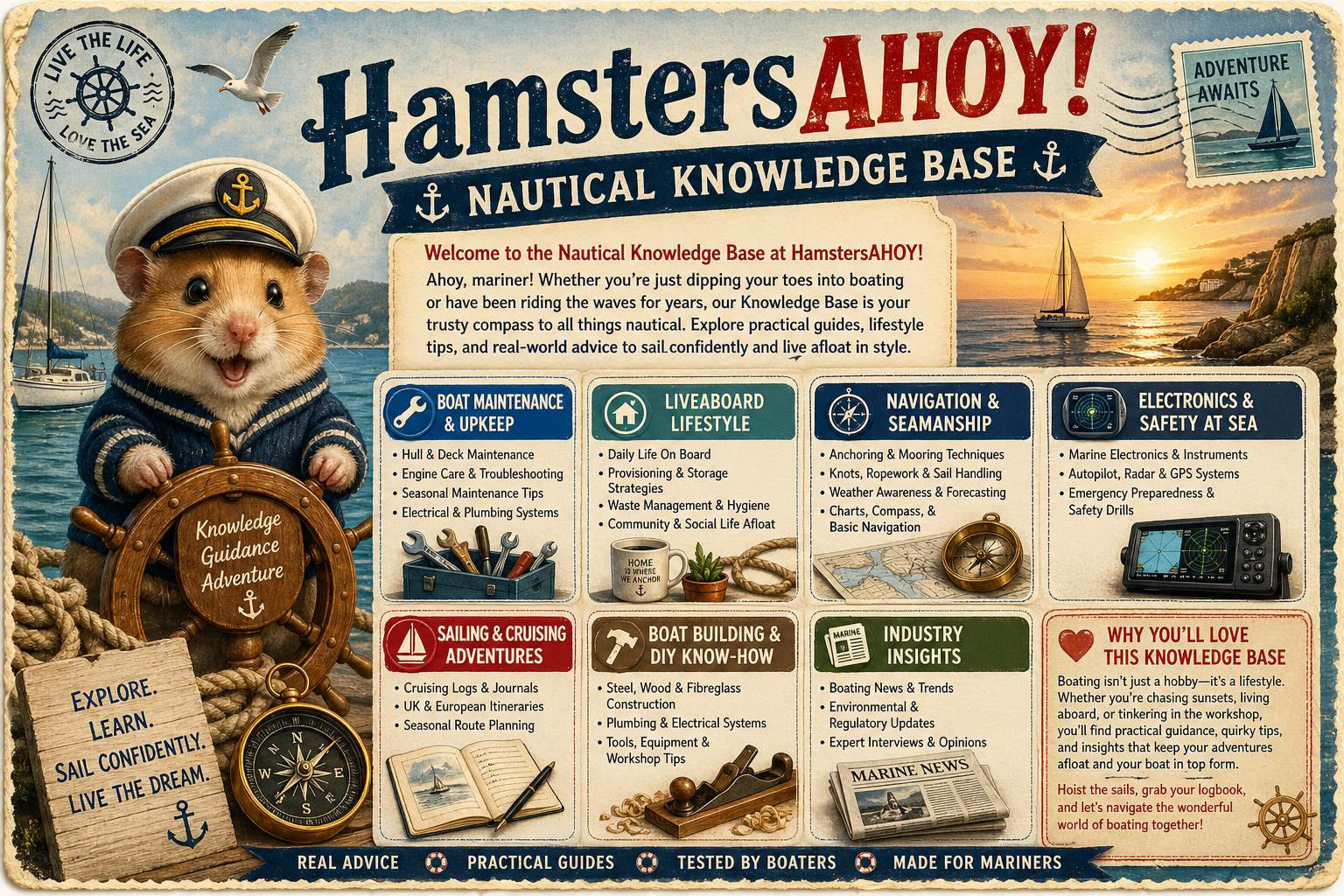
Welcome to the Nautical Knowledge Base at HamstersAHOY!
Ahoy, mariner! Whether you’re just dipping your toes into boating or have been riding the waves for years, our Knowledge Base is your trusty compass to all things nautical. Explore practical guides, lifestyle tips, and real-world advice to sail confidently and live afloat in style.
What Awaits You Onboard
Boat Maintenance & Upkeep
- Hull & Deck Maintenance
- Engine Care & Troubleshooting
- Seasonal Maintenance Tips
- Electrical & Plumbing Systems
Liveaboard Lifestyle
- Daily Life On Board
- Provisioning & Storage Strategies
- Waste Management & Hygiene
- Community & Social Life Afloat
Navigation & Seamanship
- Anchoring & Mooring Techniques
- Knots, Ropework & Sail Handling
- Weather Awareness & Forecasting
- Charts, Compass, & Basic Navigation
Electronics & Safety at Sea
- Marine Electronics & Instruments
- Autopilot, Radar & GPS Systems
- Emergency Preparedness & Safety Drills
Sailing & Cruising Adventures
Boat Building & DIY Know-How
- Steel, Wood & Fibreglass Construction
- Plumbing & Electrical Systems
- Tools, Equipment & Workshop Tips
Industry Insights
Why You’ll Love This Knowledge Base
Boating isn’t just a hobby—it’s a lifestyle. Whether you’re chasing sunsets, living aboard, or tinkering in the workshop, you’ll find practical guidance, quirky tips, and insights that keep your adventures afloat and your boat in top form. Hoist the sails, grab your logbook, and let’s navigate the wonderful world of boating together!
Life aboard a boat is rich with adventure and freedom, but it can also present challenges when it comes to staying socially connected. For liveaboards, communication tools are essential for maintaining friendships, sharing knowledge, and participating in community life—even while cruising or anchored in remote locations.
Life aboard is about more than the boat itself—it’s about the people who share it and the community that surrounds it. For families, liveaboard family life brings unique opportunities and challenges, blending daily routines, social interaction, and intergenerational connection in ways that are rarely found ashore. From children making friends at the dock to grandparents visiting for holidays, social life on a family boat can be rich, rewarding, and deeply community-oriented.
Life aboard is not just about the boat—it’s about the connections that make each harbour and marina a lively, welcoming space. Many liveaboard communities develop community traditions and shared rituals that reinforce bonds, celebrate milestones, and mark the rhythm of life afloat. From seasonal events to small, recurring gatherings, these practices enrich social life and foster a strong sense of belonging.
Life aboard a boat often means movement. Many liveaboards cruise between marinas, anchorages, and different regions seasonally, embracing the freedom to explore. Yet this mobility raises an important question: how do you maintain a sense of community when your neighbours change constantly? Liveaboard cruising networks provide the answer, allowing boaters to maintain friendships, share information, and participate socially across locations.
Life aboard isn’t just about the boat—it’s about the people you meet along the way. For liveaboards, shared facilities and communal spaces in marinas and boathouses often become the focal point for social interaction. These spaces go beyond practicality; they encourage conversation, foster support networks, and build the kind of community that transforms a simple mooring into a vibrant neighbourhood.
One of the most rewarding aspects of the liveaboard lifestyle is the ability to share your floating home with others. Whether inviting neighbouring boaters for a drink, welcoming visiting friends, or hosting family from ashore, hosting aboard a boat plays a key role in building and sustaining social connections within the liveaboard community.
Life afloat is often associated with freedom and independence, but that does not mean liveaboards are isolated. In fact, modern technology has transformed the social landscape of boating. From messaging apps to radio networks, liveaboard online communities now play a central role in how people connect, share information, and support one another across marinas, anchorages, and cruising routes.
While marinas are often the first social hub encountered by liveaboards, many boaters discover that some of the most memorable connections are formed away from pontoons, in quiet bays, rivers, and natural harbours. The liveaboard anchorage community is less structured than marina life, yet it can be just as rich in companionship, shared experience, and mutual support.
For many people drawn to the liveaboard lifestyle, the boat itself is only part of the story. While freedom, water views, and a simplified way of living often take centre stage, it is the liveaboard marina community that truly shapes day-to-day life afloat. Marinas are not just places to moor; they are living neighbourhoods, rich with social interaction, shared routines, and a sense of belonging that surprises many newcomers.
Understanding anchoring techniques is an essential part of basic seamanship. Proper anchoring ensures that your boat remains secure in varying conditions and prevents accidents or drifting. This guide covers anchor types, choosing suitable holding ground, calculating scope ratio, deploying and retrieving anchors, and essential anchor safety practices.
Mastering knots and ropework is an essential part of basic seamanship. Proper handling of lines ensures safe mooring, efficient sail control, and effective anchoring. This guide introduces key mooring lines, splicing techniques, rope safety, and practical line handling skills for beginners.
Learning sail handling is a fundamental part of basic seamanship. Whether you are sailing for leisure or training, understanding how to manage sails, adjust for wind direction, perform reefing techniques, and maintain sail safety is essential. This guide introduces beginners to the key principles of sail management, trimming, and care.
Performing man overboard drills is a vital aspect of basic seamanship. Accidents can happen at any time, and knowing how to react quickly and efficiently can save lives. This guide covers safety procedures, the proper use of life jackets, recovery techniques, and the importance of crew coordination during an emergency.
Weather awareness is a cornerstone of basic seamanship. Understanding weather conditions, wind patterns, and the influence of tides can make the difference between a safe, enjoyable trip and a dangerous situation at sea. This guide covers how to interpret forecasts, prepare for storms, and make informed decisions for safe boating.
For anyone learning basic seamanship, understanding navigation charts and how to use a compass is essential. These tools help you plot courses, avoid hazards, and navigate safely both along coasts and on open waters. This guide explains the different types of charts, chart symbols, compass navigation basics, plotting courses, and how to integrate modern GPS technology with traditional navigation skills.
For any boater, understanding tides is a vital part of basic seamanship. Tides and currents can affect how your vessel handles, where you can safely navigate, and even the timing of departures and arrivals. This guide explains tidal cycles, using tidal charts, managing river currents, and practical tips for safe coastal navigation and boat handling in tidal waters.
Learning anchor handling is an essential skill in basic seamanship. Proper anchoring ensures your boat stays secure, protects your vessel from damage, and allows you to enjoy calm, safe stops whether in a bay, river, or open water. This article explores techniques for choosing the right anchor, handling the rode, understanding seabed types, and practising safe anchor recovery.
Learning mooring techniques is a crucial part of basic seamanship. Whether you are securing a small motorboat or a sailing yacht, safe docking requires understanding how your vessel behaves, using proper equipment, and following best practices. This guide covers boat handling, the use of fenders, dock lines, and other essential considerations for safe mooring.
- Introduction to Basic Seamanship: Essential Skills for Every Boater
- Boat Ropework: Essential Knots, Ropes, and Seamanship Skills for Safe Boating
- Optimising Your Voyage: Data Logging and Performance Analytics with Marine Electronics
- Maintaining Confidence at Sea: Troubleshooting and Calibrating Marine Electronics
- Integrated Marine Electronics: How Synergy Between Systems Transforms Navigation