
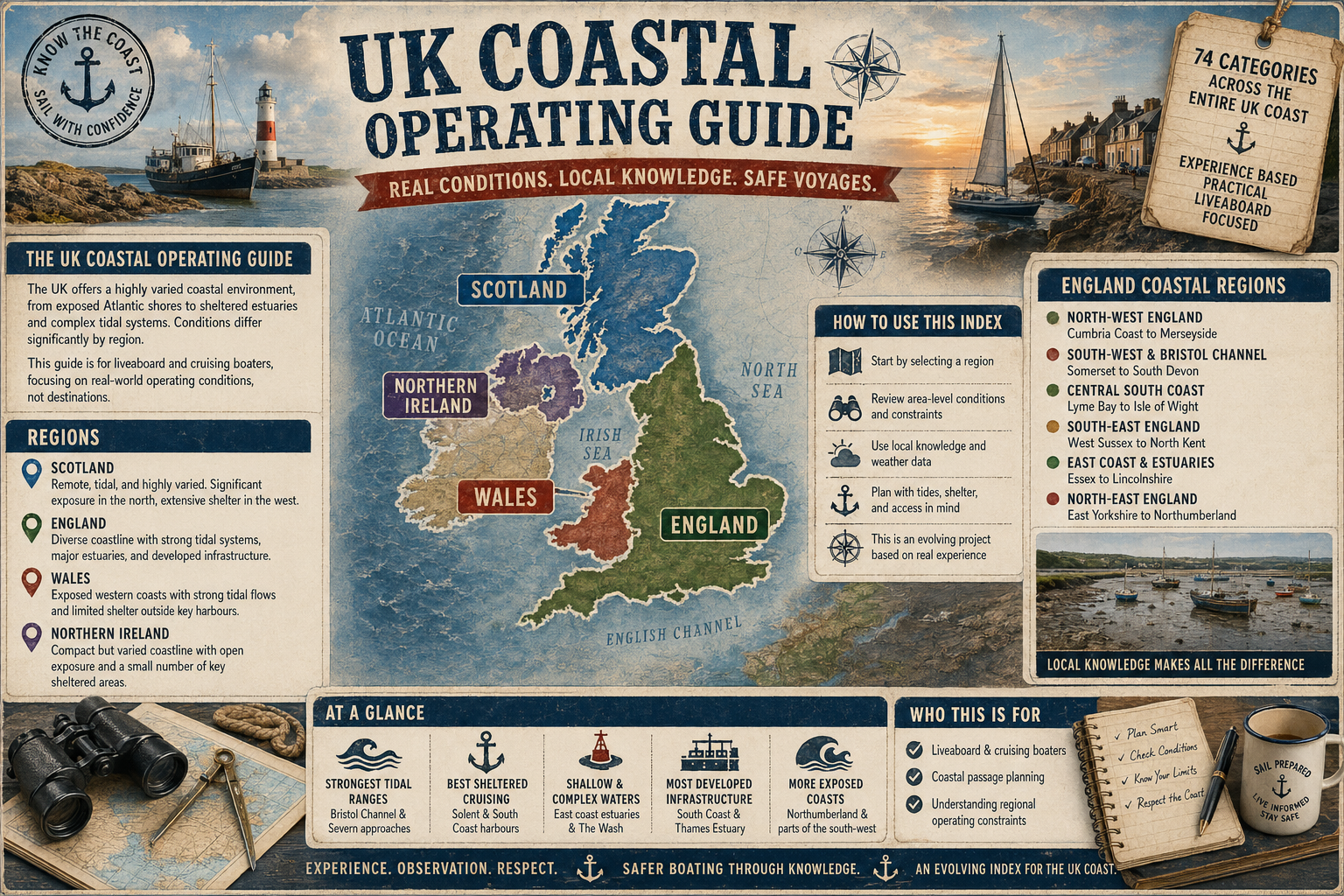





The southern coast of Cornwall retains a strong body of mining and coastal folklore, much of it shaped by the close relationship between the sea and the old tin and copper workings. Between the Lizard, Falmouth Bay and the western approaches towards Mount’s Bay, former engine houses, adits and cliff workings remain conspicuous from offshore. Local tradition long associated these places with “knockers”, small subterranean spirits believed by miners to inhabit the workings beneath the coast. Although the stories varied between districts and families, the belief was widely recorded throughout Cornwall during the eighteenth and nineteenth centuries, and survives as part of the region’s maritime character.
In South Cornwall the mining districts often extended directly beneath the cliffs and, in places, beneath the sea itself. Around Porthleven, the Loe Bar coast, and the coves west of Falmouth, shafts and drainage levels were frequently exposed to Atlantic weather and heavy winter seas. Miners spoke of faint tapping or knocking sounds heard underground before rockfalls or flooding. Some regarded these noises as practical warnings caused by shifting ground or timber, while others attributed them to the knockers. Contemporary accounts suggest that many working miners treated the stories with caution rather than open superstition, yet customs associated with them persisted well into the industrial period. Offerings of crusts or fragments of a miner’s pasty were sometimes left in the workings, particularly where conditions were difficult or uncertain.
The folklore was closely tied to the hazards of the coast itself. South Cornwall’s inlets and narrow coves are subject to abrupt weather changes, confused seas and heavy swell rebounding from granite cliffs. Numerous sea caves occur along this coast, especially around the Lizard peninsula and the western reaches towards Land’s End. Some were enlarged naturally by wave action, while others connected with abandoned mine levels driven seawards from inland workings. In periods of strong tide and easterly swell, the surge within these caves could produce resonant sounds that local communities occasionally linked with underground activity or the presence of knockers. Such associations were rarely described in dramatic terms; rather, they formed part of a practical understanding of an often dangerous coastline.
Harbour communities in places such as Porthleven, Coverack and Cadgwith maintained a long familiarity with mining folklore because many families combined fishing, coastal trade and mine employment according to season and opportunity. Fishermen were generally less concerned with knockers than miners, yet there remained a widespread respect for places where the cliff workings met the sea. Certain flooded adits and cave entrances were avoided in rough weather owing to strong suction, concealed rocks and unstable ground. Along parts of the coast, tales persisted of voices or hammering heard from abandoned workings after storms, though these reports were usually attributed to wave action within the old tunnels rather than anything supernatural.
The Helford and Fal estuaries contain fewer dramatic cliff mines than the exposed western coast, but even there local tradition retained references to underground spirits associated with former quarries and riverside workings. In many accounts the knockers were not considered malevolent. They were more commonly regarded as indicators of change underground, capable either of warning miners away from danger or leading them towards promising ground. Historians differ as to how sincerely such beliefs were held by later generations, though records from Victorian Cornwall confirm that the traditions remained familiar throughout the mining districts.
For mariners approaching South Cornwall, the abandoned engine houses standing above coves and headlands still form notable coastal marks, particularly in clear weather or low evening light. Their presence reflects a coastline where seamanship, quarrying and deep mining developed side by side under difficult conditions of tide, weather and rock. The enduring stories of knockers and cave sounds remain part of that working landscape, lending the coast an atmosphere shaped less by invention than by long experience of the sea and the ground beneath it.

Comments