



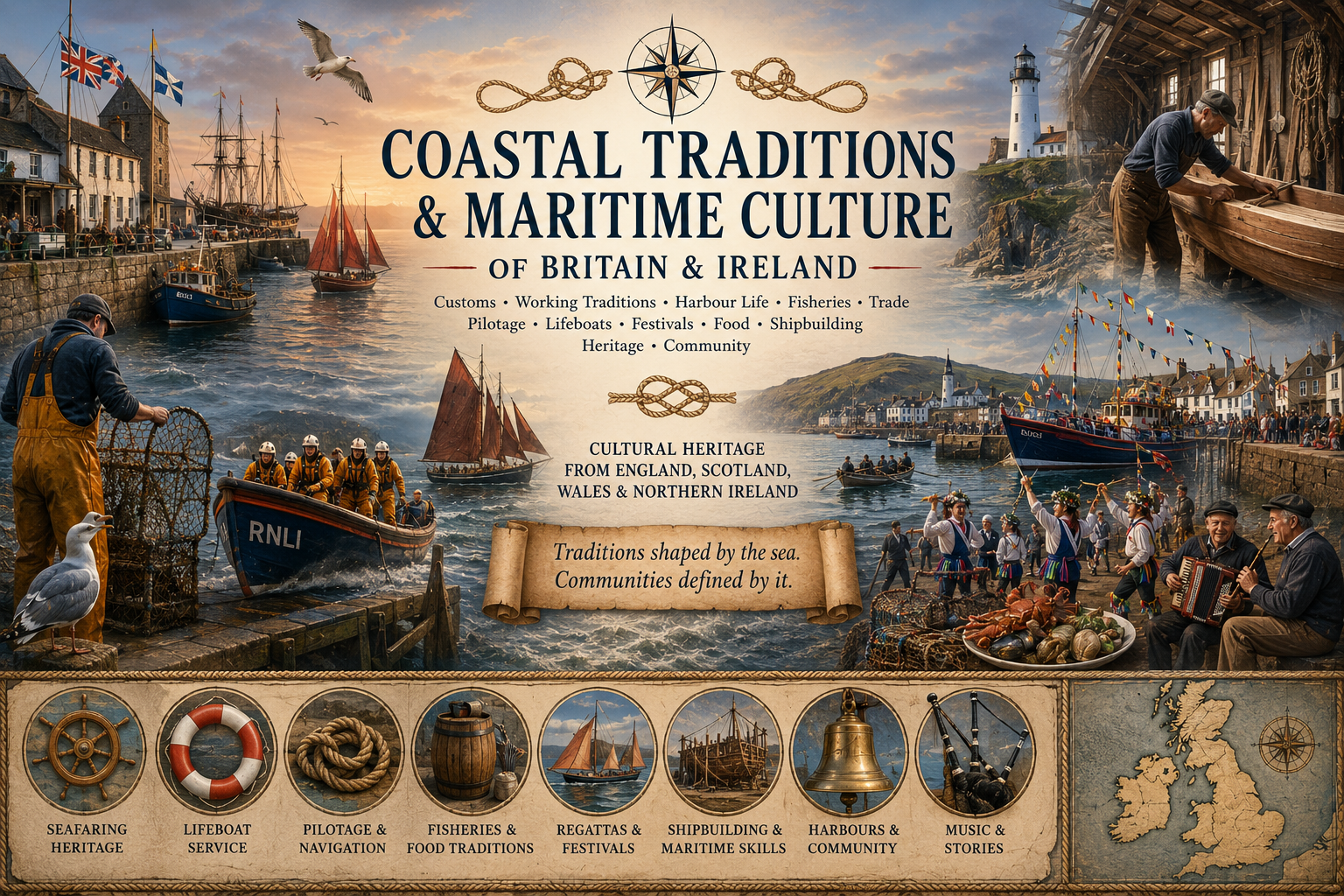



Whitby’s harbor glimmered under the late afternoon sun, though I declared it insufficiently dramatic for a proper landing. “One must always enter a port with style,” I announced, boots clicking, wig perfectly adjusted. Jack muttered something about tides; I ignored him. Prudence, as usual, was distracted by local pastries.
Now, everyone knows Whitby has a history, but the truth is far more theatrical than the guidebooks suggest. You see, centuries ago, a secret cabal of smugglers—draped in finery pilfered from visiting dignitaries—would convene under the guise of moonlit masquerades. I assured the crew that I had uncovered fragments of their ledger hidden behind a faded tapestry in St. Mary’s Abbey, though naturally, one could not verify such delicate matters without some finesse.
As we approached the cliffs, the wind carried whispers—though perhaps that was only my imagination or the Invisible Partner quietly giggling from their usual unseen vantage. “The masquerade is never fully ended,” I declared, drawing wide eyes from Jack, who frowned, and Prudence, who spilled her tea laughing.
Suddenly, a shadow flitted across the quay—no ordinary human, of course. I raised my hand in ceremonial greeting. The shadow paused, then vanished. “Quite expected,” I said, resuming my explanation of the smugglers’ elaborate dances and their penchant for frilly boots, which, I emphasized, was essential to avoid detection.
By the time we returned to the boat, the evening fog had rolled in, concealing much and revealing just enough. Jack insisted on measuring the quay stones for anomalies, Prudence attempted an impromptu jig, and I—naturally—catalogued each dramatic gesture in my ledger. And somewhere in the hush, the Invisible Partner whispered: “Some traditions prefer the cloak of mystery.” No one questioned them. One simply allowed the legend to flourish.
Comments