


The Merseyside Coast is defined less by open shoreline than by the working estuary of the River Mersey, where tidal range, dredged channels and dense traffic separation schemes shape all movement. From the Irish Sea approaches into Liverpool Bay and upstream to the enclosed dock systems of Liverpool and Birkenhead, maritime activity remains structured, regulated and closely tied to pilotage practice. The cultural identity of the coast is therefore bound to harbour operations, ferry crossings and the long continuity of dock labour and ship repair rather than to seasonal coastal settlement.
Historically, the development of Liverpool as a transatlantic port in the eighteenth and nineteenth centuries established a complex dock estate along the eastern bank of the Mersey, later mirrored by Birkenhead on the Wirral side. The enclosed wet dock system, including the Royal Albert Dock and adjoining basins, allowed continuous loading independent of tidal state, an important adaptation in a river where the tidal rise can exceed several metres and generate strong lateral currents. Maritime labour culture developed around these enclosed docks, with distinct occupational communities associated with stevedoring, warehousing, ropework and ship chandlery. Further downstream, Cammell Laird at Birkenhead became a major centre for shipbuilding and repair, a role that continues in reduced but still operational form.
The Mersey ferry crossings between Liverpool and Birkenhead, Seacombe and Woodside form one of the most persistent maritime services in the region. While now partly integrated into commuter transport, the ferries retain procedural continuity with earlier chain ferry and packet boat services. Navigation on the estuary requires careful attention to buoyed channels and constant adjustment for shifting sandbanks, particularly off New Brighton and Crosby, where shoaling can alter local depth conditions. Pilotage services remain essential for large commercial vessels entering the Port of Liverpool, and the presence of compulsory pilot boarding areas offshore reflects the continuing hazards of the approach.
Coastal customs and working traditions have historically been shaped by dock labour organisation and maritime trade cycles. The waterfront once supported extensive warehousing districts and bonded storage linked to imperial and Atlantic trade networks. While much of the older dock labour structure has declined, elements of its occupational identity persist in maritime unions, port services and maintenance trades. Small-scale fishing was formerly present along parts of the Wirral foreshore and in tributary creeks, though it has been significantly reduced by industrialisation of the estuary and changing water quality conditions through the twentieth century. Limited inshore activity may still be observed, though it is no longer a defining economic feature.
Maritime cultural expression in the region has long been associated with sea songs, dockside music and working chants. Liverpool in particular maintained a tradition of maritime ballads and shanty singing linked to sailing vessels of the nineteenth century, with later survivals adapted through dockside communities and naval recruitment contexts. In recent decades there has been a modest revival of sea shanty performance within heritage events and informal gatherings, though this is best understood as cultural reactivation rather than continuous unbroken tradition. Lifeboat operations also form part of the coastal identity, with RNLI stations at New Brighton and Crosby providing coverage of the approaches to Liverpool Bay and the tidal channel.
Modern maritime continuity is most evident in the commercial port operations of the Port of Liverpool, handling container traffic, bulk cargo and automotive imports, alongside passenger services including routes to the Isle of Man operated from the Mersey terminals. The river remains heavily managed, with dredging regimes, vessel traffic systems and exclusion zones reflecting its status as a major commercial waterway rather than a natural shoreline environment. Recreational navigation is present but subordinated to commercial scheduling and tidal constraints.
The Merseyside Coast thus retains a strongly functional maritime character. Its traditions are embedded in port infrastructure, ferry services and dock engineering rather than in seasonal coastal practice. While much of the older labour and shipbuilding culture has diminished in scale, it persists in institutional memory, surviving trades and the continued operation of one of the United Kingdom’s principal estuarine ports. The coastline today remains a working system in which historical practice and modern logistics are closely interwoven within a constrained and heavily navigated tidal environment.
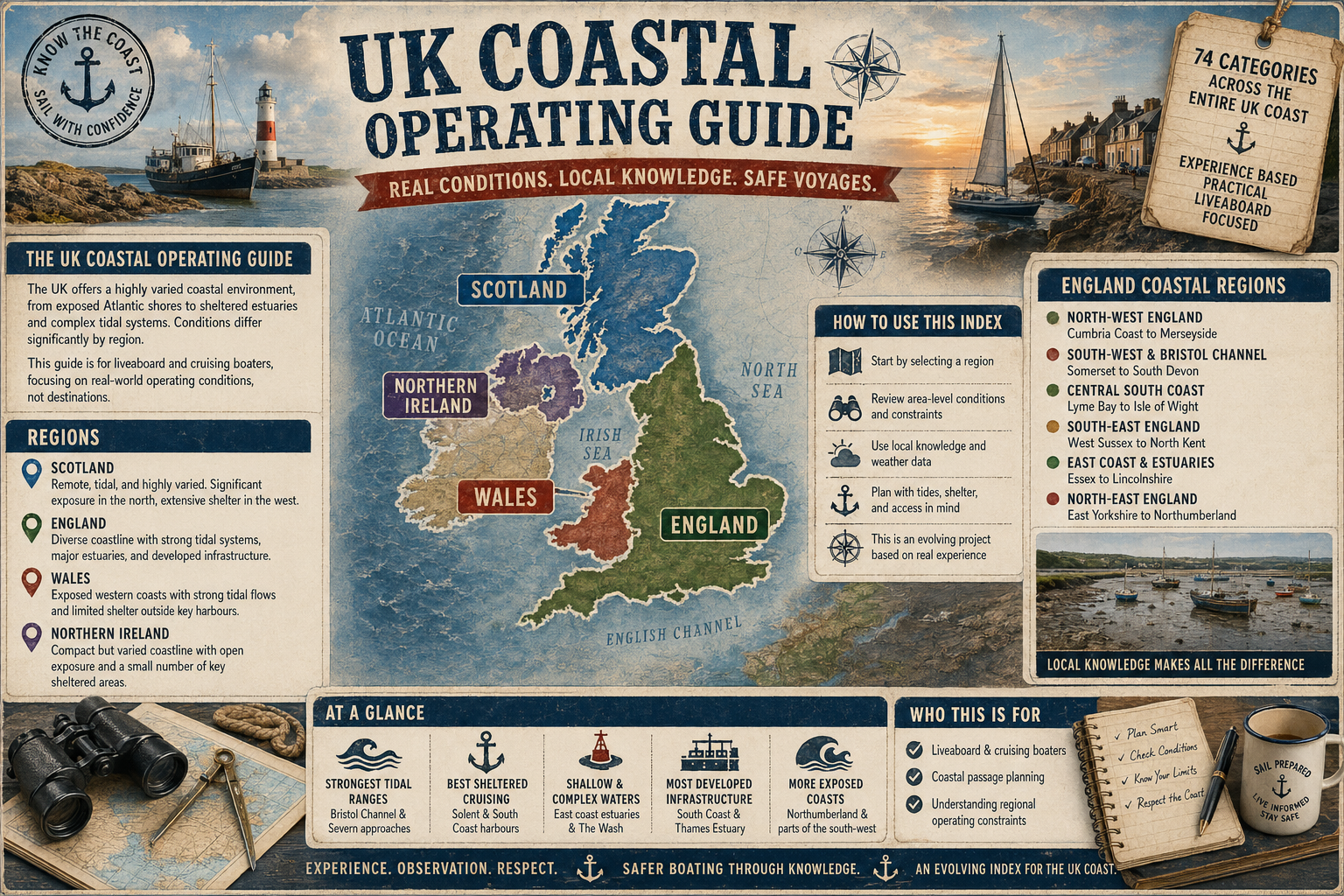
- The UK Coastal Operating Guide
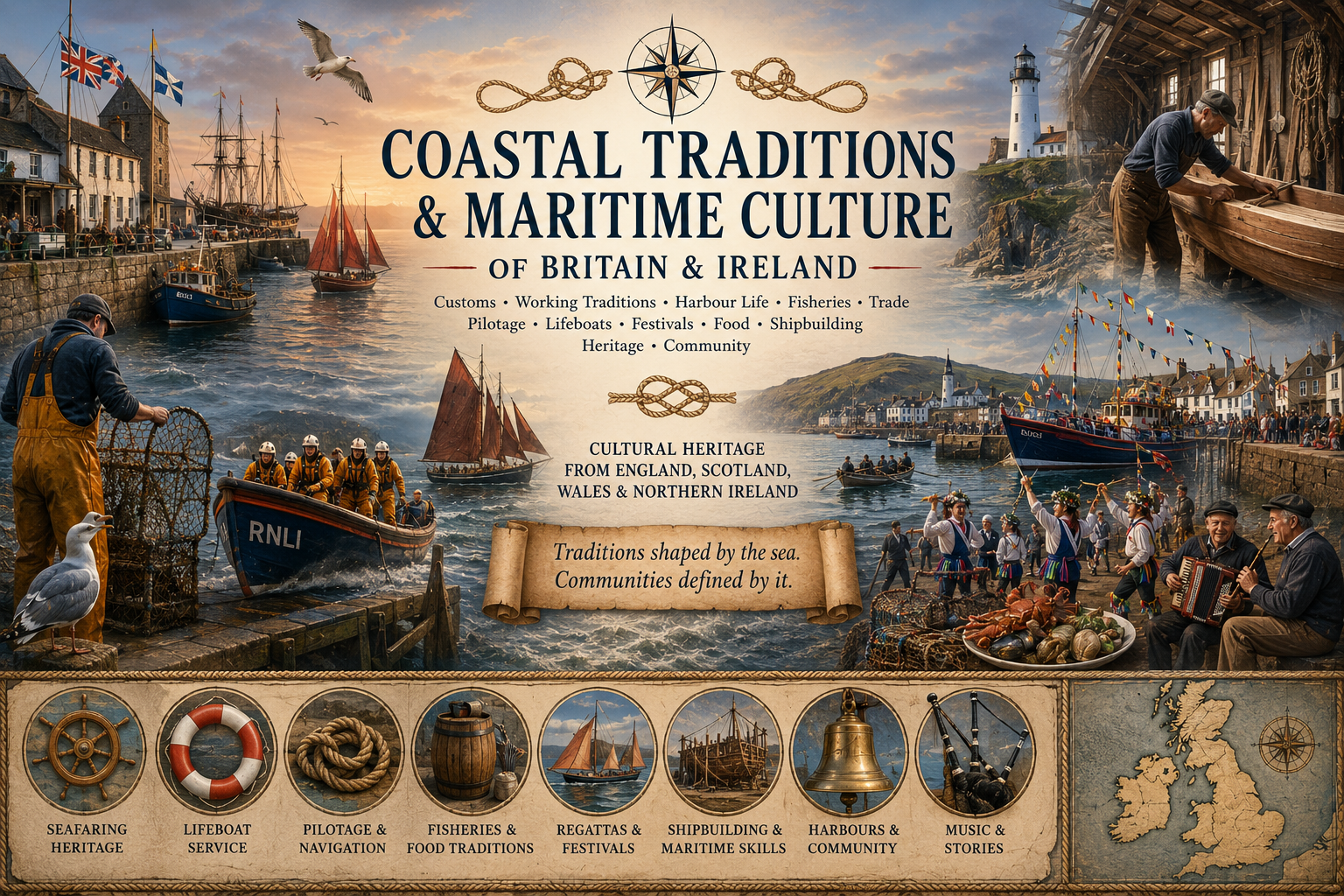
- Coastal Traditions & Maritime Culture of Britain and Northern Ireland
- Coastal Myths & Legends of Britain & Northern Ireland

Comments