

Along the County Down coast, particularly between Carlingford Lough and the outer reaches of Strangford Lough, traditions concerning seal-people, commonly termed selkies, have long formed part of local maritime folklore. The stories are consistent with wider North Atlantic coastal traditions found in Scotland, Orkney and parts of western Ireland, though the County Down accounts are generally restrained in character and closely tied to fishing communities and isolated shore settlements. The folklore is strongest around rocky inlets, tidal narrows and exposed beaches where seals are commonly observed from the sea.
The coast itself lends some context to such traditions. Grey seals and common seals are regularly encountered along the Down shoreline, especially near the outer Ards Peninsula, the Copeland Islands and the rocky approaches beneath the Mourne Mountains. In periods of poor visibility or heavy swell, seals moving close inshore could easily be mistaken at distance for swimmers or figures among breaking water. Older accounts from the eighteenth and nineteenth centuries occasionally refer to fishermen avoiding certain skerries or tidal channels after dusk owing to supposed encounters with unusual seal behaviour, though these references are fragmentary and often anecdotal.
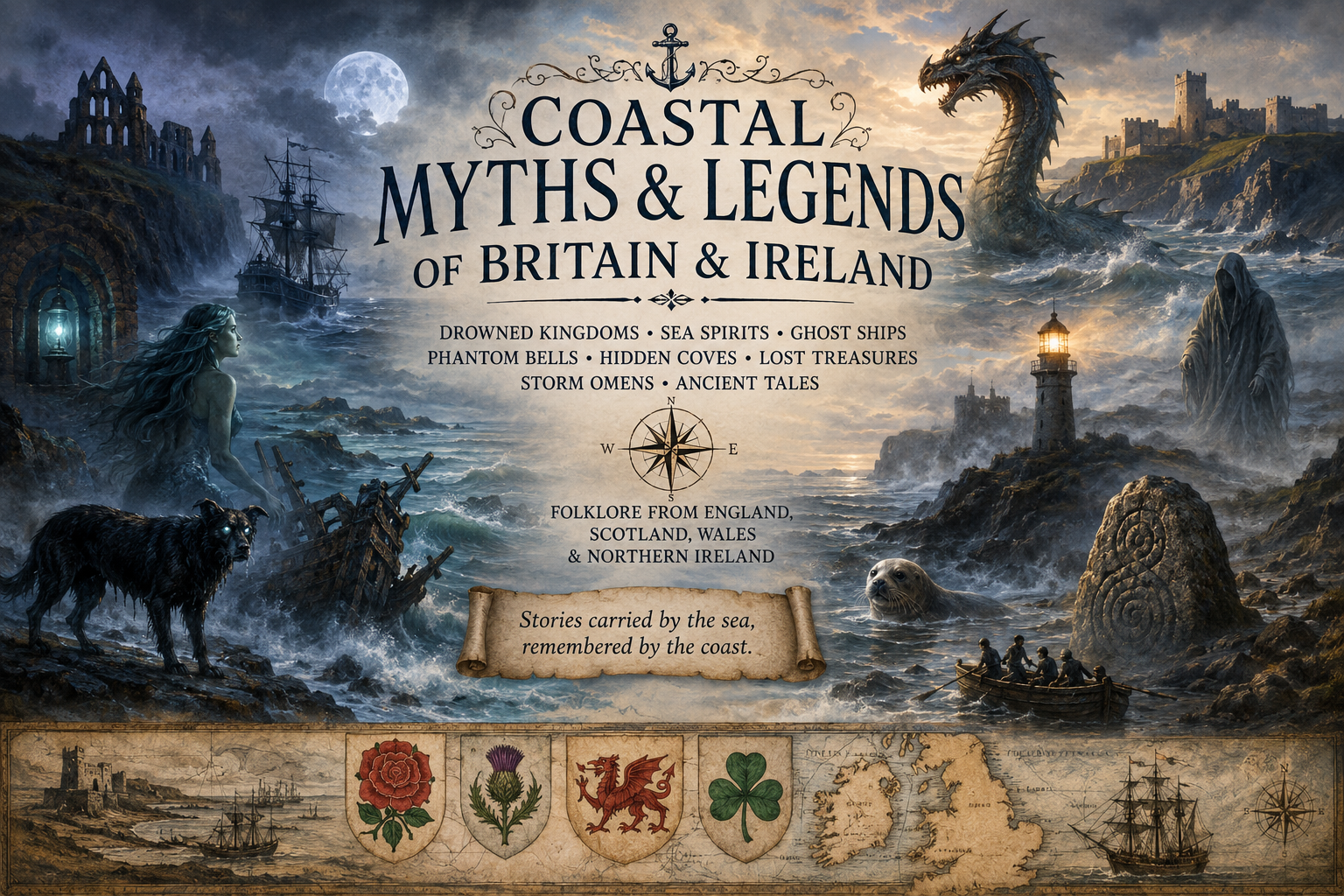
Within local tradition, selkies were usually described not as malevolent beings but as creatures occupying an uncertain boundary between the human and maritime worlds. Stories commonly concerned seal-women shedding their skins upon isolated strands before assuming human form ashore. Such tales appear to have circulated in small harbour communities around Kilkeel, Ardglass and parts of the Lecale coast, though surviving written sources are sparse. In most versions, the sea remains central to the narrative; the selkie invariably returns to the water, often during rough weather or on a strong tide.
The tidal character of the County Down coast may partly explain the persistence of these associations. Strangford Narrows, with its exceptionally strong currents and eddies, has long attracted folklore concerning unseen movements beneath the surface. Local boatmen historically treated the narrows with considerable respect, timing passages carefully against the tide. While selkie stories were not directly connected with navigational hazards, they belonged to the same body of maritime cautionary lore through which coastal populations interpreted difficult waters and sudden changes in weather.
Among fishing families, seals themselves occupied an ambiguous position. They were sometimes regarded as intelligent creatures capable of understanding human activity at sea, and unnecessary harm to them was occasionally considered unlucky. Such beliefs were not unique to County Down but were widely held around the Irish Sea. Some older fishermen maintained that seals following a vessel in calm weather should not be disturbed, particularly near harbour approaches or salmon grounds. Inshore crews working the coast beneath the Mournes are known to have repeated such cautions well into the twentieth century.
There is little evidence that selkie folklore here developed into elaborate ceremonial practice. Rather, it persisted as part of the oral tradition of the coast, passed among sailors, fishers and coastal households familiar with long winter nights, shifting fog and the constant presence of the sea. In contrast to more romanticised modern retellings, the County Down versions remained comparatively understated and were often recounted as local anecdotes rather than fixed legends.
The coastline itself reinforces the atmosphere from which such traditions arose. Much of the shore is exposed to easterly weather from the Irish Sea, with alternating cliffs, stony beaches and small harbours offering limited shelter outside established anchorages. In poor light, seals hauled upon rocks or moving through breaking surf can appear unexpectedly human in outline. Such conditions undoubtedly contributed to the endurance of these stories among communities accustomed to observing the sea closely.
Today the selkie traditions of County Down survive chiefly as part of the broader maritime character of the coast, reflecting a long-standing familiarity with tidal waters, working harbours and the uncertain margin between land and sea.

Comments