
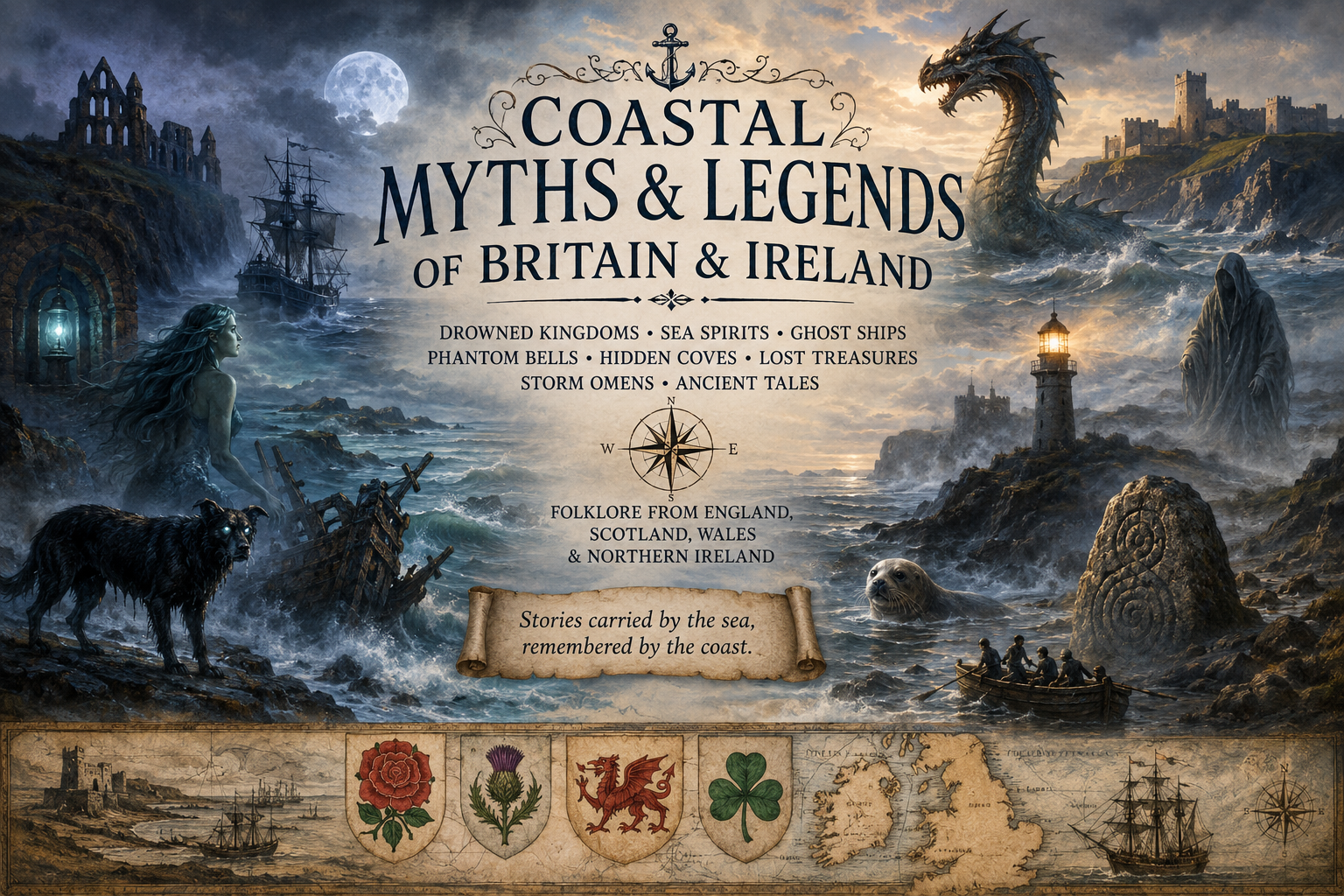





The coastal highlands of St Catherine’s Down, at the eastern extremity of the Isle of Wight, have long been associated with the figure of the so-called Ghost Hound. Local tradition, with strong roots among the communities of Sandown and Shanklin, recounts the appearance of a spectral canine on the chalk escarpments overlooking the English Channel. Sightings are reported primarily along the cliff tops, particularly during autumn evenings when mists frequently settle over the downs, though accounts vary and lack precise documentation.
Historically, the downlands formed part of a wider navigational landscape used by fishermen and small coasting vessels. The steep cliffs rise abruptly from the coastal waters, creating a visual marker for vessels rounding Dunnose and approaching Sandown Bay. The Ghost Hound is said to have been observed following the contours of these high grounds, and while its origins remain obscure, it is likely intertwined with local shepherding and land-use practices of the 18th and 19th centuries. Contemporary records suggest that references to the hound appear sporadically in parish notes and sailors’ diaries, reflecting a long-standing oral tradition rather than a singular documented event.
From a maritime perspective, the hound has been interpreted as an omen by seafarers navigating the often variable conditions off the southeastern coast of the Isle of Wight. The tidal flows in Sandown Bay can be irregular, with swells reflecting off the downs under certain wind directions. Mariners have traditionally maintained an awareness of coastal topography when entering these waters, and stories of the hound served both as a cautionary tale and a mnemonic for the location of cliffs and headlands under reduced visibility. While no practical hazard is directly linked to the legend, it has been incorporated into local pilot lore as a point of situational awareness, particularly before the establishment of modern aids to navigation.
Although primarily anecdotal, the legend reflects the character of the Isle of Wight coastline: steep, chalky cliffs rising sharply from the channel, subject to shifting weather and tidal conditions, and rich in local narrative. The Ghost Hound of St Catherine’s Down, whether understood as a metaphorical sentinel or a traditional tale, underscores the ways in which coastal communities historically interpreted and memorised the landscape for safe passage along these waters.

Comments