
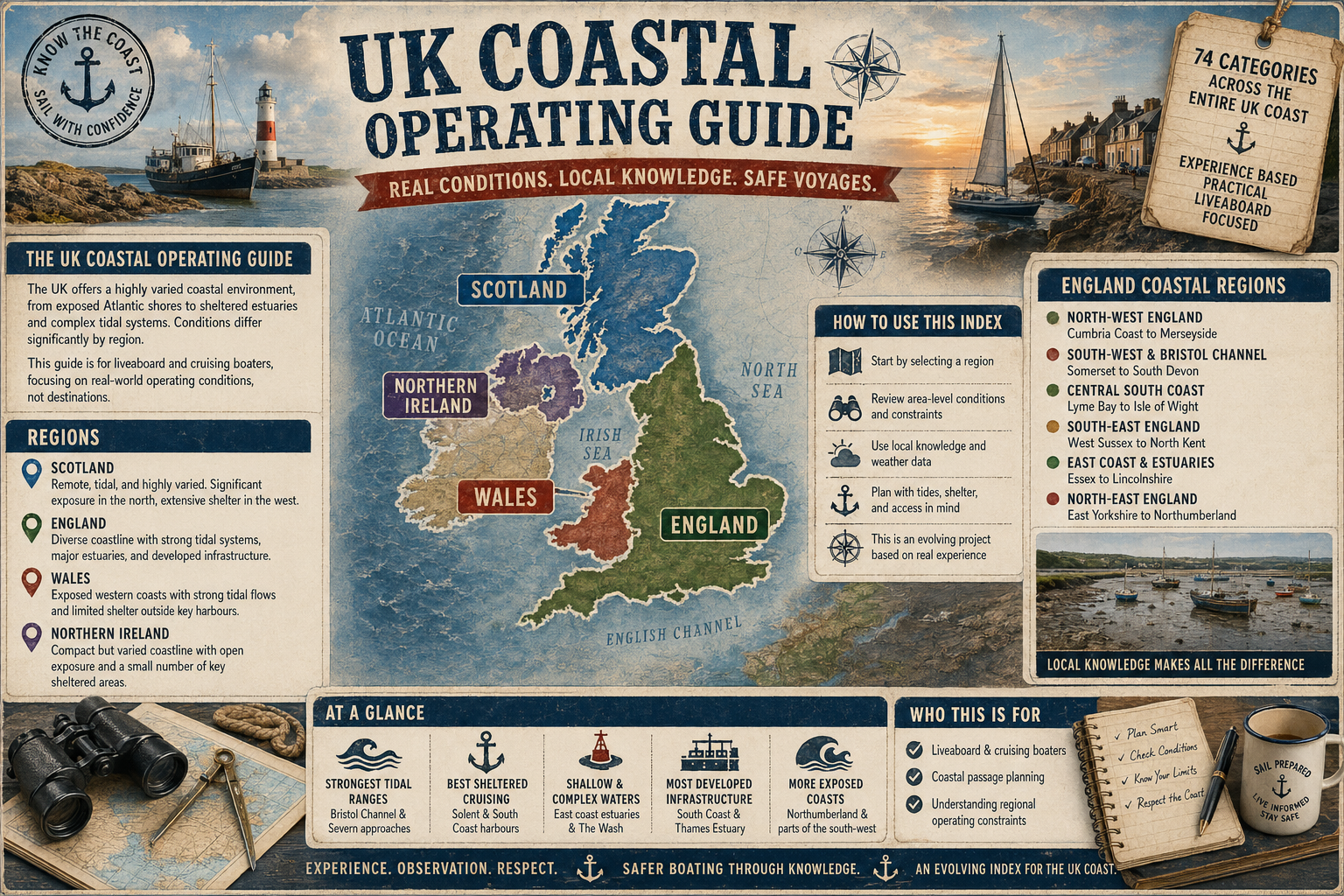

The coastline of Caithness, extending from the Moray Firth north-eastwards to Dunnet Head and eastwards towards Wick, forms one of the more exposed and heavily worked maritime margins of the Scottish mainland. In pilotage terms it is a coast of long Atlantic fetches, strong tidal set from the Pentland Firth, and frequent overfalls where offshore banks and headlands deflect the North Sea swell. Within this setting, local tradition preserves a restrained but persistent association with hostile sea spirits, often described in older accounts as “sea devils” or unnamed powers of deep water. These references are not uniform or systematised in any surviving folklore corpus, but appear as scattered survivals within wider Northern Isles and Norse-influenced maritime belief.
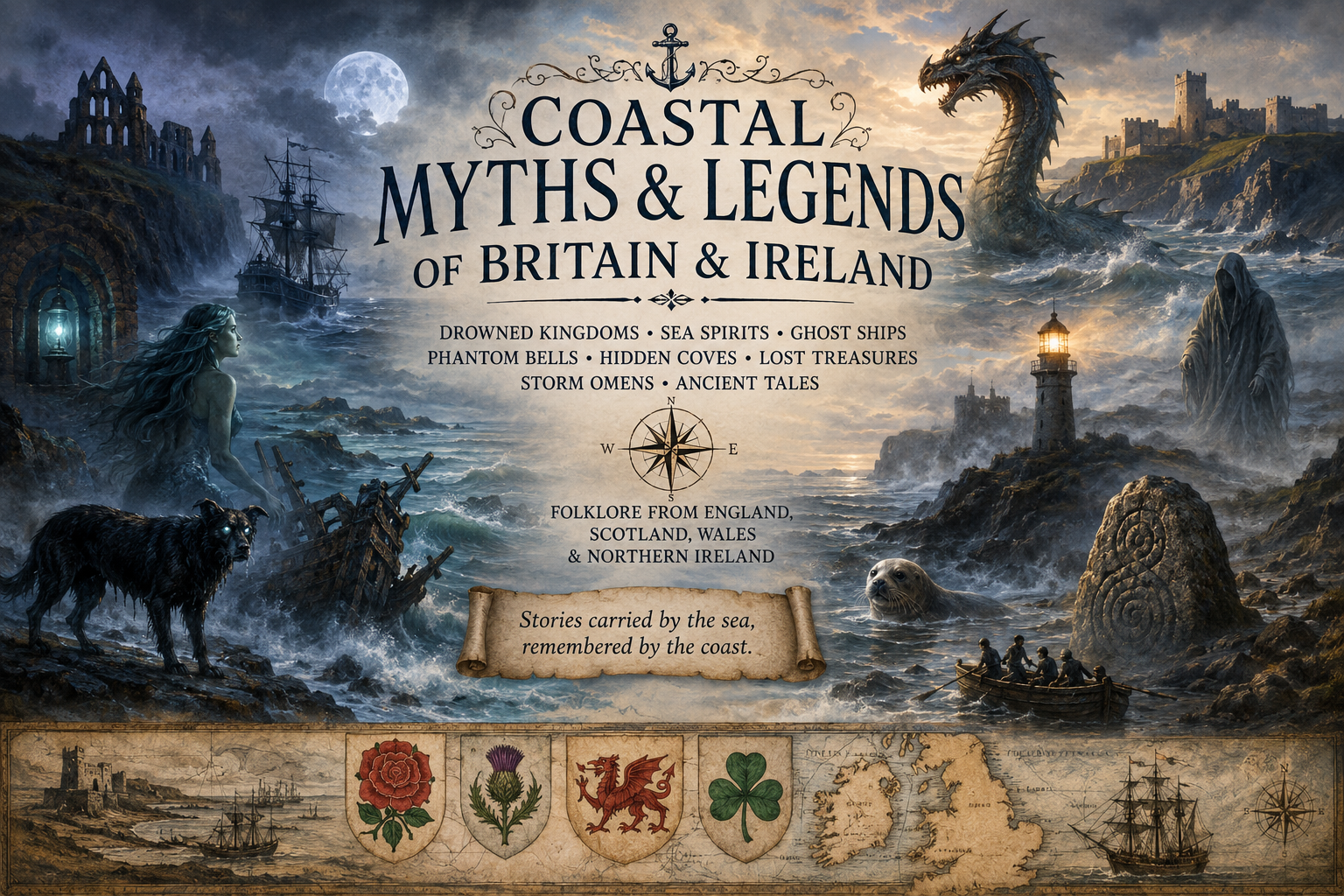
Historically, Caithness and the adjacent waters of the Pentland Firth were part of the Norse earldom of Orkney, and maritime culture in the region retained strong Scandinavian influence well into the medieval period. It is within this broader Norse cultural layer that references to sea beings and subaqueous entities must be understood. The more structured folklore of the Orkney and Shetland Islands includes the finfolk tradition, describing shape-shifting sea dwellers associated with deep offshore waters and winter seas. While Wick and the Caithness coast are not primary centres of finfolk tradition, oral transmission across fishing communities likely allowed related motifs to diffuse southwards, becoming less defined and more generalised in character.
Local maritime naming conventions also reflect cautionary attitudes towards the sea. Fishermen operating from Wick Harbour, particularly following its expansion in the nineteenth century under Thomas Telford’s improvements at Pulteneytown, worked waters where the approach is governed by rapidly changing North Sea conditions. The offing is subject to strong tidal streams influenced by the Pentland Firth, and the sea state can alter quickly under wind against tide. In such conditions, it was not uncommon in oral accounts for heavy or unexplained seas to be described in terms that implied agency, whether as “working seas” or, in older phrasing, as if “the sea had taken offence”. These expressions are best read as metaphorical language rather than structured belief systems, though they occasionally align with wider northern European traditions that personify the ocean.
The headlands of Caithness, including Duncansby Head with its offshore stacks, present particularly stark conditions in onshore easterly weather, where breaking seas and tide race interaction produce confused waters. Similarly, the approaches to the Pentland Firth, including the vicinity of Stroma Island, are well known for powerful tidal streams and eddying conditions. In such waters, historical pilots and local fishermen placed considerable emphasis on timing, tide tables where available, and experiential knowledge passed through generations. Within this practical seamanship context, references to sea spirits or unseen dangers may be interpreted as cultural expressions of respect for a sea that is demonstrably hazardous rather than as literal belief in entities.
It should also be noted that written records of Caithness folklore are comparatively sparse in relation to the richer oral traditions of Orkney and Shetland. As a result, any discussion of “sea demon” motifs in the Wick district must remain cautious. What survives is more accurately characterised as a shared North Atlantic maritime worldview in which the sea is acknowledged as active, powerful, and at times unpredictable beyond precise human control. This worldview is consistent with practical seamanship in exposed waters where fog, tidal shear, and Atlantic swell converge.
In summary, the folklore association of Caithness and Wick with sea-dwelling hostile forces is best understood as a subdued reflection of broader Norse and North Sea maritime tradition rather than a distinct local mythology. It sits alongside, and is often indistinguishable from, the lived experience of working a difficult and powerful coastline. The character of these waters—swept by tide, wind, and long-period swell—has ensured that such traditions remain anchored less in narrative form than in the enduring caution with which mariners continue to approach this coast.

Comments