




Coastal Fishing Fleets and Cliff Rescue Traditions
The East Sussex coast combines working fishing communities, exposed chalk headlands and comparatively small commercial harbours. Local maritime culture has long reflected the demands of an open Channel shoreline where weather, tides and shifting beach conditions have influenced both navigation and daily work. Although practices differ between ports, a recognisable continuity survives in the operation of beach-launched fishing vessels, harbour services and voluntary rescue organisations. The relationship between seafarers and the high chalk cliffs has also shaped traditions of coastal rescue that remain an important part of the area's maritime identity.
Fishing has been one of the principal occupations along much of the coastline, particularly at Hastings, where the beach-launched fleet remains one of the best-known examples of its kind in Britain. Without the protection of a conventional harbour, vessels have traditionally been hauled clear of the sea across the shingle using mechanical winches, replacing earlier manual methods while preserving the same practical system. The fleet has adapted over time to changing fisheries, regulations and markets, targeting species according to season and conditions in the eastern English Channel. Rye Harbour, at the entrance to the River Rother estuary, has also supported commercial fishing, although the navigable channel and harbour approaches have required continual attention owing to silting and the movement of coastal sediments. At Newhaven, the harbour developed as both a fishing port and a commercial gateway, with its position on the River Ouse providing a sheltered entrance despite the need for careful pilotage in adverse weather.
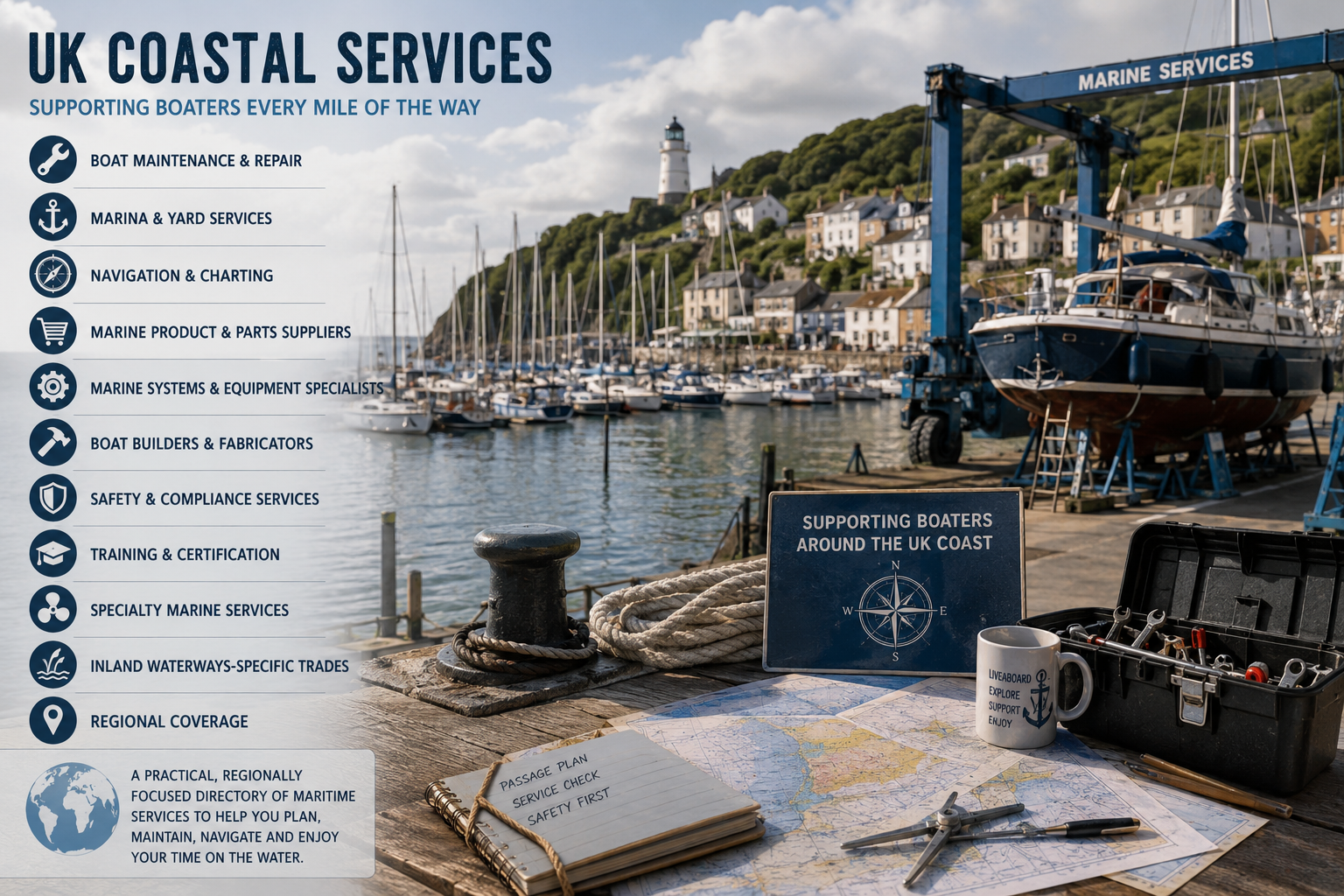
Along this coast, maritime employment has extended beyond fishing alone. Newhaven has long served cross-Channel traffic and commercial shipping, while harbour operations, pilotage, dredging and marine engineering have contributed to the local economy. Smaller boatyards have supported fishing craft, pleasure vessels and harbour launches, carrying forward practical woodworking and repair skills rather than large-scale shipbuilding. Beach maintenance, navigation marks and harbour infrastructure have remained essential where tidal streams, wave action and the movement of shingle can alter approaches over comparatively short periods. Such conditions have encouraged a local emphasis on practical seamanship and familiarity with the coast rather than reliance on fixed routines.
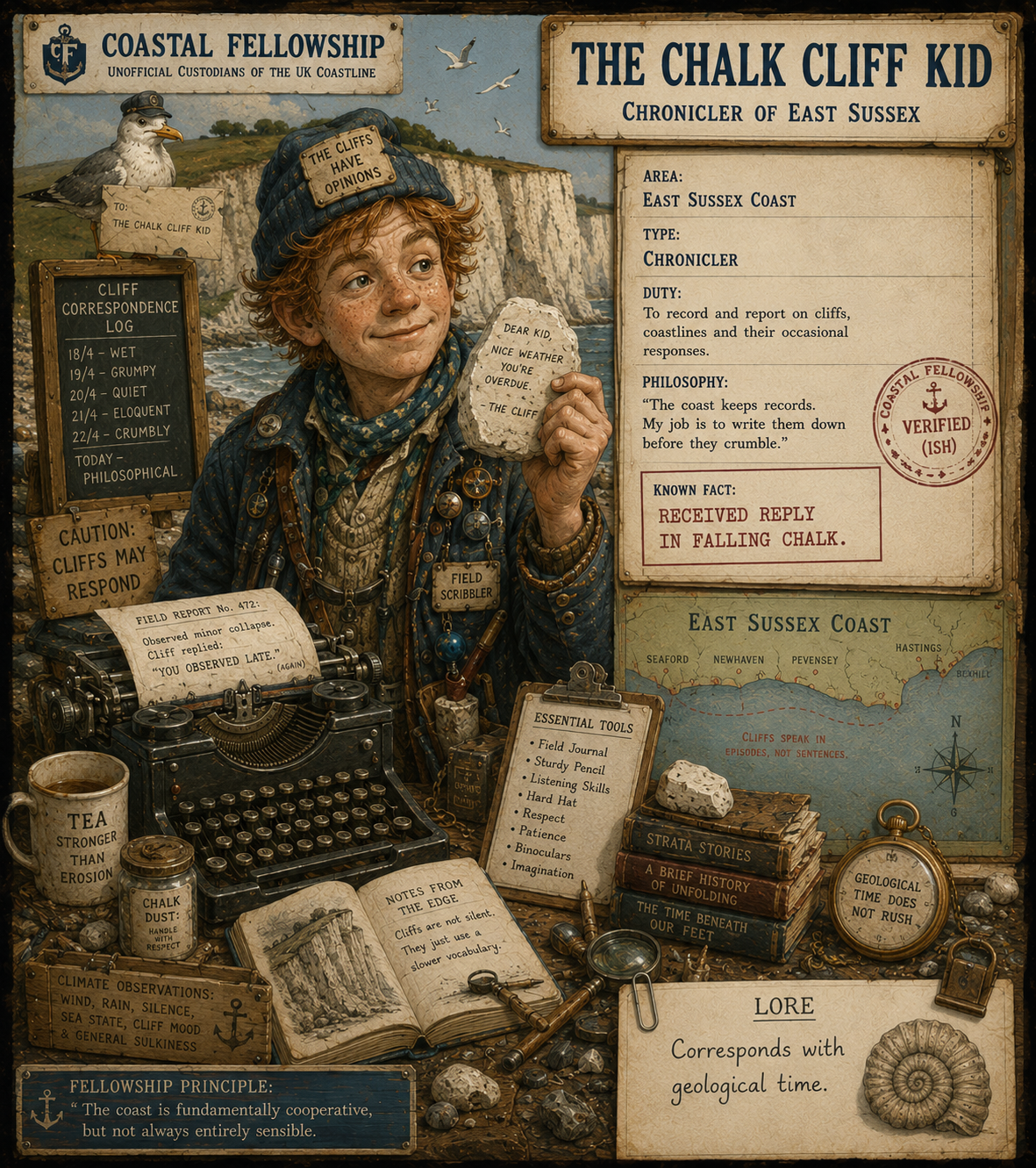
The chalk cliffs between Seaford, Beachy Head and Eastbourne have given rise to a long association with coastal rescue. These headlands have presented hazards both to vessels offshore and to people on the cliffs themselves. Lifeboat crews, coastguards and, in earlier periods, organised cliff rescue parties developed methods suited to steep terrain and difficult sea conditions. Equipment and techniques have naturally evolved, yet the principle of locally organised response has shown considerable continuity. Modern cliff rescue is undertaken by specialist teams working alongside the coastguard and other emergency services, maintaining a tradition of voluntary maritime assistance that remains firmly connected with the coastline.
Harbour customs are generally practical rather than ceremonial. Fishing activity continues to follow tidal opportunities, weather forecasts and seasonal availability of fish, while harbour movements remain governed by local notices and navigational requirements. Regattas and sailing events are held at several centres, including Newhaven and Eastbourne, although their character varies between clubs and communities. Such events primarily reflect active participation in local boating rather than distinctive regional ceremonial customs. Blessings of fishing vessels or comparable observances have occurred occasionally, but these have not formed a consistent tradition across the whole East Sussex coast and should be regarded as locally variable rather than characteristic of the region as a whole.
Seafood continues to provide a visible connection between present-day communities and earlier maritime occupations. Fresh catches landed by local vessels remain associated with species such as sole, plaice, bass, mackerel and shellfish where conditions permit, although landings fluctuate according to quotas, stock management and seasonal factors. Local fish markets and direct sales from working harbours maintain a practical link between fishing activity and coastal settlements, even where fleet numbers are smaller than in previous generations.
Cultural continuity along the East Sussex coast may best be described as moderate. Commercial fishing has contracted from its historical scale, and several traditional occupations have become more specialised or mechanised. Nevertheless, beach-launched fishing at Hastings, the continued operation of Newhaven Harbour, active lifeboat stations, volunteer rescue organisations and everyday harbour work preserve many of the customs and skills associated with working the eastern English Channel. Rather than surviving as historical display, these practices continue because they remain necessary within the operational life of the coast, linking present-day seamanship with established local experience of tides, weather and the demands of an exposed shoreline.
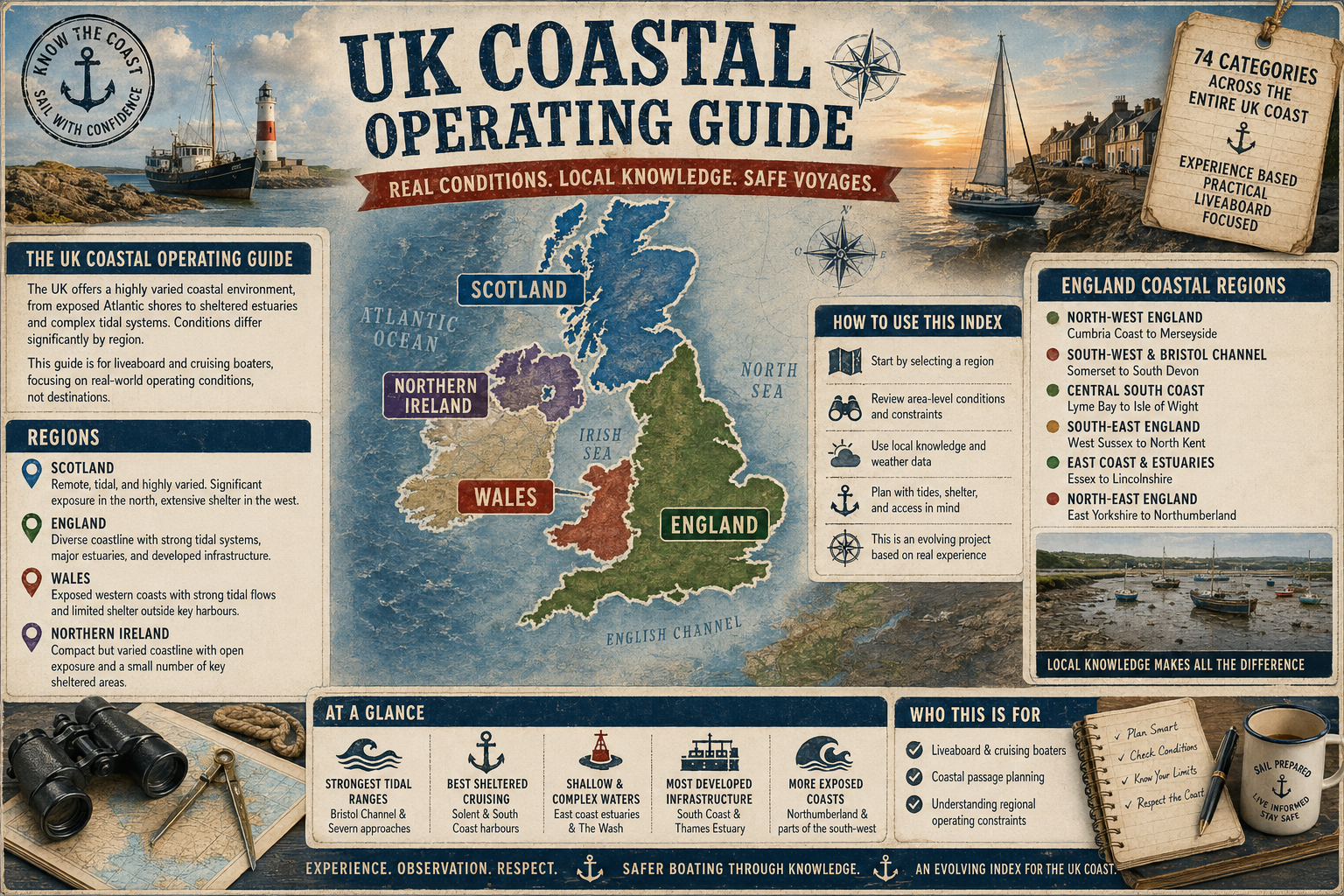
- The UK Coastal Operating Guide
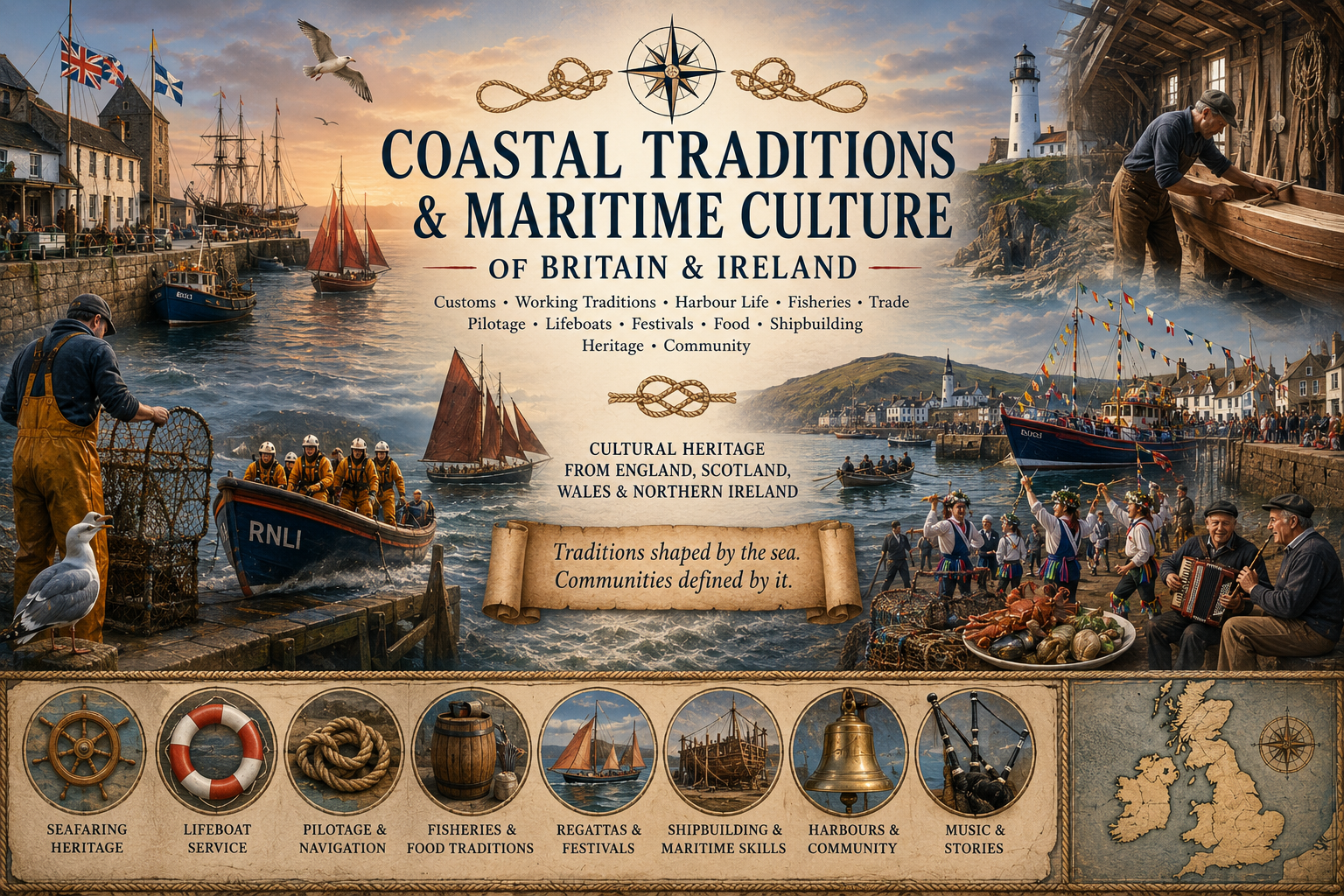
- Coastal Traditions & Maritime Culture of Britain and Northern Ireland
- Coastal Myths & Legends of Britain & Northern Ireland
Comments