





South Kent Coastline
Overview
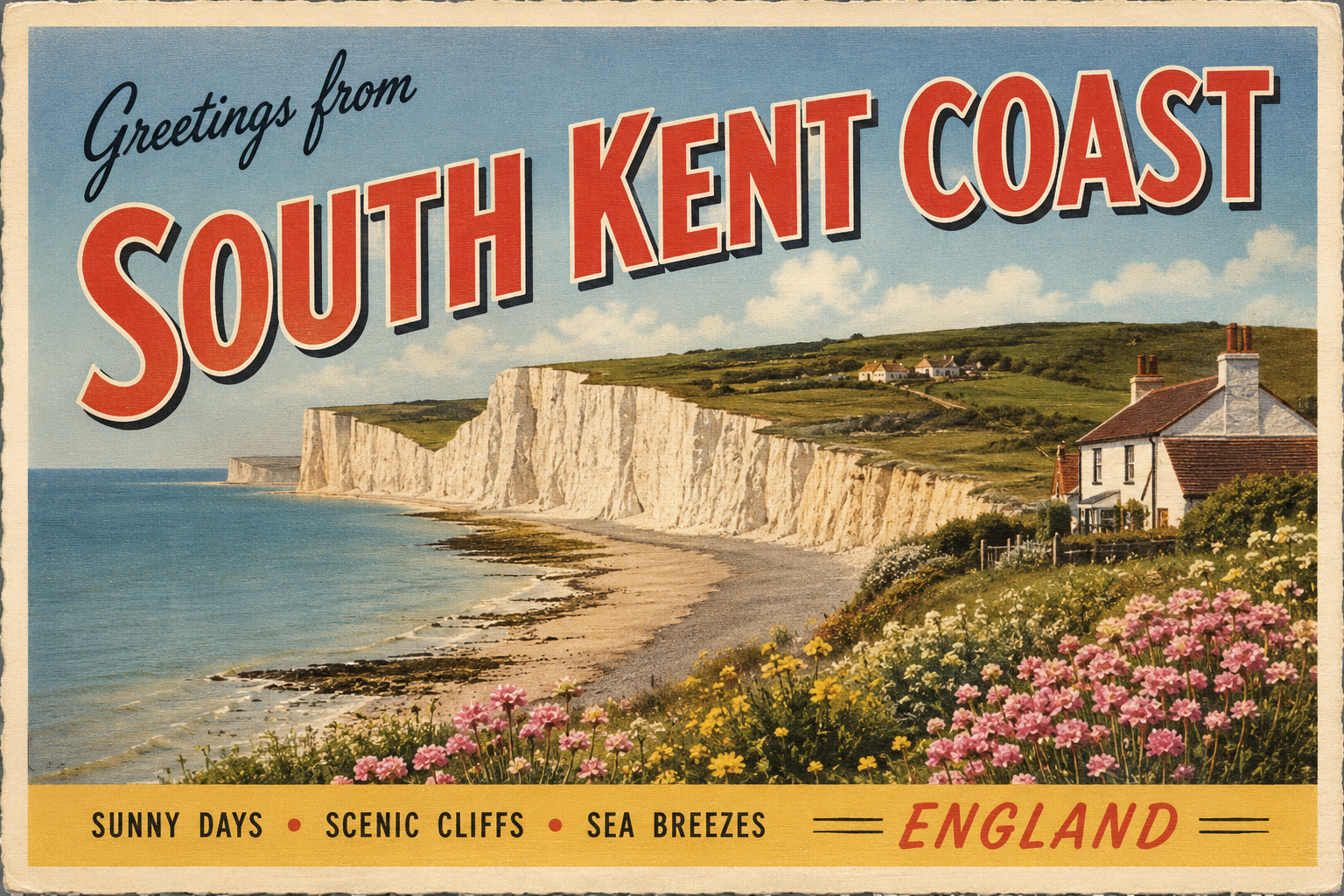
The South Kent coastline faces the English Channel and forms part of the narrowest section between the United Kingdom and continental Europe. It is characterised by a mix of chalk cliffs, shingle beaches, and occasional low-lying stretches near river mouths.
Settlements are spaced along the coast, often associated with historic harbours or defensive positions. The area is influenced by strong tidal streams and significant commercial shipping activity passing through the Dover Strait.
Local Operating Context (for Liveaboard Boaters)
Navigation along this stretch requires awareness of tidal timing and traffic separation schemes in adjacent waters. Movements are often planned around favourable tidal flows, which can be pronounced.
Opportunities for stopping or sheltering can be limited outside established harbour areas. Open stretches of coast offer little natural refuge, particularly in onshore or easterly conditions.
Weather conditions in the Channel can change with limited warning, and sea states may build quickly due to wind-against-tide situations. Visibility can also vary, particularly in periods of mist or sea fog.
Access to shore facilities varies by location and is generally more structured around larger coastal towns. Outside these, interaction with the shore may be restricted by beach gradients or exposure.
Typical Conditions
- Strong tidal streams, particularly in the Dover Strait
- Frequent commercial vessel traffic in nearby shipping lanes
- Variable sea states influenced by wind direction and tidal flow
- Periods of reduced visibility due to haze or fog
Access & Shelter
- Limited natural shelter along exposed cliff sections
- Harbour access generally concentrated at key coastal towns
- Open roadsteads may offer temporary holding in settled weather
- Entry conditions can depend on tide, swell, and harbour orientation
Shore Interaction
- Access often via harbours or slipways in developed areas
- Shingle beaches may make landing or boarding less straightforward
- Tidal range can affect accessibility of shoreline features
- Some stretches have limited direct shore access due to cliffs
Risk Factors
- Heavy shipping traffic requiring careful navigation and awareness
- Strong and shifting tidal currents
- Exposure to easterly and south-easterly winds
- Limited emergency shelter options outside main harbours
Overall Character
The South Kent coastline presents a functional but at times demanding operating environment. It combines open Channel exposure with concentrated points of access, requiring planning and caution rather than opportunistic movement.
Notable Locations
-
Dover – Major harbour area with controlled access and significant shipping movement
-
Folkestone – Coastal town with harbour structures offering some shelter depending on conditions
-
Dungeness – Low-lying headland with open exposure and minimal natural protection
-
Hythe – Shingle shoreline with limited direct harbour facilities
Practical Mooring & Anchorage Locations
Dover Harbour
- Type: Harbour
- Shelter: West through north-east (well sheltered within inner harbour)
- Exposure: Strong easterly and south-easterly swell outside harbour entrance; turbulence in strong wind-against-tide conditions
- Key Constraints: Heavy commercial traffic, ferry movements, tidal streams in approach channel, controlled harbour operations
- Traffic Level: High
- Liveaboard Suitability: Medium
- Notes: One of the most secure all-weather options on the coast. Entry and manoeuvring require careful timing due to traffic density.
Folkestone Harbour
- Type: Harbour / Marina basin
- Shelter: North-west through south-west (good inside basin)
- Exposure: Easterly swell can affect entrance; limited protection in strong southerly storm conditions
- Key Constraints: Harbour access depends on operational status of gates and marina management, tidal considerations at entry
- Traffic Level: Medium
- Liveaboard Suitability: Medium
- Notes: Provides relatively calm berthing when conditions are settled. Space and access arrangements can vary seasonally.
Hythe
- Type: Harbour / Small craft mooring area
- Shelter: North through west (limited but generally calm in settled weather)
- Exposure: South-easterly and easterly winds can create uncomfortable conditions due to open shoreline
- Key Constraints: Limited harbour infrastructure, tidal beach gradient, shallow approaches in places
- Traffic Level: Low
- Liveaboard Suitability: Low
- Notes: Primarily suitable for small craft and short stays. Not a fully serviced long-term liveaboard location.
Dungeness (Roadstead Anchorage)
- Type: Anchorage / Open roadstead
- Shelter: Minimal; slight lee in very settled north-westerly conditions only
- Exposure: Fully exposed to Channel swell, particularly from south-west through south-east
- Key Constraints: No natural harbour, holding ground variability, rapidly changing sea state with wind-against-tide
- Traffic Level: Medium
- Liveaboard Suitability: Low
- Notes: Used only in settled conditions for short periods. Requires careful monitoring and readiness to move.
Rye Harbour (River Rother)
- Type: Harbour / River mooring
- Shelter: North through west (good within river and marina areas)
- Exposure: Entrance can be affected by swell and shifting sandbanks; easterly winds create uncomfortable conditions offshore
- Key Constraints: Tidal bar at entrance, depth restrictions in channel, strong tidal flow on approach
- Traffic Level: Medium
- Liveaboard Suitability: High
- Notes: One of the more practical semi-sheltered options in this stretch. Entry requires attention to tide and channel conditions.
Deal Harbour / Anchorage
- Type: Harbour / Anchorage
- Shelter: West through north-west (limited but workable in settled conditions inside harbour area)
- Exposure: Open to easterly and south-easterly winds; swell can develop quickly offshore
- Key Constraints: Small harbour, tidal beach conditions, limited depth and visitor space
- Traffic Level: Medium
- Liveaboard Suitability: Medium
- Notes: Functions more as a small working harbour and occasional stopover point. Best suited to short-term stays.
Operational Support Infrastructure (Public Services)
Healthcare
Healthcare services are available within coastal towns and nearby inland centres, with access varying depending on location and transport links.
Emergency Services
Emergency response is coordinated through national services, with coastal and maritime incidents typically supported by lifeboat stations and coastguard operations.
Postal Services
Postal services are accessible within established towns, though availability may be limited in smaller or less populated areas.
Civic Services
Local authorities provide standard civic services within towns, including waste management and public facilities, though access from the water may vary.
Visitor Information
Visitor information is generally available in larger coastal settlements, offering general guidance on the area and local regulations.
Practical Notes for Boaters
This section will be developed over time based on direct experience and relevant contributions. The focus is on practical usefulness rather than completeness.
From the Project
Observations and notes from the ongoing boat conversion and coastal exploration project will be added here as they become available.
Related Knowledge Base
- Coastal erosion processes
- Sedimentary rock formations
- Harbour types and access
- Tidal patterns and coastal conditions
Status
This is part of a growing coastal index. Content will be expanded over time as the project develops.
