




Coastal Drainage Communities & Inshore Fishing Heritage
The Lincolnshire Coast has long been shaped as much by the management of water as by navigation itself. Extensive saltmarshes, reclaimed marshland, tidal creeks and shallow estuaries have produced coastal communities whose relationship with the sea has often centred upon drainage, flood defence and small-scale inshore work rather than deep-water seafaring. Cultural continuity is uneven across the coast, reflecting changing shorelines, land reclamation and the decline of many traditional occupations. Even so, aspects of maritime practice remain evident in the working ports, fishing settlements and harbour towns that continue to face the North Sea.
Navigation has always required close attention to local conditions. The Humber Estuary to the north, together with the mouths of the Witham, Welland and other tidal channels associated with The Wash, presents shifting sands, strong tidal streams and extensive drying banks. Harbour communities developed practical local knowledge of channels, tides and weather, while drainage authorities maintained embankments, sluices and outfalls that were essential to both agriculture and coastal settlement. The distinction between maritime and drainage work has therefore often been less marked here than elsewhere on the English coast.
Fishing formed an important, though varied, element of coastal life. Small inshore vessels worked for shellfish, flatfish and seasonal catches in nearshore waters, while larger ports developed wider fishing interests. Boston maintained commercial links through its tidal haven, and Grimsby emerged as one of Britain's principal fishing ports during the nineteenth and twentieth centuries, although much of its activity lay beyond the immediate Lincolnshire inshore grounds. Along smaller stretches of the coast, fishing was generally adapted to local tidal conditions, with beach launching or use of modest harbour facilities where available. These fisheries have contracted considerably, but their influence remains visible in waterfront buildings, harbour layouts and the continued presence of small commercial craft.
The coast has also supported industries closely connected with maritime conditions. Salt production was significant in earlier periods around parts of The Wash, taking advantage of coastal marshes and tidal waters. Trade in agricultural produce, timber, coal and other cargoes relied upon tidal rivers and estuarine ports, while coastal shipping linked Lincolnshire with neighbouring counties and ports around the North Sea. Boat repair and limited local boatbuilding developed where fishing and harbour traffic created practical demand, although few distinctive regional vessel types now survive in regular service.
Traditional customs associated directly with the sea are comparatively fragmentary. Harbour observances generally reflected the practical rhythm of fishing, shipping and tidal access rather than elaborate ceremonial practice. Regattas and sailing events have taken place at several coastal settlements over the years, though their form has varied between communities and many have evolved into broader civic occasions. Lifeboat stations, particularly where exposed North Sea conditions have required organised rescue services, remain an enduring part of local maritime identity, with volunteer support continuing a tradition of coastal assistance that has adapted to modern operational standards.
Food traditions retain some connection with local waters. Fresh fish, shellfish and products gathered from estuarine environments have historically supplemented agricultural production across the coastal plain. The precise character of these traditions differs between the Humber, the central coast and The Wash, reflecting local fisheries and changing commercial patterns. Modern seafood businesses continue in some ports, although processing methods, markets and supply chains are now substantially different from those of earlier generations.
Present-day maritime culture is most readily observed in the continued management of tidal waters and the working use of selected harbours. Commercial shipping remains important within the Humber system, while smaller fishing operations, marina activity and coastal rescue services provide continuity with earlier patterns of practical seamanship. Maintenance of sea defences, drainage infrastructure and navigable channels remains a defining feature of the coastline, reinforcing the long-standing relationship between coastal engineering and everyday maritime life. Local knowledge of tides, weather windows and changing banks continues to inform those who work afloat, even where traditional occupations have diminished.
For the visiting mariner, the Lincolnshire Coast presents a coastline whose maritime traditions are closely tied to estuaries, reclaimed marshes and tidal management rather than to conspicuous ceremonial customs. Although many older practices survive only in part, working harbours, lifeboat services, residual inshore fisheries and the continuing importance of coastal drainage provide a credible link between historic maritime communities and the modern character of these waters. The resulting culture remains practical, locally varied and firmly influenced by the demands of an exposed, low-lying shoreline.
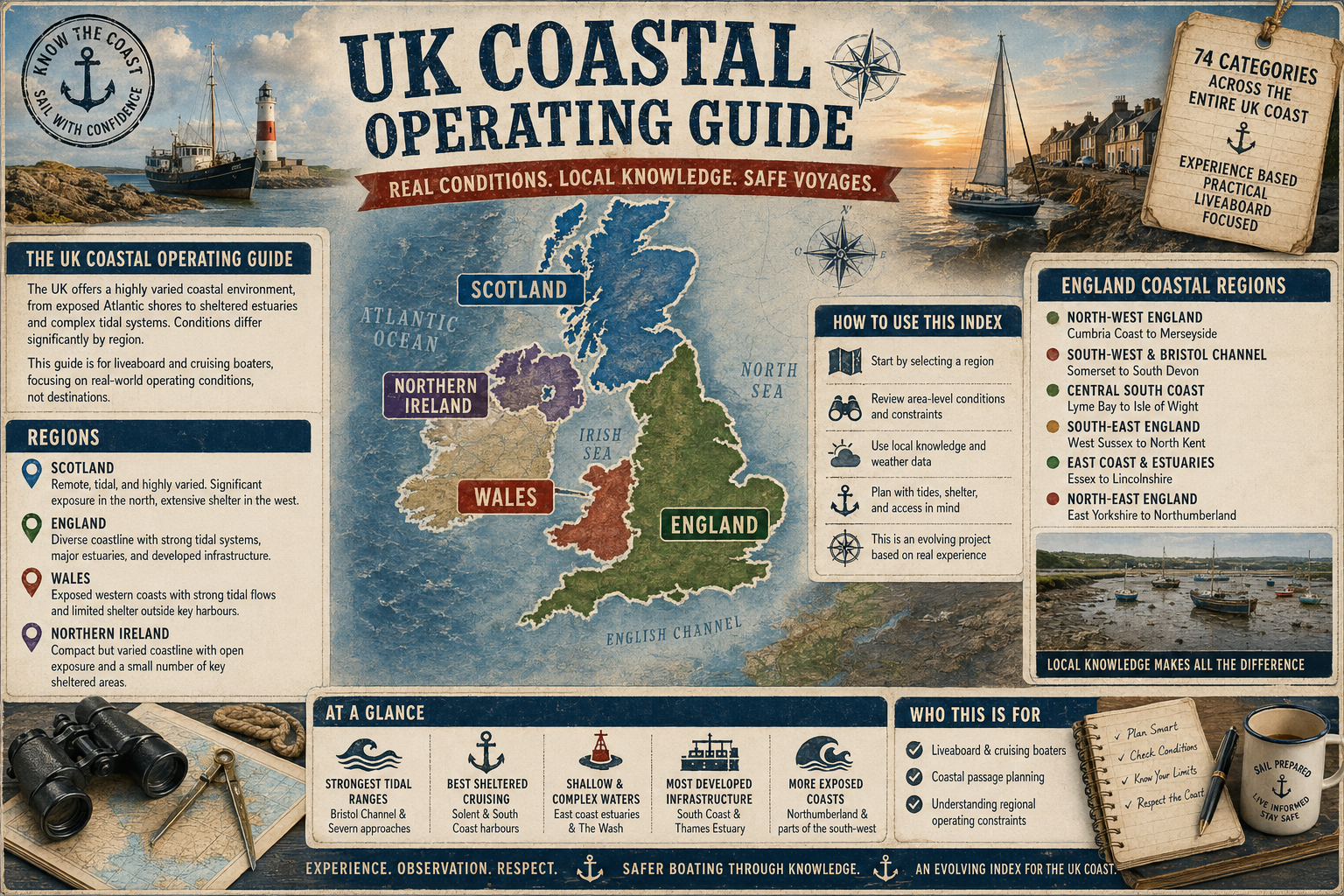
- The UK Coastal Operating Guide
- Coastal Traditions & Maritime Culture of Britain and Northern Ireland
- Coastal Myths & Legends of Britain & Northern Ireland
Comments