




Pilchard fisheries and Atlantic harbour traditions
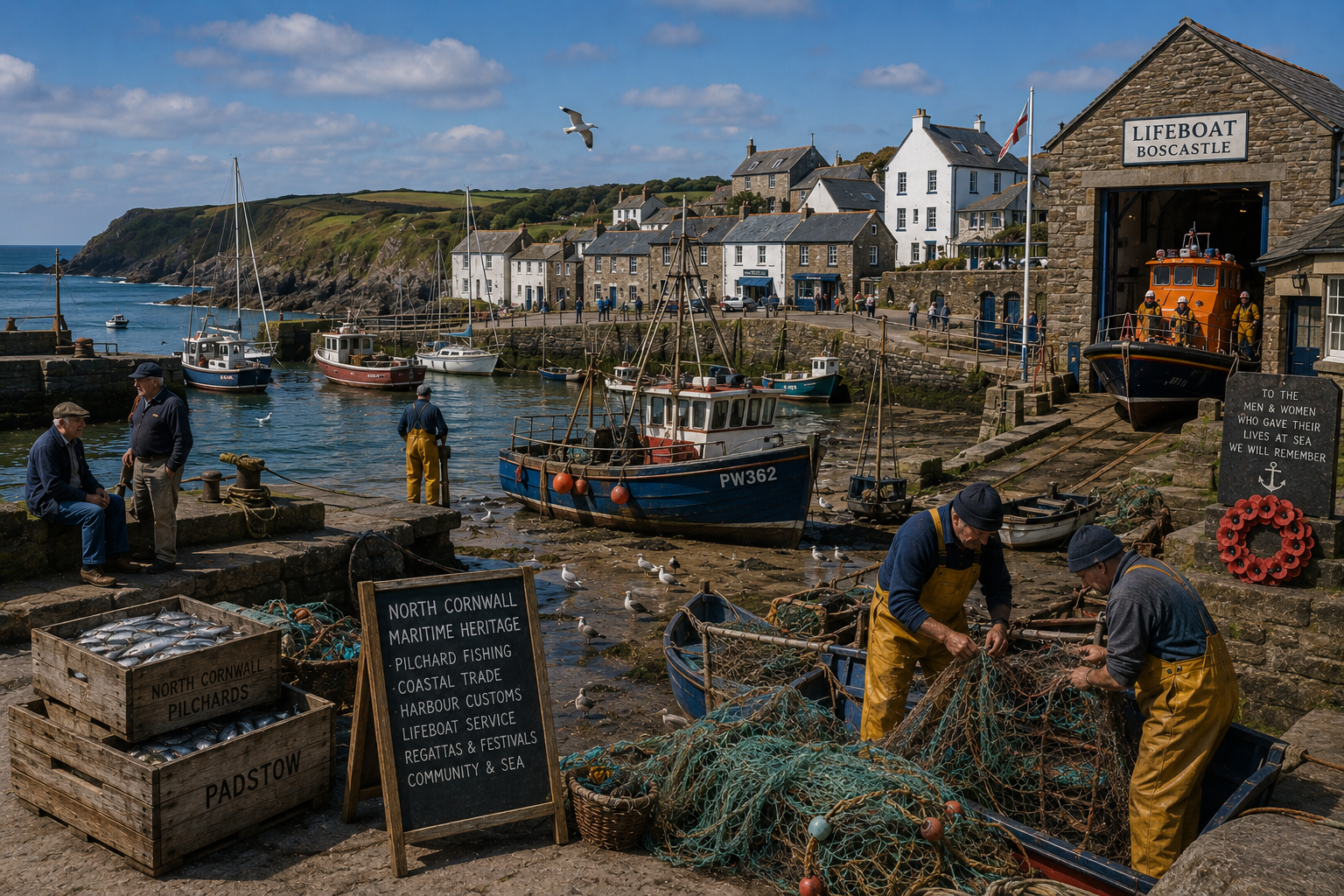
The maritime character of North Cornwall has long been shaped by its exposure to the Atlantic and by a chain of small harbours serving fishing, coastal trade and local navigation. From the Camel Estuary and Padstow Bay westwards towards Boscastle, Port Isaac and Bude, communities developed around practical engagement with often demanding sea conditions. The cultural continuity of the coast remains strong, particularly where fishing activity, harbour management and lifeboat service continue to provide a direct connection with earlier maritime practice.
Pilchard fishing formed one of the principal coastal industries of North Cornwall from the medieval period through the nineteenth century. Seasonal shoals moving along the Cornish coast supported fisheries based on seine nets operated from both boats and shore stations. Numerous coves and small harbours participated in this trade, although the scale and methods varied locally. Cured pilchards were exported to markets in southern Europe, while associated industries included net making, fish processing and the maintenance of storehouses and cellars close to the waterfront. Remains of fish cellars and related structures survive at several coastal settlements and provide visible evidence of the former importance of the fishery.
Alongside fishing, coastal trade was significant. Before the development of modern transport links, small vessels carried agricultural produce, coal, lime, timber and other cargoes between Cornish ports and destinations around the Bristol Channel, the Irish Sea and the south coast of Britain. The Camel Estuary supported commercial navigation to inland quays, while harbours such as Bude developed facilities linked to local industry and coastal shipment. Seamanship in these waters required familiarity with Atlantic swell, shifting sandbanks and strong tidal streams around harbour entrances and headlands. Knowledge of local conditions was often transmitted through fishing families and working boat crews rather than through formal instruction alone.
Harbour customs remain an important aspect of maritime life. Many North Cornwall harbours originated as small tidal refuges where access depended upon the state of tide and prevailing weather. Practical traditions associated with launching, mooring and maintaining vessels developed in response to these constraints. In several ports, fishing boats were historically hauled clear of the water between tides, a practice that survives in modified form where drying harbours remain in use. Harbour authorities and local boat owners continue to observe procedures shaped by the limitations of narrow entrances, tidal ranges and exposed approaches.
Lifeboat service forms another enduring element of coastal culture. The Atlantic coast has experienced numerous wrecks and maritime casualties, particularly during periods of heavy weather. Volunteer lifeboat crews became established in several communities and remain closely associated with local identity. The work of rescue services is commemorated through memorials, harbour records and community events, reflecting the long-standing expectation that seafarers assist vessels and crews in difficulty. Although modern navigation and safety equipment have altered operating conditions, the practical ethos surrounding maritime rescue retains considerable continuity.
Regattas and harbour celebrations occur at a number of North Cornwall ports, though their form differs between communities. These events generally emphasise local boating activity, rowing, sailing and working-waterfront traditions rather than elaborate ceremonial observances. In some locations they preserve links with fishing fleets and harbour occupations, while elsewhere they function primarily as community gatherings centred on the water. Variations between ports are considerable, and no single pattern applies across the entire coastline.
Elements of maritime food culture also reflect the historic importance of fisheries. Pilchards, later more commonly referred to as sardines in commercial contexts, remain associated with the Cornish coast. Contemporary fishing activity includes shellfish and mixed inshore fisheries, while local seafood continues to feature prominently in harbour communities. Although the economic structure of the industry has changed substantially, working fishing vessels remain a familiar presence in several North Cornwall ports.
Modern continuity is evident in active harbours, yacht moorings within the Camel Estuary, commercial fishing operations and the ongoing maintenance of traditional waterfront infrastructure. Boat repair, marine services and volunteer maritime organisations continue practices rooted in earlier patterns of coastal employment. While the scale of fishing and coastal trade is reduced compared with the nineteenth century, the connection between community life and the sea remains visible in daily harbour activity and in the management of tidal waterfronts.
For the navigator, North Cornwall presents more than a sequence of Atlantic harbours and estuaries. Its present character remains closely linked to generations of fishing, rescue work, coastal trade and harbour management. The persistence of these activities, adapted to modern conditions, continues to shape the maritime identity of the coastline.
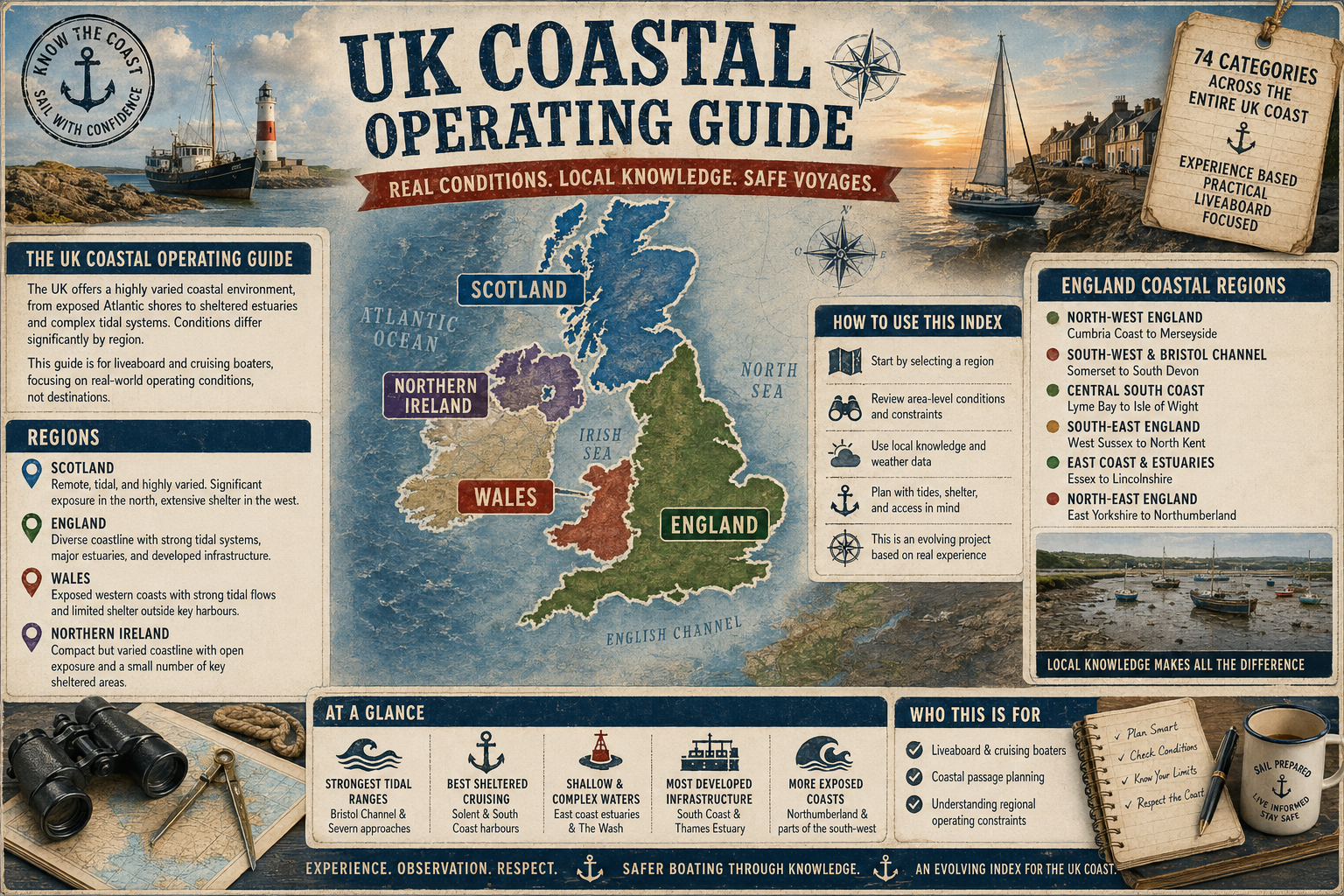
- The UK Coastal Operating Guide
- Coastal Traditions & Maritime Culture of Britain and Northern Ireland
- Coastal Myths & Legends of Britain & Northern Ireland
Comments