




Whitby Fishing Culture & Maritime Apprenticeship Traditions
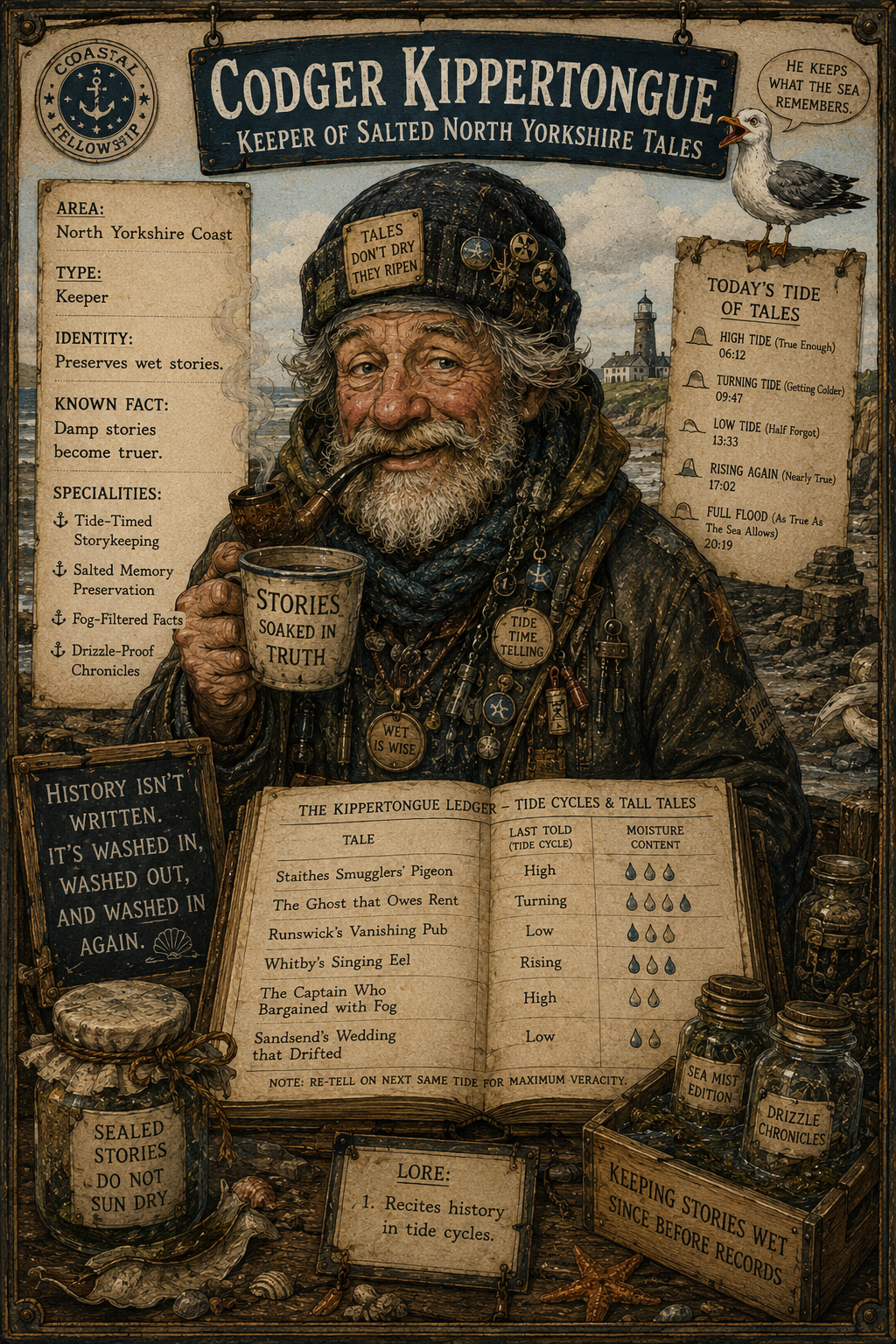
The maritime character of the North Yorkshire Coast has long been centred upon the working ports of Whitby, Staithes, Runswick Bay and, to a lesser extent, Scarborough at its southern approach. Among these, Whitby has maintained one of the strongest associations with fishing, seafaring and the practical transfer of maritime skills between generations. The coastline offers comparatively few natural havens, and the combination of exposed North Sea conditions, tidal streams and narrow harbour entrances has traditionally required sound local knowledge. Coastal communities consequently developed customs closely tied to the demands of fishing, navigation and harbour management rather than to commercial display or ceremonial practice.
Whitby became established as an important fishing and ship-owning port from the eighteenth century onwards, although commercial emphasis varied over time between fishing, shipbuilding, whaling and merchant trade. The harbour supported fleets working the North Sea fisheries, with catches including cod, haddock, herring, crab and lobster according to season and changing market conditions. Smaller ports such as Staithes retained mixed inshore fisheries, where cobles and other beach-launched craft operated from limited harbour facilities or directly from the foreshore when conditions permitted. Practical knowledge of tides, weather and local seabed conditions formed an essential part of everyday seamanship along this coast.
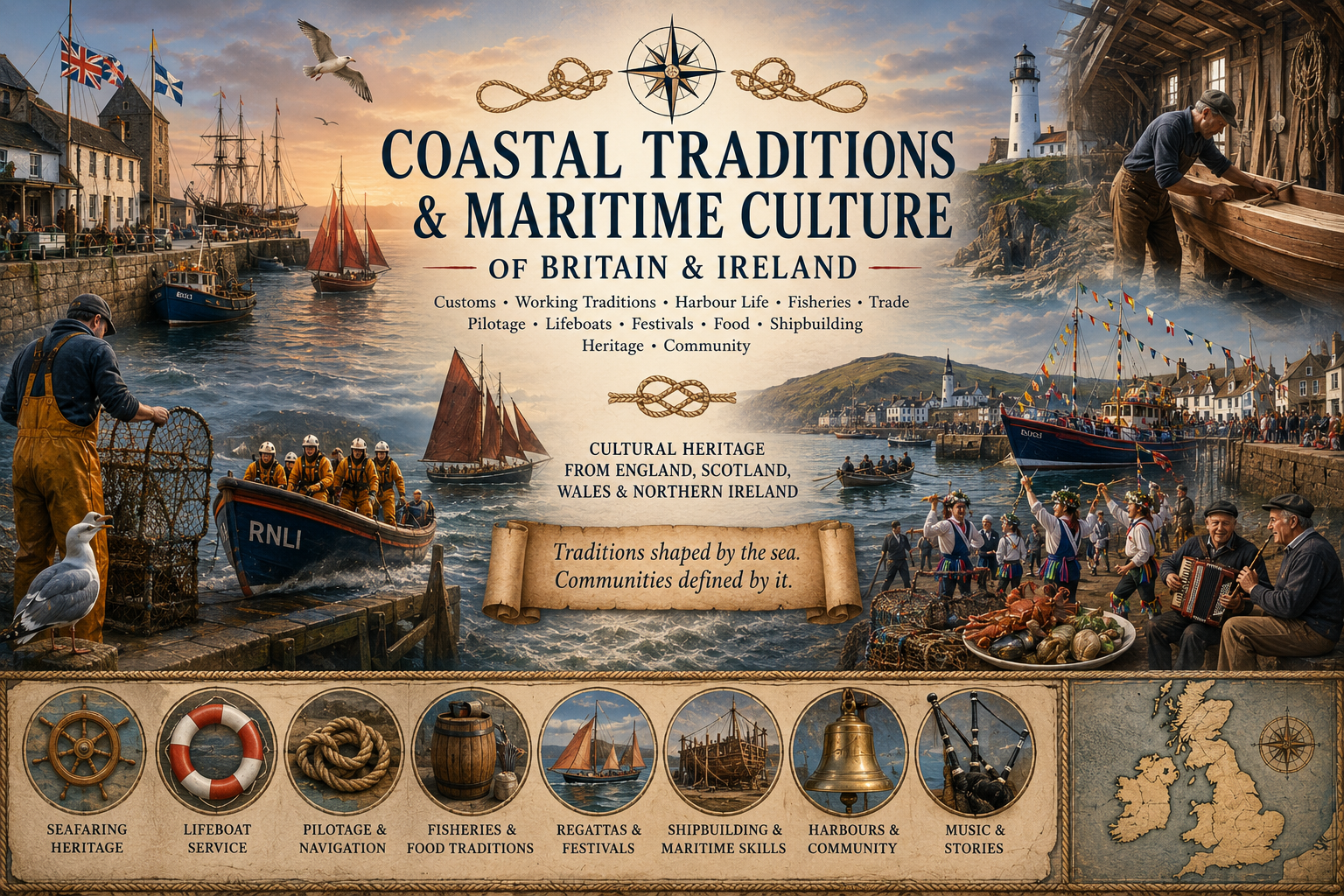
A notable feature of Whitby's maritime culture has been the tradition of apprenticeship within fishing families and associated marine trades. Young men commonly entered service aboard local vessels under experienced skippers, learning navigation, gear handling, maintenance and harbour routine through practical employment rather than formal instruction alone. While the structure of apprenticeship altered during the twentieth century with regulatory and educational changes, the principle of acquiring seamanship through close association with established crews has remained a recognisable element of the local fishing community. Similar patterns could be found elsewhere on the coast, although their extent varied between individual ports and periods.
Boatbuilding and repair also formed an important supporting industry. Whitby developed a reputation for constructing robust wooden vessels suited to North Sea conditions, while smaller yards elsewhere along the coast undertook repairs and maintenance for local fishing craft. Even where commercial boatbuilding has declined, slipways, former yards and working quays continue to illustrate the close relationship between harbour infrastructure and local employment. Rope work, net mending and engine maintenance likewise remained integral parts of the working waterfront, often undertaken within family businesses or small marine workshops.
Harbour routine has traditionally reflected both the physical limitations of the coast and the seasonal demands of fishing. Movements through Whitby Harbour have long been governed by tides and the condition of the harbour entrance, particularly during periods of heavy easterly weather. Fishing vessels commonly timed departures and returns to coincide with favourable water levels and market requirements. Similar considerations applied at Staithes and Runswick Bay, where launching and recovery demanded careful judgement of sea state as well as local familiarity with harbour approaches. Such practices continue to influence operational routines even where vessel types and fishing methods have changed.
Among the most enduring public expressions of maritime life are the blessing of the fishing fleet and associated harbour services held in Whitby. These observances recognise both the economic importance of the sea and the hazards traditionally faced by local crews. Their precise form has altered over time, and participation varies, but they continue to provide a visible connection between contemporary fishing communities and earlier maritime practice. Local regattas and rowing events have also been associated with several coastal settlements, although their emphasis differs between communities and should not be regarded as uniform across the entire coastline.
The work of the lifeboat service has become closely interwoven with coastal identity. Whitby, Scarborough and other stations along the North Yorkshire Coast have long histories of rescue operations in waters where rapidly changing weather and an exposed lee shore have presented persistent risks to fishing vessels, merchant shipping and recreational craft alike. Community support for lifeboat institutions remains a practical aspect of local maritime culture rather than solely an historical association.
Modern fisheries are smaller than in previous generations, yet crab and lobster fishing continues to support working harbours along much of the coast. Commercial activity now exists alongside leisure boating, visiting yachts and charter operations, but active fishing vessels retain priority within many harbour areas. Skills associated with seamanship, gear handling and local pilotage continue to be passed through families, professional training and long experience on the water, preserving elements of the older apprenticeship tradition in contemporary form.
Throughout the North Yorkshire Coast, maritime customs remain closely connected with the practical use of the sea rather than with formal commemoration. Although individual ports differ in scale and emphasis, Whitby's fishing culture, its tradition of learning through service afloat, and the continued operation of working fisheries provide a clear thread of continuity linking present-day harbour activity with the longstanding maritime character of this section of the Yorkshire coast.
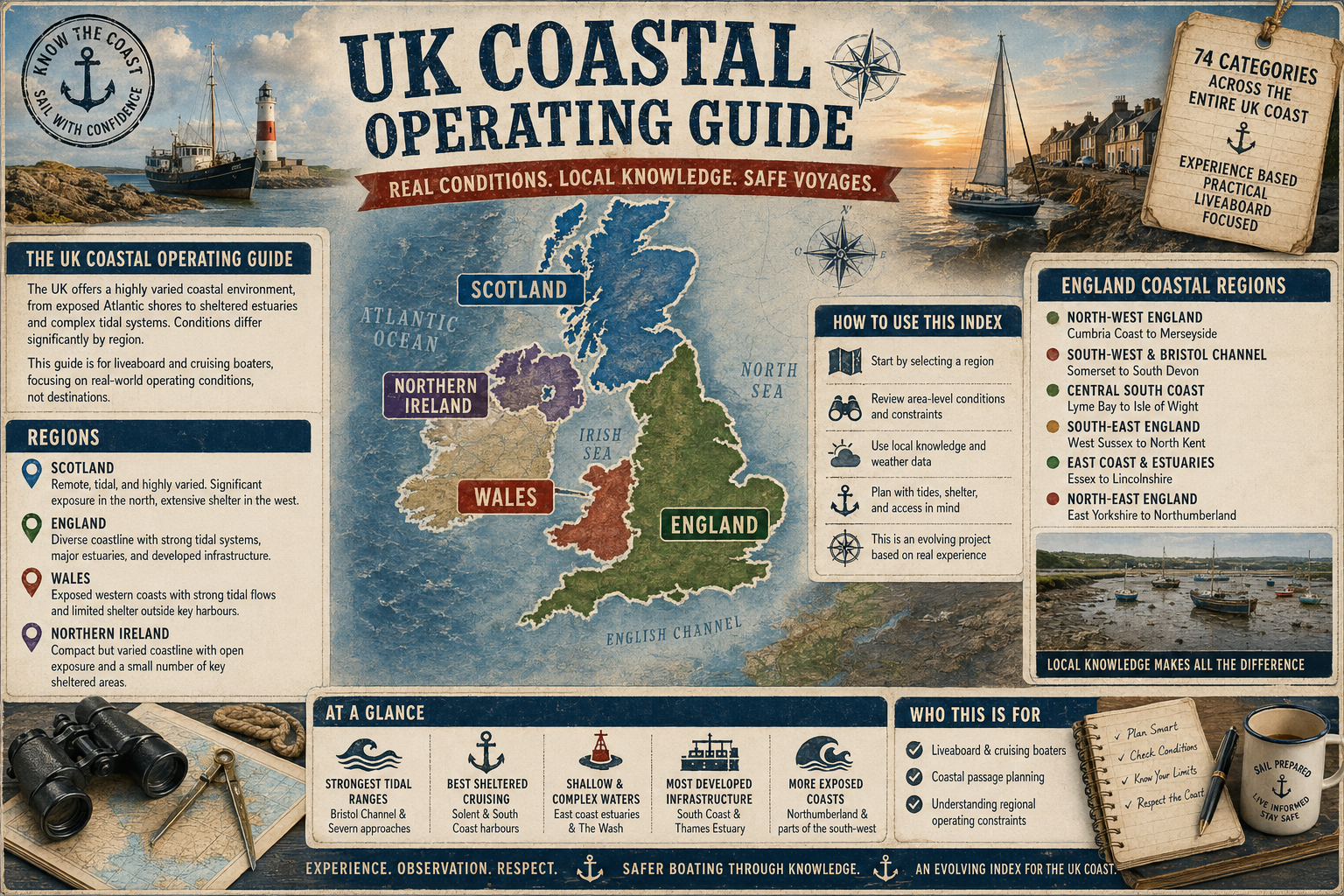
- The UK Coastal Operating Guide
- Coastal Traditions & Maritime Culture of Britain and Northern Ireland
- Coastal Myths & Legends of Britain & Northern Ireland
Comments