



Coble Fishing, Holy Island Crossings & RNLI Heritage
The Northumberland Coast retains one of the strongest continuities of traditional maritime culture found around the shores of Britain. Its character has long been shaped by open beaches, small fishing harbours, tidal islands and exposed North Sea conditions rather than by large commercial ports. Coastal communities developed practical working methods suited to shallow inshore waters, shifting sand and frequent surf, many of which remain evident despite the decline of commercial fishing. Local identity continues to be closely associated with the sea, particularly through the survival of coble fishing, the distinctive tidal crossings to Holy Island, and an enduring lifeboat tradition maintained by the Royal National Lifeboat Institution.
Fishing formed the principal occupation in many settlements including Seahouses, Craster, Boulmer and Amble, each adapting to local conditions. The Northumbrian coble became the defining working craft of the district. Its broad beam, shallow draught and high bow allowed crews to launch directly from beaches or negotiate harbour entrances exposed to swell. Designed for line fishing, netting and the seasonal collection of shellfish, the coble remained in widespread commercial use long after similar beach-launched craft had disappeared elsewhere. Although modern vessels now undertake much of the commercial catch, traditional cobles are still worked in limited numbers and continue to represent a living rather than purely historic element of the coastline.
Inshore fisheries have varied with locality and season. Lobster and crab fisheries have remained especially important, supported by fleets operating from small harbours where pots are still stacked prominently on quays. White fish were formerly taken in greater quantities, while salmon fisheries were historically associated with river mouths including the Tweed and Coquet, although methods and regulations have altered considerably over time. Fish curing also contributed to the local economy, with Craster becoming particularly associated with smoked herring. While production has become smaller in scale, the connection between local fisheries and food traditions remains evident.
The tidal approaches to Holy Island have produced customs unlike those elsewhere on the English coast. Access across the sands depends entirely upon the state of the tide, and safe passage has long relied upon local knowledge of channels, weather and timing. Pilgrims, residents, fishermen and traders historically crossed the causeway route or earlier paths over the sands according to tidal conditions. The practice survives today under modern management, although the essential requirement to respect the tide remains unchanged. Mariners navigating the surrounding waters have likewise regarded the island's drying banks and changing channels with appropriate caution.
Harbours throughout the district remain comparatively small and continue to reflect their original working purpose. Many developed around natural inlets subsequently improved by piers or breakwaters rather than extensive commercial dock systems. Harbour routines remain closely linked to fishing activity, maintenance of small craft and local seamanship. Boat handling, gear preparation and the launching or recovery of vessels continue to form part of daily life in several communities, even where employment has diversified beyond the fishing industry.
The Northumberland Coast also possesses a notable lifeboat tradition. Exposure to strong onshore winds, rocky outcrops and extensive reefs led to numerous historic wrecks, encouraging the early establishment of organised lifesaving services. RNLI stations at places including Seahouses and Amble continue this long-standing commitment to rescue at sea, while local support for volunteer crews remains a recognised feature of coastal life. Earlier rescue methods, involving rocket apparatus, shore-based assistance and local seamanship, have largely passed into history, but they form an acknowledged part of community memory in many settlements.
Maritime gatherings remain generally practical rather than elaborate. Harbour events, local regattas and lifeboat days continue in several locations, although their scale and programme vary between communities and from year to year. Such occasions commonly recognise fishing, seamanship and volunteer rescue services rather than commemorating purely ceremonial traditions. They provide continuity for communities whose relationship with the sea remains active, even where commercial dependence has reduced.
Boatbuilding once supported many of the district's fishing communities, with local yards constructing and repairing cobles and other small working craft using designs refined over generations. Although specialist builders are now few, knowledge of traditional hull forms continues through restoration projects, museums and the maintenance of surviving vessels. Skills associated with net making, rope work and practical boat maintenance likewise persist among fishermen, sailing organisations and local volunteers, though often in more limited form than formerly.
Present-day maritime culture along the Northumberland Coast remains closely tied to everyday use of its waters rather than historical interpretation alone. Fishing vessels continue to work inshore grounds, tidal awareness governs movement to and from Holy Island, and volunteer lifeboat crews maintain an uninterrupted tradition of coastal rescue. Together these continuing practices preserve a distinctive maritime character that remains firmly connected with the working coastline and the practical demands of navigation in North Sea conditions.
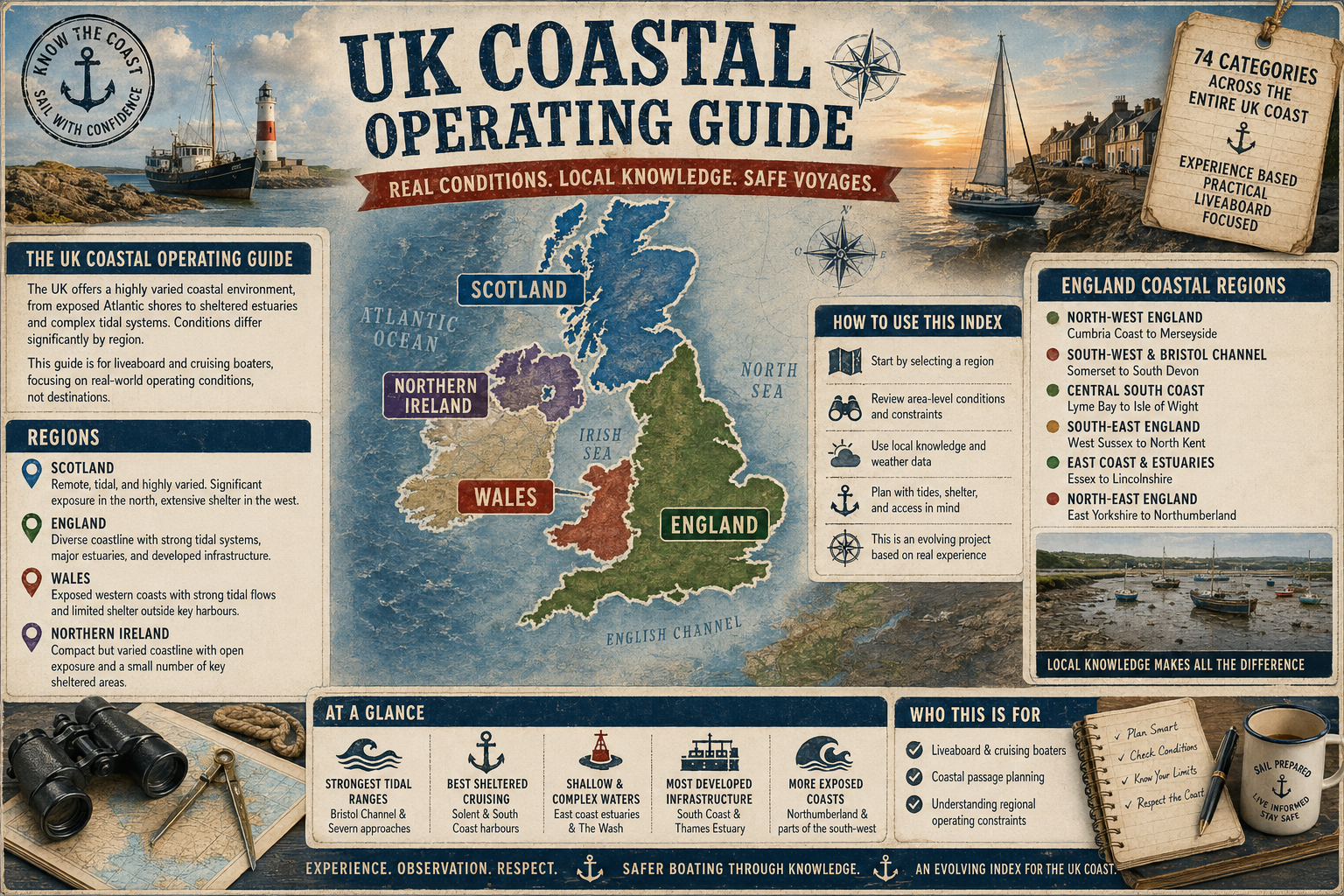
- The UK Coastal Operating Guide
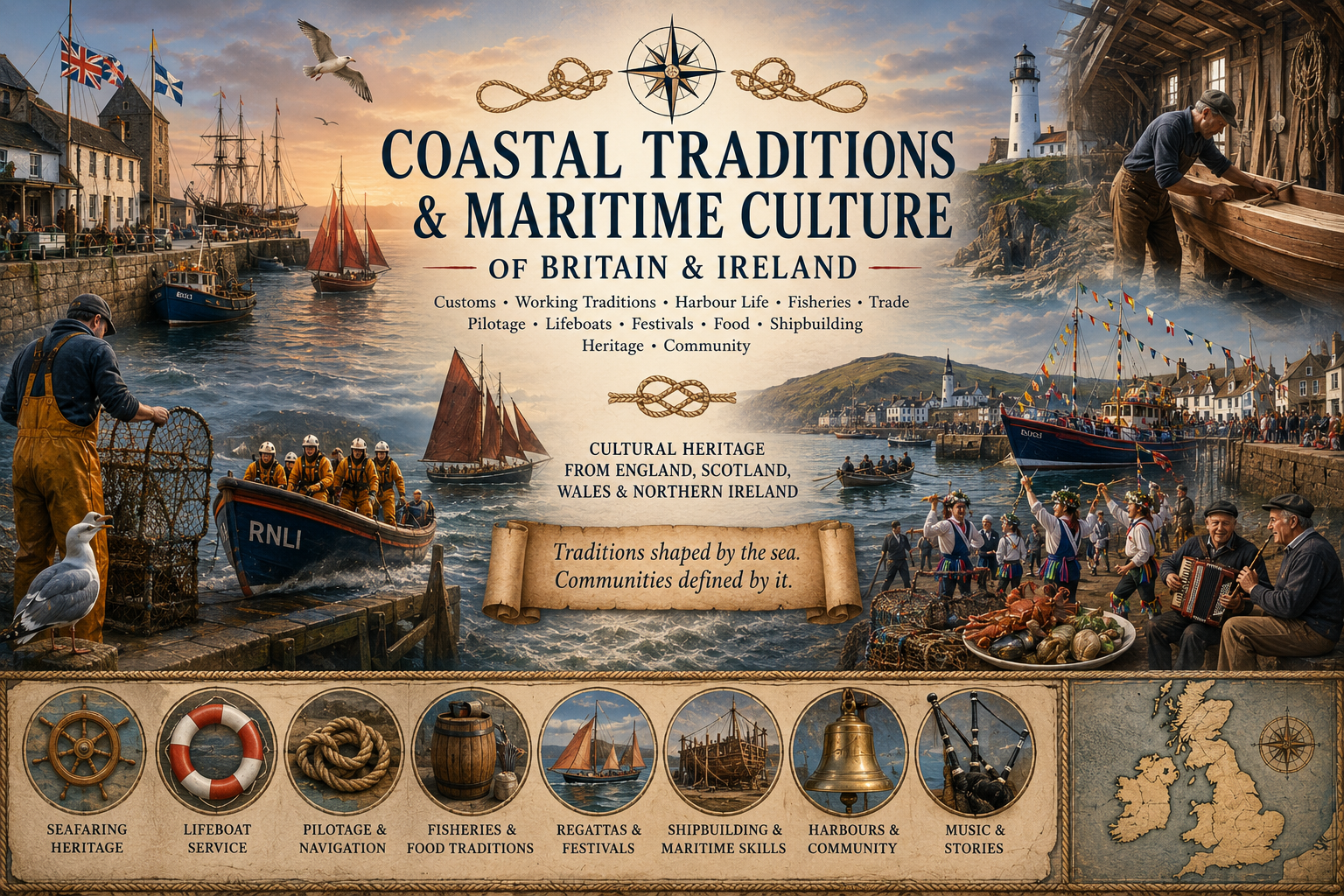
- Coastal Traditions & Maritime Culture of Britain and Northern Ireland
- Coastal Myths & Legends of Britain & Northern Ireland
Comments