



Central Solent Coastline - Area 32
Overview
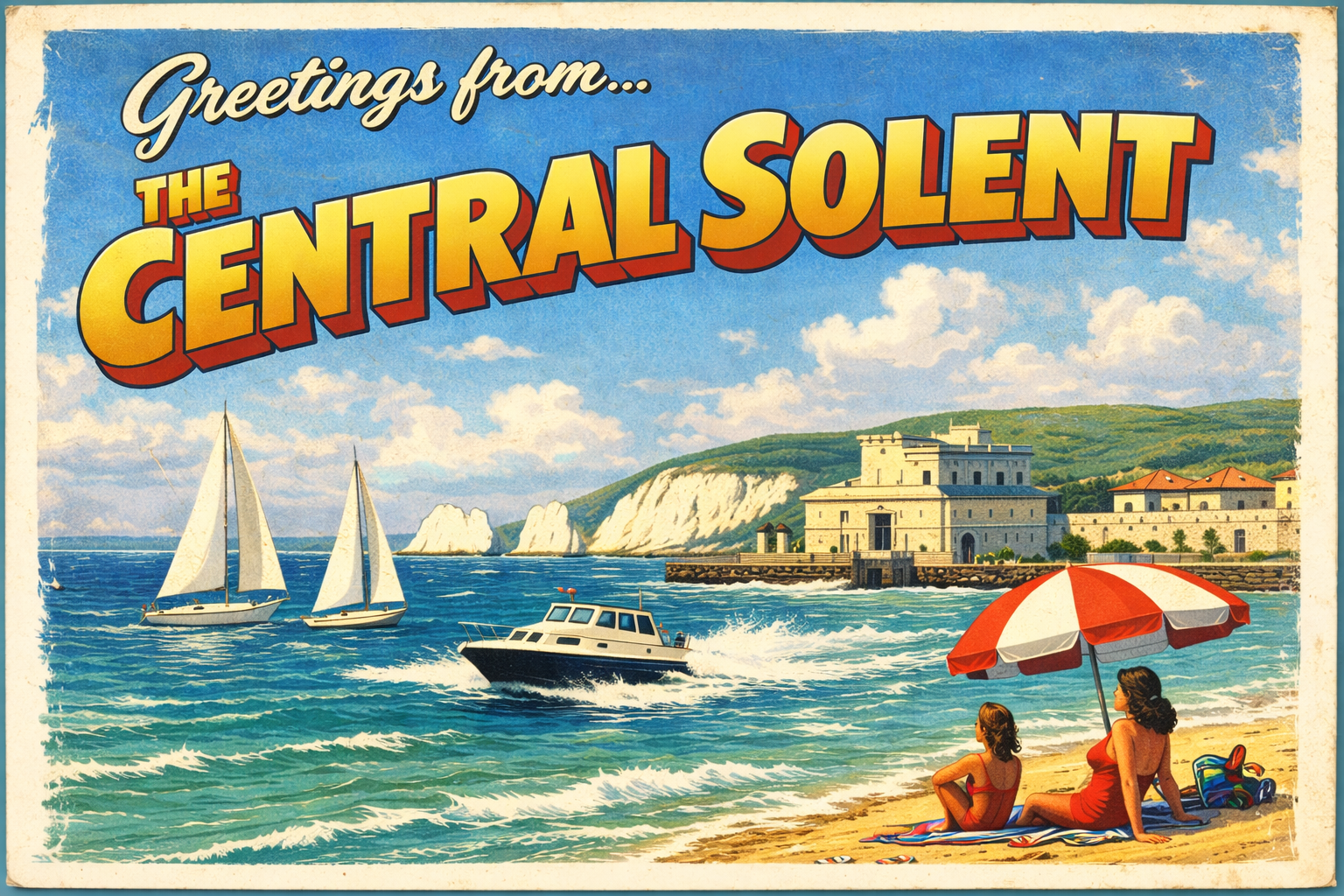
The Central Solent coastline is an area known for its varied conditions and its proximity to major maritime routes. The coastline, while offering several sheltered areas, can also be exposed to stronger winds and tides. Liveaboard boaters navigating this region will find some sheltered inlets but must remain cautious of shifting weather patterns.
The region stretches between key points, offering access to several bays and estuaries, but is also subject to the busy traffic of both commercial and recreational vessels. Navigational awareness and preparation are crucial for liveaboard boaters, as the water can become busy, particularly in the summer months.
Local Operating Context (for Liveaboard Boaters)
For liveaboard boaters, the Central Solent presents a mix of sheltered spots and more exposed stretches. The area is often busiest around the main harbours, so securing a suitable anchorage can be challenging. Tidal currents may also play a role in limiting options, particularly around certain headlands and estuaries.
The Solent's popularity as a sailing destination means boaters can often find themselves in proximity to larger vessels, which requires heightened vigilance. Navigational aids are generally well-maintained, but local knowledge is helpful in avoiding hazards such as sandbanks and shallows.
Access to the shoreline varies along the coastline. In more exposed areas, it may be difficult to safely access land, whereas sheltered inlets provide more secure landings for smaller boats. In all cases, boater caution is recommended when attempting shore interactions, particularly in tidal zones.
Weather patterns should be closely monitored, as conditions can change rapidly. Boat traffic is generally heavy in some parts, particularly near larger settlements, which may pose risks for smaller, liveaboard vessels.
Typical Conditions
- Winds can be moderate to strong, particularly in the open stretches of the Solent.
- Tidal currents may vary, depending on the location and time of day.
- The region can be busy, with high volumes of recreational and commercial traffic.
- Exposure to the elements is common in more open areas, particularly around headlands.
Access & Shelter
- Sheltered anchorages are available, though they can be limited in some areas.
- Some inlets and bays offer calm waters for mooring, though tidal flows may complicate access.
- Land access is restricted in several regions, particularly along exposed coastlines.
- The area offers no immediate shelter in some parts, especially in adverse weather conditions.
Shore Interaction
- Shore access may be difficult in more exposed locations.
- Many areas are sparsely populated, offering limited facilities for boaters on land.
- The tides can greatly affect access, particularly around estuaries and beaches.
- Local ports may offer facilities, though many are more geared towards transient traffic rather than long-term mooring.
Risk Factors
- Rapid weather changes can create sudden challenges for liveaboard boaters.
- Strong tidal currents in certain areas pose risks to navigation and anchoring.
- Heavy boat traffic, especially in the summer months, can lead to congestion and potential collisions.
- Shallow areas and sandbanks should be approached with caution.
Overall Character
The Central Solent coastline offers a varied experience for liveaboard boaters, with sheltered waters mixed in with more exposed stretches. While access to the land may be limited, there are several areas suitable for short-term stops. However, the region’s popularity and tidal variations mean that careful planning is essential for those considering spending extended periods on the water.
Notable Locations
-
Southampton Water – A large inlet offering sheltered moorings and access to the city, though it is busy with commercial traffic.
-
Newtown Creek – A relatively quiet area offering a sheltered anchorage, although tidal conditions must be carefully monitored.
-
The Needles – A dramatic and exposed headland, offering scenic views but limited shelter for liveaboard vessels.
-
Langstone Harbour – A natural harbour with a mix of sheltered anchorages, though tidal currents can present challenges for mooring.
Practical Mooring & Anchorage Locations
Southampton Water
- Type: Estuary / Harbour
- Shelter: Well protected from W through NE winds depending on position within the waterway
- Exposure: Becomes choppy in strong S or SE winds; wakes from heavy commercial traffic
- Key Constraints: Strong tidal streams in the main channel; high density of commercial shipping and pilotage operations
- Traffic Level: High
- Liveaboard Suitability: High
- Notes: Extensive sheltered mooring options but primarily within managed or designated areas. Requires careful attention to shipping lanes and ferry movements.
Portsmouth Harbour
- Type: Harbour
- Shelter: Excellent shelter from most wind directions, particularly outside the harbour entrance
- Exposure: Outer approaches can be uncomfortable in strong southerlies or easterlies
- Key Constraints: Naval and commercial traffic restrictions in parts of the harbour; busy channel access
- Traffic Level: High
- Liveaboard Suitability: High
- Notes: Large, well-established harbour with multiple marina and mooring areas. Some zones are restricted due to naval activity.
Langstone Harbour
- Type: Harbour / Estuary
- Shelter: Good protection from W through N winds
- Exposure: Exposed to E and SE winds with chop developing quickly
- Key Constraints: Extensive shallow areas and drying mudflats; strong tidal influence on access
- Traffic Level: Medium
- Liveaboard Suitability: Medium
- Notes: Offers multiple anchoring options but requires careful tidal planning. Entry and exit channels are depth-sensitive.
Hamble River
- Type: River Mooring
- Shelter: Well sheltered from most directions once inside the river
- Exposure: Lower reaches can be affected by wind-against-tide conditions
- Key Constraints: Narrow channel with strong tidal streams; busy with sailing traffic and training vessels
- Traffic Level: High
- Liveaboard Suitability: High
- Notes: One of the most established boating rivers in the Solent. Strong infrastructure but requires careful navigation at peak times.
Beaulieu River
- Type: Estuary / River Mooring
- Shelter: Very good shelter from most wind directions within the river
- Exposure: Outer entrance can be affected by swell in strong easterlies or southerlies
- Key Constraints: Privately managed river with controlled moorings; tidal access restrictions at lower states
- Traffic Level: Low
- Liveaboard Suitability: Medium
- Notes: Quiet and well-ordered mooring environment with limited congestion. Access is tidal and availability can be restricted.
Newtown Creek
- Type: Anchorage
- Shelter: Good shelter from most directions except strong northerly winds
- Exposure: Can become uncomfortable in strong northerlies due to limited fetch protection
- Key Constraints: Extensive drying areas; strict conservation management; tidal access essential
- Traffic Level: Low
- Liveaboard Suitability: Medium
- Notes: One of the quieter anchorages in the Solent with limited development. Requires careful attention to tides and holding ground.
Marine Safety & Support
HM Coastguard provides search and rescue coordination throughout the area, supported by local Coastguard Rescue Teams and RNLI lifeboat stations where established. Emergency medical facilities and essential services are generally available in the principal coastal towns and regional centres serving the area.
Coastal Guardians & Local Support
The coastal community is strengthened by organisations that share practical knowledge, support visiting boaters and help maintain the quality of information within the UK Coastal Operating Guide.
The following Coastal Guardian positions are currently available or reserved.
*** Please note: Only five (5) Guardian berths are available in this coastal area ***
⚓ Example Marine Engineering & Vessel Support
Location • Marine Engineering • Repairs & Servicing
This position is reserved for a recognised local marine engineering business providing servicing, repairs and technical support to cruising and liveaboard vessels operating within this coastal area.
Best for: Vessel maintenance and engineering support
⚓ Example Chandlery & Marine Supplies
Location • Marine Supplies • Equipment & Gear
Reserved for a local chandlery or marine supplier helping visiting boaters obtain equipment, safety gear and essential stores for safe coastal cruising.
Best for: Cruising equipment and essential stores
⚓ Example Boatyard & Marine Services
Location • Marine Services • Specialist Support
This position is reserved for a local boatyard or marine service provider offering lifting, storage, maintenance and specialist support for vessels visiting the area.
Best for: Boatyard facilities and vessel maintenance
⚓ Example Marina, Harbour & Visitor Facilities
Location • Visitor Facilities • Practical Support
Reserved for a local organisation providing practical services that support visiting boaters and contribute to the wider maritime community.
Best for: Practical local boating support
⚓ Example Local Maritime Services & Coastal Knowledge
Location • Coastal Knowledge • Marine Information
This position recognises an organisation whose local knowledge and practical contribution help strengthen the quality of information available to visiting mariners.
Best for: Local knowledge and community support
Status:Five (5) Berths Available. Reserved for Coastal Guardians Only
Additional marine businesses, marinas and specialist services are listed within the Ship's Office.
UK Public Services & Infrastructure
Public services, healthcare, emergency response and essential facilities are available throughout the UK coastline. Provision is generally strongest in larger towns and regional centres, while remote rural and island areas may offer more limited local access.
Practical Notes for Boaters
This section will be developed over time based on direct experience and relevant contributions. The focus is on practical usefulness rather than completeness.
From the Project
Observations and notes from the ongoing boat conversion and coastal exploration project will be added here as they become available.
Related Knowledge Base
- Coastal erosion processes
- Sedimentary rock formations
- Harbour types and access
- Tidal patterns and coastal conditions
Status
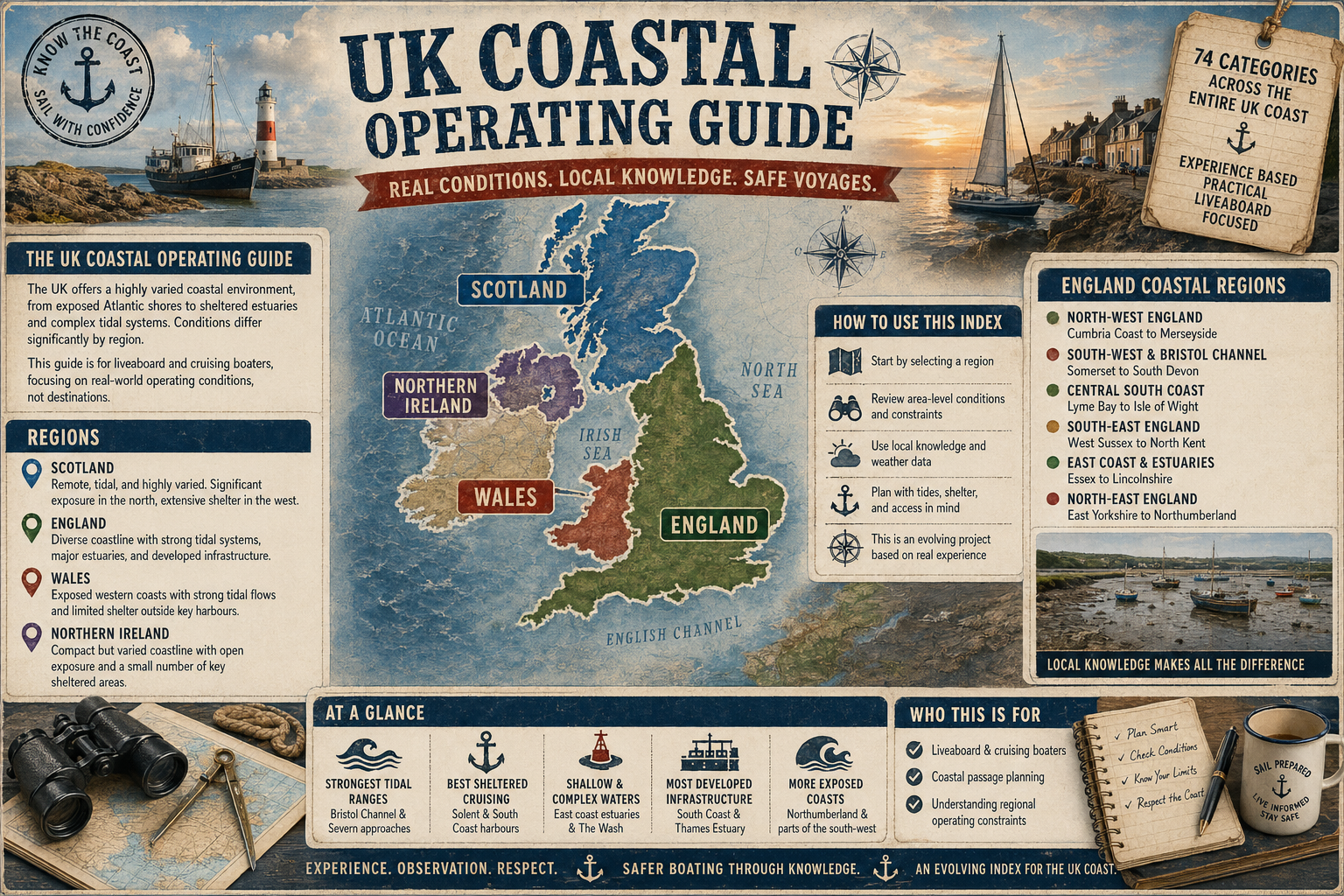
This is part of a growing coastal index. Content will be expanded over time as the project develops.