




Cowes Sailing Culture and Regatta Traditions
The Central Solent has long been recognised as the principal centre of British yachting, with maritime traditions shaped by the sheltered tidal waters between the Isle of Wight and the Hampshire shore. Although commercial and naval activity has always been present elsewhere within the Solent, the waters surrounding Cowes and the Medina estuary have developed a distinct identity founded upon organised sailing, yacht design and practical seamanship. Strong tidal streams, confined channels and heavy seasonal traffic have encouraged a disciplined approach to navigation that remains characteristic of the area.
The Medina estuary has served as the maritime focus of the district for centuries. Cowes and East Cowes developed as working ports handling coastal trade, ship repair and local industries, while ferries maintained regular communication with Southampton and the mainland. Timber, agricultural produce and manufactured goods passed through the harbour alongside fishing craft and small trading vessels. During the nineteenth century the expansion of yacht ownership transformed the waterfront, bringing increasing demand for specialist boatbuilding, sailmaking, chandlery and marine engineering. Commercial shipping gradually became less prominent, but the estuary retained its practical function as a harbour supporting both industry and navigation.
Boatbuilding became one of the defining occupations of the Central Solent. Numerous yards along the Medina produced sailing yachts, racing craft, launches and working vessels, contributing significantly to advances in yacht construction and naval architecture. The area became associated with successive developments in hull design, rigging and marine engineering, many of which influenced yacht racing well beyond the Solent. While ownership and technology have changed, the concentration of builders, repair yards and marine specialists continues to distinguish the estuary from many other sections of the south coast.
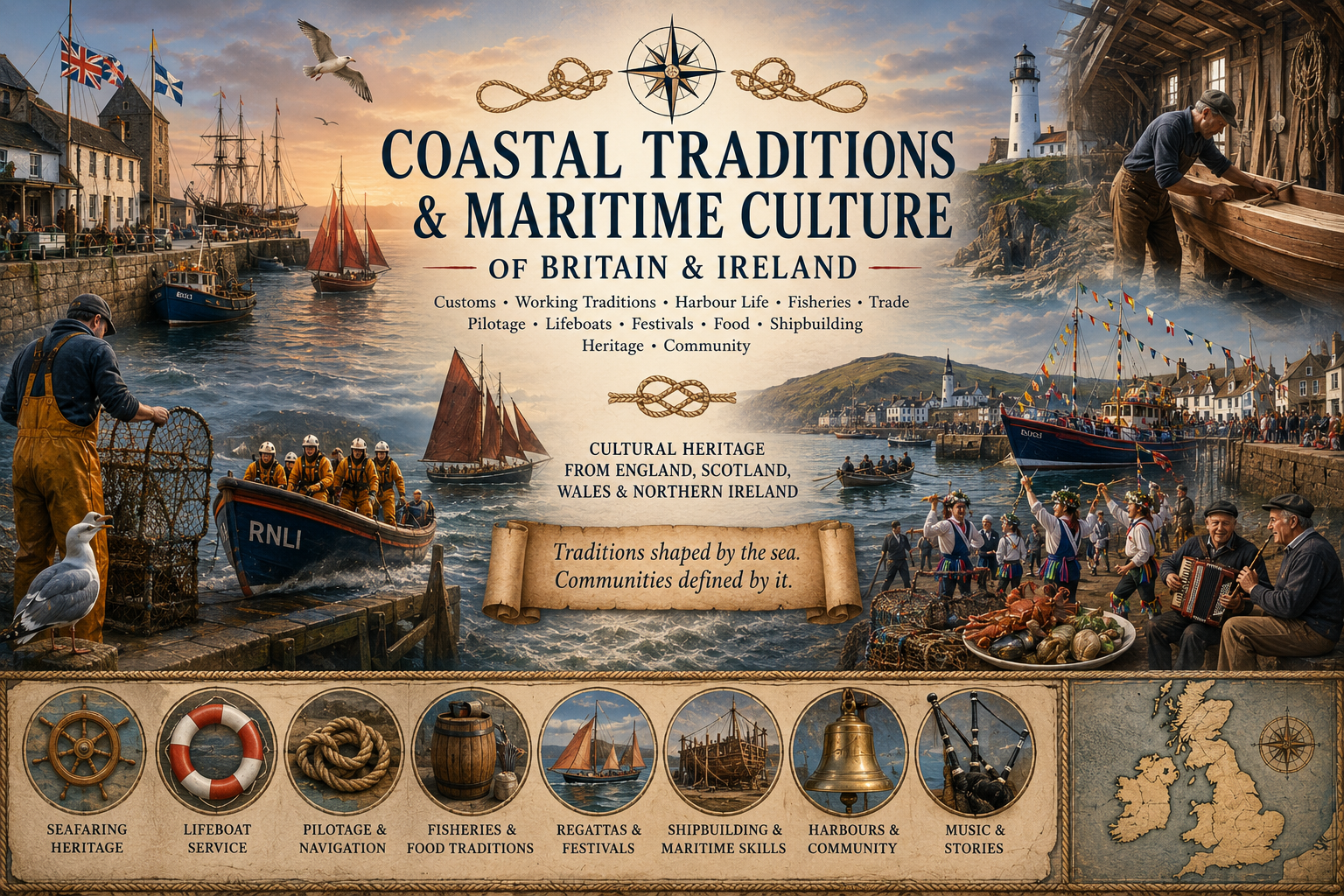
Sailing clubs have exercised an equally enduring influence upon local maritime culture. Organised yacht racing expanded during the nineteenth century, establishing Cowes as the principal venue for competitive sailing in Britain. Cowes Week remains the best-known expression of this tradition, combining long-established racing programmes with harbour procedures that have become familiar to successive generations of local crews and visiting yachts. Other regattas, club races and class championships occupy much of the sailing season, reflecting a pattern of organised competition that extends across a wide range of vessels rather than being confined to a single event.
The practical customs associated with racing have become embedded in everyday harbour life. Visiting yachts commonly prepare for tidal gate timings, race starts and crowded mooring areas, while local crews retain detailed knowledge of shifting currents, wind effects and the interaction of commercial traffic with racing fleets. The Central Solent's reputation for busy waters has encouraged close cooperation between harbour authorities, race organisers and mariners. Established conventions governing navigation during racing periods remain an important aspect of local seamanship, although they operate within modern regulations rather than informal custom.
Despite the prominence of competitive sailing, the Central Solent has never been exclusively devoted to yachts. Cross-Solent ferry services continue to form part of the area's daily rhythm, particularly between Southampton and East Cowes, maintaining routes that have linked communities for generations. Harbour tugs, pilot launches, maintenance craft and commercial vessels share the same waters as racing fleets, producing an environment in which working navigation and recreational sailing exist alongside one another. Fishing survives on a comparatively modest scale, with small inshore craft operating where conditions and local markets permit, although it no longer defines the character of the estuary as it once did.
Modern continuity is especially evident in the concentration of sailing schools, yacht clubs, marine businesses and specialist services supporting both local and visiting craft. Winter refits, commissioning in spring and organised racing throughout the summer continue annual patterns that are now firmly established. Lifeboat services, harbour patrols and volunteer organisations contribute to safe navigation while reinforcing longstanding traditions of practical assistance on the water. Although equipment and vessel design have evolved considerably, many everyday routines remain recognisable to earlier generations of Solent sailors.
The Central Solent therefore retains a maritime culture distinguished by organised sailing rather than by large-scale commercial activity. Boatbuilding, competitive yacht racing, ferry operations and disciplined harbour practice continue to define its identity. Together these traditions maintain the Central Solent as a working stretch of tidal water where modern recreational sailing remains closely connected with established maritime skills, local knowledge and the practical requirements of navigation.
- The UK Coastal Operating Guide
- Coastal Traditions & Maritime Culture of Britain and Northern Ireland
- Coastal Myths & Legends of Britain & Northern Ireland

Comments