





Flat-Bottomed Coastal Craft and Bristol Channel Trading Traditions
The Somerset coast, extending from the Severn Estuary to the approaches of the Quantock shore, has long been shaped by the conditions of the inner Bristol Channel. Strong tidal streams, extensive mudflats and a marked tidal range governed both navigation and the character of local seafaring. Maritime activity was concentrated in small estuarial ports and tidal havens rather than in deep-water anchorages, and local practice developed accordingly. Flat-bottomed and shallow-draught craft were formerly common throughout Bridgwater Bay and the lower reaches of the Parrett and Axe, suited to drying berths, shifting channels and cargo work on soft ground.
Coastal trade formed the principal maritime employment for many Somerset communities from the eighteenth century into the early twentieth. Small ketches, sloops and trows traded between the Bristol Channel ports, South Wales, Devon and Ireland, carrying coal, limestone, cider, agricultural produce, timber and bricks. The River Parrett supported an active inland connection through Bridgwater, whose quays handled both coastal and river traffic. Vessels navigating the Parrett required local knowledge of tides and sands, and arrivals were often timed to make use of the flood tide over Stert Flats and the shifting approaches to the river mouth.
Watchet maintained a smaller but persistent maritime trade, particularly linked to mineral traffic from west Somerset. Iron ore from the Brendon Hills was exported through the harbour during the nineteenth century, while coastal shipping supplied coal and general cargoes to settlements along the shore. Harbour structures throughout the district were adapted to severe tidal conditions; many craft routinely dried alongside walls or settled upright on mud berths between tides. This pattern remained characteristic of Bristol Channel seamanship well into living memory.
Fishing activity along the Somerset coast was generally modest in scale when compared with larger Channel ports, though estuarial and nearshore fisheries remained important locally. Salmon fishing formerly operated in the Severn Estuary and lower Parrett by means of fixed nets and lave-net practice, although regulation and environmental change have reduced much of this work. Cockling and shrimping continued intermittently within Bridgwater Bay and the tidal creeks, while small inshore boats worked pots and nets from Watchet, Minehead and Porlock on a seasonal basis. Local maritime food traditions retained associations with smoked fish, laverbread from the wider Bristol Channel region, and shellfish gathered from estuarial waters where conditions permitted.
The coast also developed a strong lifeboat and rescue tradition in response to the hazards of the Channel. Burnham-on-Sea in particular became noted for its RNLI service and for the use of specialised rescue craft capable of operating across mudflats and shallow approaches. The dangerous combination of fog, tides and sandbanks off Berrow and Brean led to numerous strandings during the nineteenth century, and local lifeboat customs formed a recognised part of community life. Harbour communities retained practical observances connected with tides and weather rather than elaborate ceremonial practice, though blessing services for fishing craft and memorial events for lost seafarers have occurred at intervals in several ports.
Regattas and rowing traditions persisted in some harbours, especially where yacht clubs and local boat owners maintained seasonal use of drying moorings. Watchet and Burnham-on-Sea continue to hold sailing and boating events tied to the tidal calendar, although modern leisure activity now exceeds commercial traffic in many smaller harbours. Flat-bottomed working craft formerly common in Bridgwater Bay survive mainly through preservation efforts, museum collections and local historical societies. Surviving examples illustrate the practical construction methods associated with the upper Bristol Channel, including wide beams, shallow draughts and reinforced bottoms suited to grounding safely on mud or sand.
Modern maritime continuity along the Somerset coast is therefore moderate rather than complete. Commercial cargo traffic has largely disappeared from the smaller ports, and several former trading quays are now used chiefly by leisure craft or fishing boats. Nevertheless, tidal awareness remains central to coastal practice. Local harbour movements, mooring arrangements and small-boat operations continue to depend heavily upon tide tables and knowledge of shifting channels. In the Parrett estuary and Bridgwater Bay, the landscape itself still reflects the older working relationship between vessel, mud berth and tidal river.
The Somerset coast retains a distinctly Bristol Channel maritime character, shaped less by ocean-going navigation than by estuarial trade, difficult tides and practical seamanship in confined waters. Although much reduced from its commercial peak, elements of the older coastal culture remain visible in harbour usage, preserved craft, lifeboat institutions and the continued handling of small vessels within one of Britain’s most demanding tidal environments.
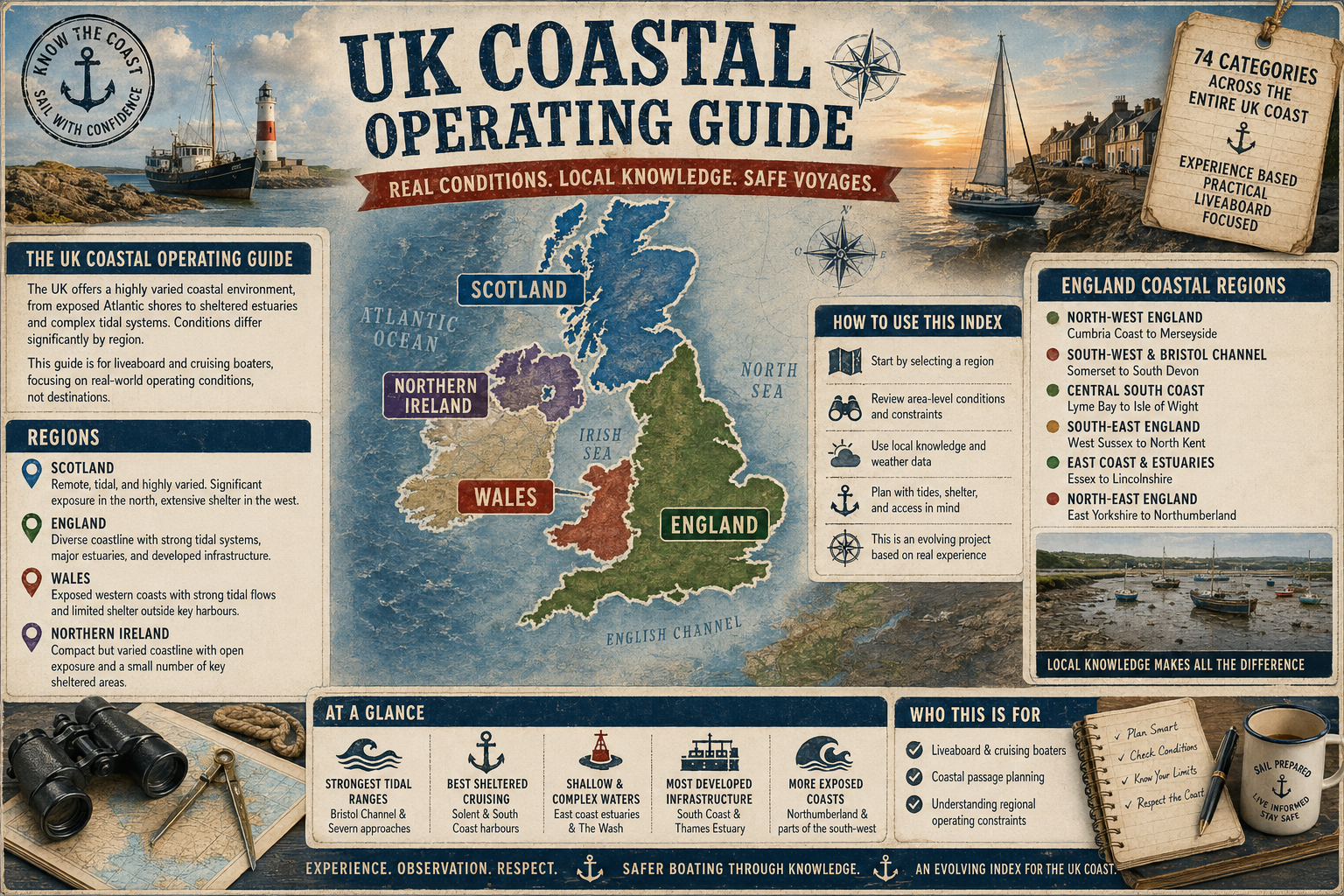
- The UK Coastal Operating Guide
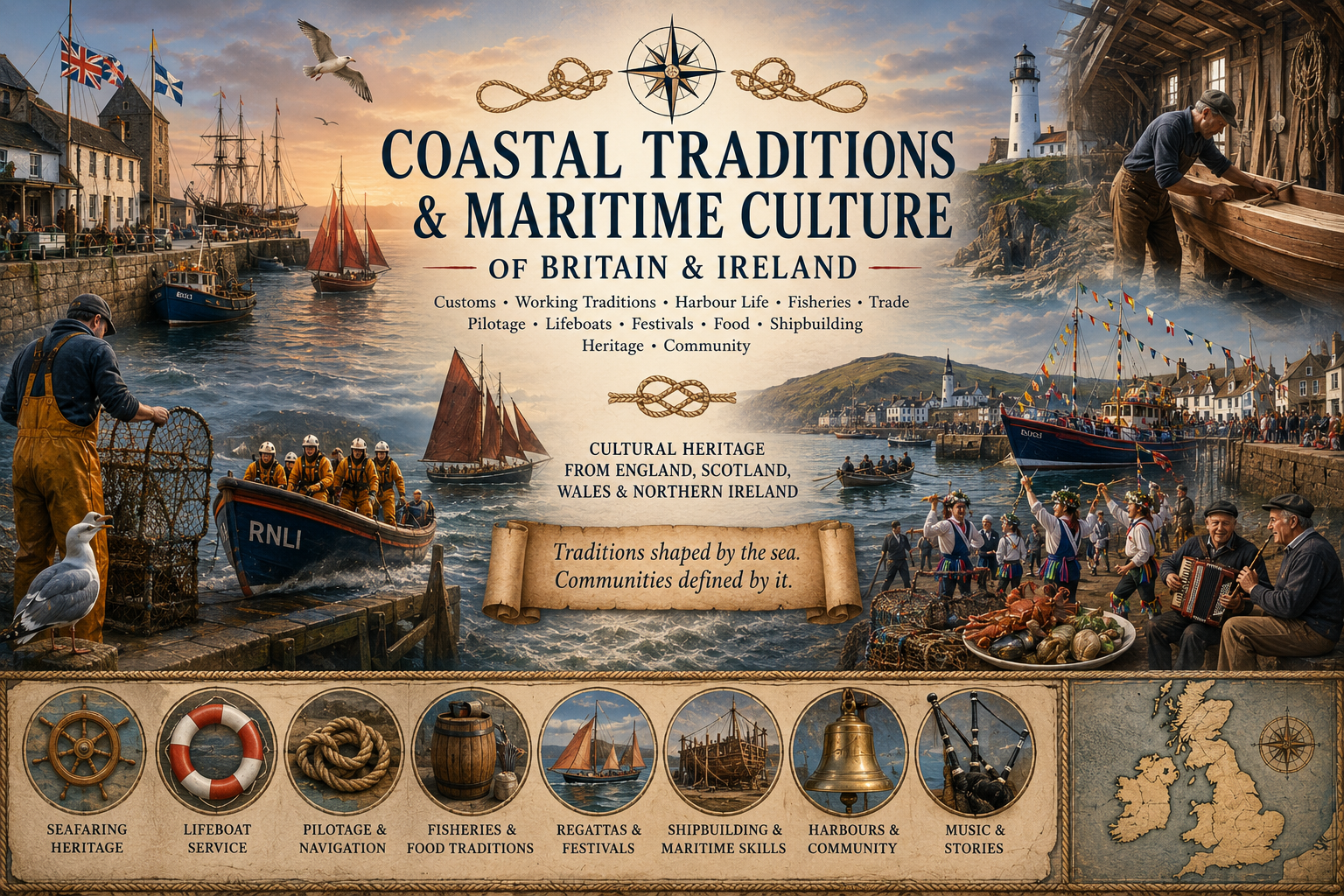
- Coastal Traditions & Maritime Culture of Britain and Northern Ireland
- Coastal Myths & Legends of Britain & Northern Ireland
Comments