




Mining Harbours, Fishing Coves and Maritime Chapel Traditions
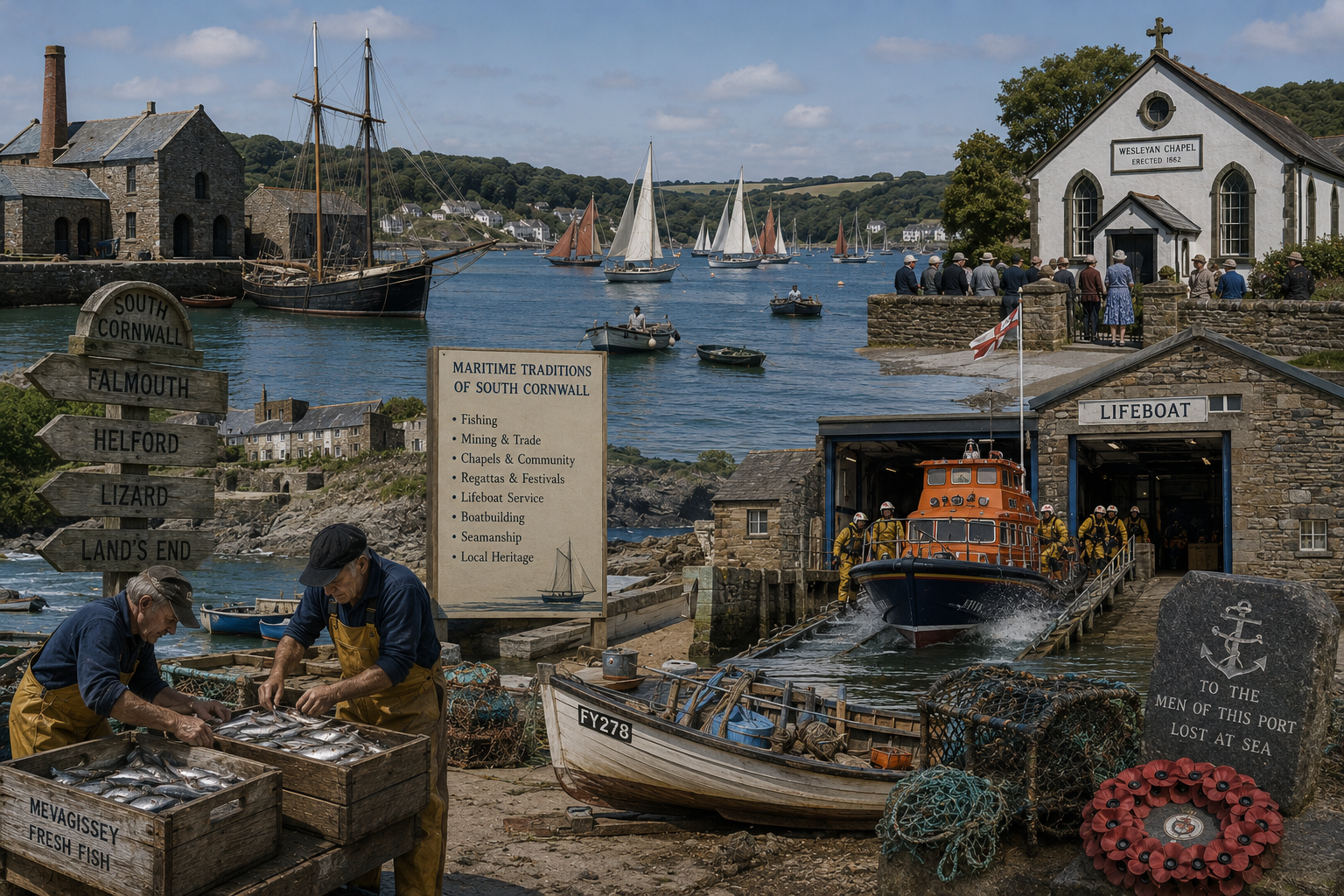
The south coast of Cornwall presents a long-established maritime landscape in which fishing coves, small trading ports, mining harbours and estuarial communities have remained closely connected to the sea. From the Tamar approaches in the east to the Fal, Helford and the harbours of the Lizard district, local identity has historically been shaped by coastal employment and seafaring practice. While individual ports developed distinct customs, a strong continuity remains between earlier maritime occupations and present-day use of the waterfront.
For much of the nineteenth century the coastline served both fisheries and the export trade associated with Cornwall’s mining industry. Harbours such as Charlestown were adapted to handle copper, tin and related materials, while numerous smaller landing places supported local coastal traffic. The deep natural waters of the Fal Estuary provided sheltered anchorages and commercial facilities that linked Cornwall with ports elsewhere in Britain and beyond. Coastal trading vessels, fishing craft and harbour workboats formed a familiar part of daily life. Along several stretches of coast, quarry stone, agricultural produce and imported goods also contributed to local maritime commerce, although activity varied considerably between ports.
Fishing remained a principal occupation in many coves and small harbours. Pilchard fisheries were once of particular importance along parts of the south coast, supported by shore-based processing and curing activities. Net fishing, potting and inshore shellfish fisheries developed alongside these seasonal trades. Harbour layouts, slipways and fish cellars in several settlements reflect these working requirements. The character of the fisheries changed over time, yet the practical knowledge of tides, weather and local grounds continued to pass through fishing families and harbour communities.
Religious observance historically formed a noticeable element of maritime life. Methodist and other Nonconformist chapels became closely associated with fishing and mining districts during the nineteenth century. In many communities, chapel attendance was intertwined with the rhythm of working life ashore and afloat. Blessings, memorial services and seafarers’ commemorations have varied between localities, and practices were never entirely uniform along the coast. Nevertheless, chapel traditions provided an important social framework for many maritime families and remain evident in several coastal settlements.
Regattas and harbour festivals have long provided occasions for maritime gathering. Boat races, rowing competitions and sailing events developed around established ports and estuaries, particularly where local clubs and working boat traditions remained active. The Fal and Helford waters continue to support a variety of sailing activities, while traditional craft are still seen during organised events. Such occasions generally reflect local maritime practice rather than ceremonial display alone, maintaining links with the everyday use of boats and harbours.
Lifeboat service forms another enduring aspect of South Cornwall’s coastal culture. Exposure to Atlantic weather systems rounding the Lizard and entering the Channel approaches has produced a long history of maritime rescue. Lifeboat stations, volunteer crews and associated fundraising activities remain significant in several communities. Alongside this, knowledge of local pilotage, tidal streams and harbour approaches has traditionally been valued by fishermen, commercial mariners and recreational sailors alike.
Boatbuilding and boat maintenance have persisted in various forms around the larger estuaries and sheltered creeks. Historic working craft, small fishing vessels and sailing boats required local skills in timber construction and repair. Although modern materials and changing economic conditions have altered the scale of these activities, specialist yards and marine trades continue to contribute to the waterfront economy. In places, traditional designs survive through restoration projects and community interest in historic vessels.
Modern continuity is particularly evident in the continued operation of fishing harbours, shellfish fisheries, yacht moorings and commercial marine facilities. Fish markets, harbour authorities, sailing clubs and volunteer maritime organisations maintain an active connection with the sea. Local seafood remains closely associated with coastal communities, reflecting the enduring importance of inshore fisheries even where employment patterns have diversified.
Today, South Cornwall retains a maritime culture that remains firmly linked to its harbours, estuaries and coastal waters. The legacy of mining exports, fishing occupations, chapel communities and seafaring service is still visible in working waterfronts and local custom. For the navigator moving along this coast, these traditions remain an observable part of the character of the shore rather than solely a matter of historical record.
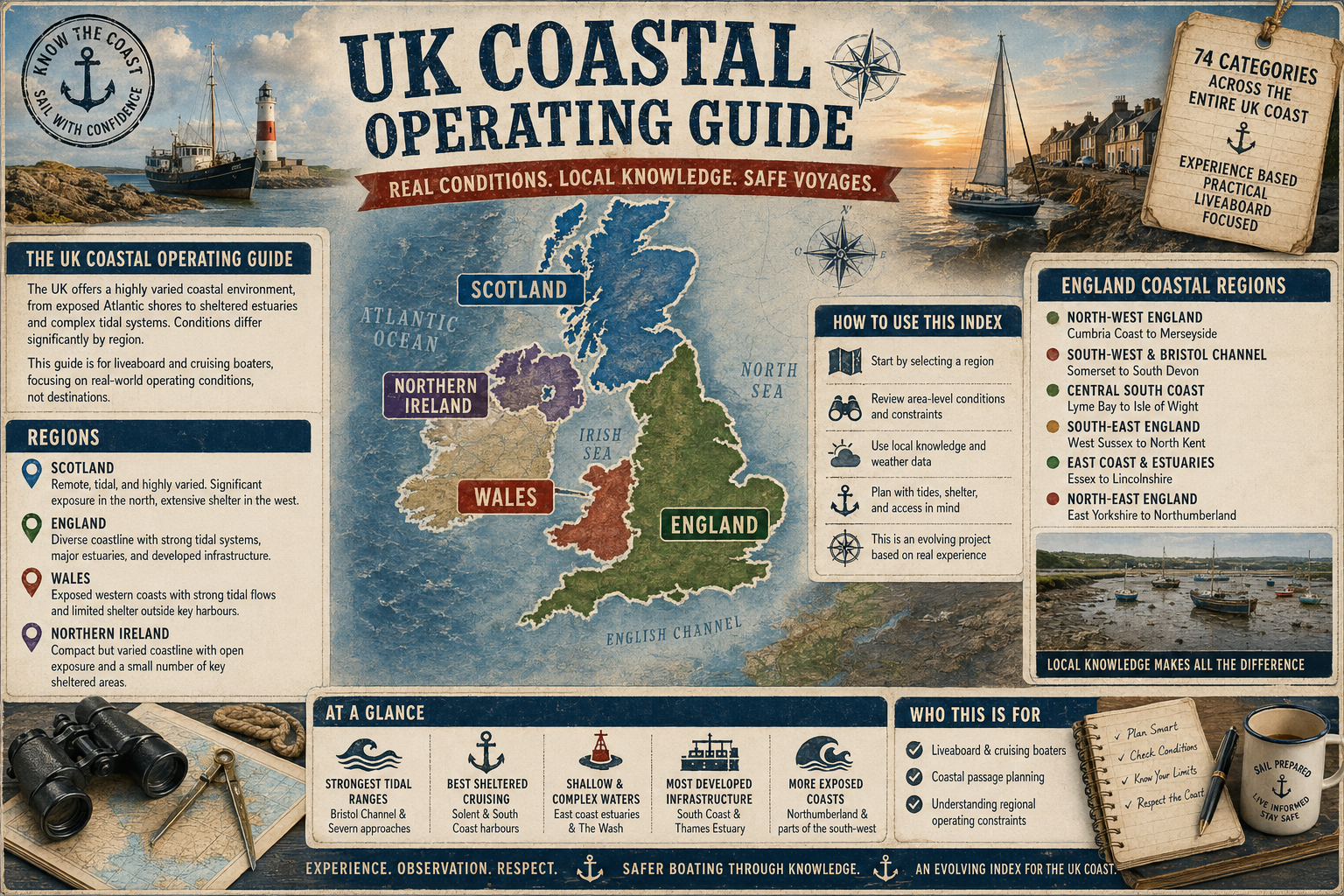
- The UK Coastal Operating Guide
- Coastal Traditions & Maritime Culture of Britain and Northern Ireland
- Coastal Myths & Legends of Britain & Northern Ireland

Comments