





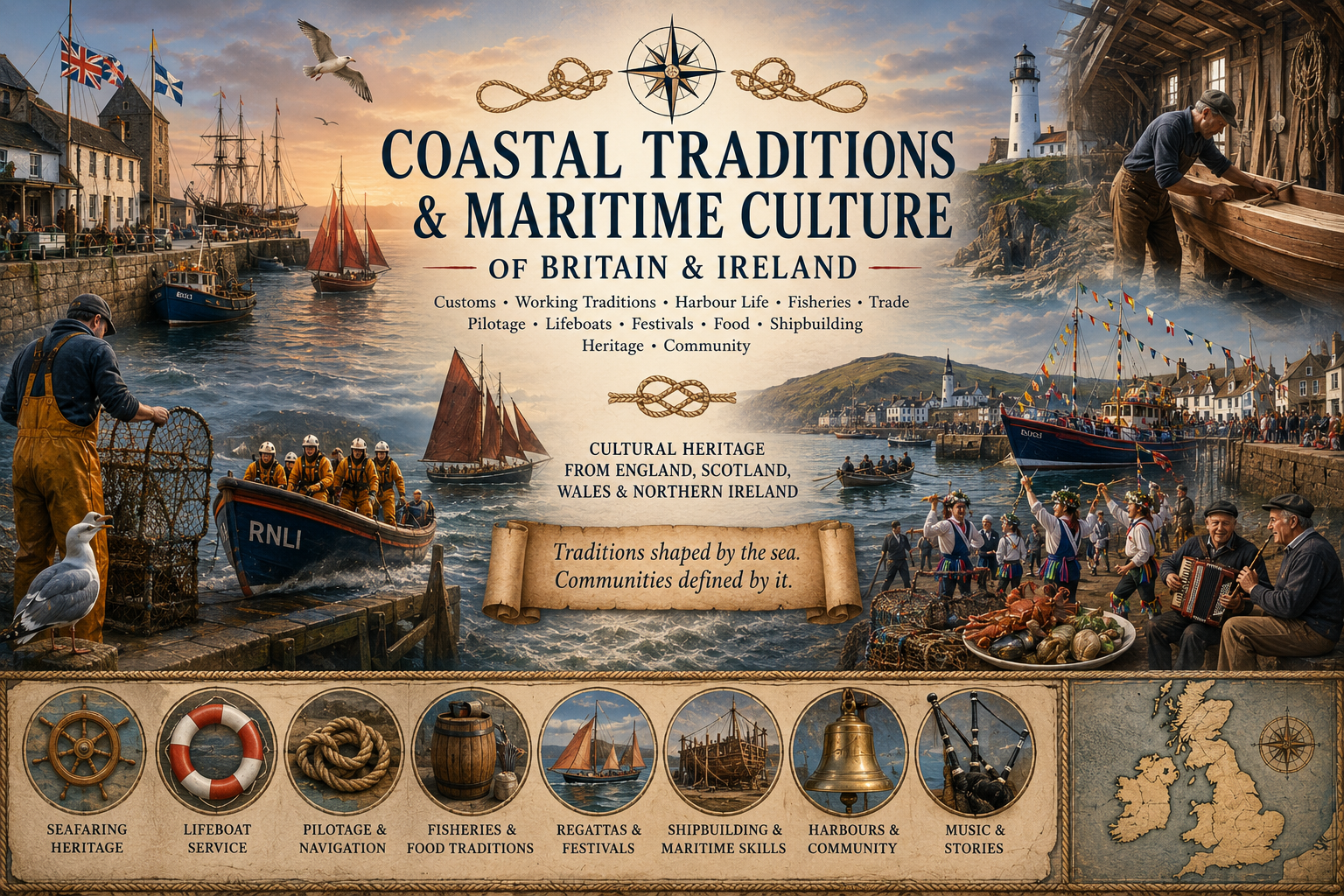
Fishing Harbours, Regattas and Coastal Tourism Traditions
The coastline between Tor Bay and the mouth of the River Teign has long been shaped by small harbours, inshore fisheries and seasonal coastal trade. Maritime culture here reflects a mixture of working fishing ports, yachting activity and the demands of a coastline exposed to the English Channel while offering a number of useful anchorages and harbour entrances. Cultural continuity is moderate. Many traditional occupations have declined in scale, yet several customs associated with fishing, harbour life and local regattas remain visible within modern coastal communities.
Historically, the principal maritime settlements of the district developed around sheltered landing places and estuarine access. Brixham became one of the most significant fishing ports on the south-west coast, particularly noted for trawling and for the development of the sailing trawler fleet during the nineteenth century. The harbour supported fish merchants, chandlers, net makers and related shore trades. Although fishing methods and vessel types have changed substantially, commercial fishing continues to influence the character of the port. Elsewhere around Tor Bay, Paignton and Torquay maintained smaller fishing interests while also serving local passenger traffic and coastal commerce.
At Teignmouth, maritime activity has traditionally centred on both fishing and trade through the Teign estuary. The river provided access to inland industries and supported the export of local products, while coastal vessels carried cargoes to ports elsewhere in southern Britain. Navigation across the estuary bar has long required attention to tidal conditions and weather, factors which influenced local seamanship and pilotage practices. The estuary communities of Teignmouth and Shaldon developed closely connected maritime identities, with many families maintaining links to fishing, shipping or harbour employment across successive generations.
Fishing traditions remain among the most recognisable cultural associations of the area. Inshore fisheries have targeted species including crab, lobster and a variety of demersal fish, although the balance of catches has altered over time in response to regulation, markets and changing fish stocks. Fish auctions and quayside landings continue to provide a visible connection with earlier working practices. Maritime food traditions associated with locally landed seafood survive, though often in commercial rather than domestic settings.
Regattas have formed a longstanding element of coastal life throughout the district. The sheltered waters of Tor Bay have supported yacht racing and rowing events for well over a century, while Teignmouth has maintained its own regatta traditions linked to the estuary and open coast. Such events historically combined competitive sailing with harbour festivities and community gatherings. Although their character has evolved, regattas continue to provide one of the clearest expressions of local maritime continuity, bringing together recreational sailors, rowing clubs and harbour users.
Lifeboat service represents another enduring strand of coastal culture. The exposed approaches to Lyme Bay and the English Channel, together with heavy seasonal traffic, have generated a long association with rescue work. Volunteer crews from local lifeboat stations remain an important part of maritime life. Public support for lifeboat institutions, fundraising events and commemorative activities reflects a continuing recognition of the practical risks associated with navigation along this section of coast.
Boat ownership and small-craft activity are now significant components of local maritime culture. Sailing clubs, mooring associations and harbour organisations maintain traditions of seamanship that differ from earlier commercial practice but remain firmly connected to local waters. In the Teign estuary, rowing, dinghy sailing and estuary-based boating continue to form part of everyday coastal life. Around Tor Bay, yacht racing and cruising activity contribute to a pattern of seasonal maritime use that has become established over several generations.
Tourism has influenced the coastline since the nineteenth century and has altered the balance between working and recreational waterfronts. Nevertheless, fishing vessels, harbour maintenance craft and commercial marine operations continue to share space with leisure boating. This coexistence is particularly evident in Brixham and Teignmouth, where active ports remain visible alongside visitor facilities. The result is a maritime culture that combines contemporary economic functions with inherited customs rather than preserving a purely historical pattern of activity.
Today, the coastal traditions of Torbay and Teignmouth are expressed through active harbours, fishing fleets, regattas, lifeboat service and continued use of the sea for work and recreation. While many older industries have contracted, the relationship between local communities and the waters of Tor Bay and the Teign estuary remains evident in everyday harbour life and in the seasonal rhythm of the coast.
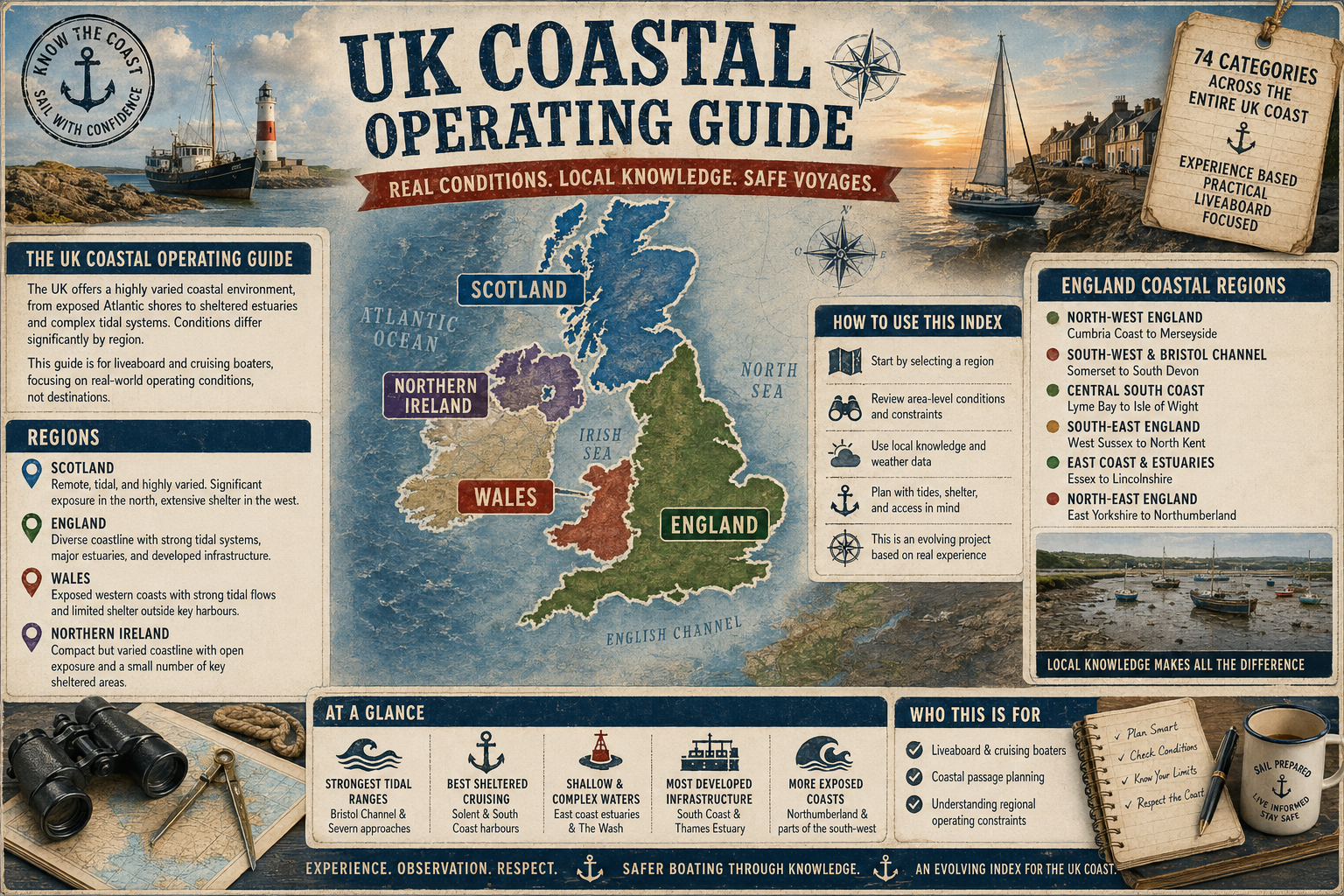
- The UK Coastal Operating Guide
- Coastal Traditions & Maritime Culture of Britain and Northern Ireland
- Coastal Myths & Legends of Britain & Northern Ireland
Comments