




Pilchard Curing, Sea Festivals and Celtic Maritime Identity
West Cornwall retains one of the strongest continuities of maritime culture in Britain. The coastline from Mount's Bay to the Penwith peninsula, including the waters around Land's End and the Isles of Scilly approaches, has long been shaped by fishing, coastal trade and seafaring communities. Harbours such as Newlyn, Mousehole, Porthleven and St Ives developed in close association with local fisheries, while the sea remains an important marker of regional identity. Distinctive Cornish and wider Celtic cultural traditions continue to be expressed through maritime events, local customs and working waterfront activities.
For several centuries the pilchard fishery formed a defining element of the coastal economy. Large seasonal shoals were pursued from small open boats, with fish landed in substantial quantities and processed in curing cellars close to the harbours. Salted pilchards were packed into barrels for export to Mediterranean markets and elsewhere. Evidence of this industry survives in the remains of fish cellars, warehouses and harbour infrastructure along parts of the coast. The importance of pilchards varied through time and from port to port, but the fishery influenced settlement patterns, employment and maritime trade throughout much of West Cornwall.
Alongside pilchards, mackerel, herring and shellfish fisheries contributed to local livelihoods. Newlyn became one of the principal fishing ports in England and remains a major landing port. Smaller harbours maintained mixed fishing traditions adapted to local conditions, including the exposed Atlantic coast and the more sheltered waters of Mount's Bay. Seamanship in these waters has always required attention to strong tidal streams around headlands, changing weather and the limited refuge available on some sections of coast.
Maritime customs in West Cornwall often retain connections with fishing communities and the annual cycle of work at sea. Harbour festivals and regattas remain a feature of several ports, although their form varies locally. Events commonly combine boat activities with community gatherings and acknowledge the continuing importance of the fishing industry. Some celebrations incorporate Cornish language, music and symbolism, reflecting a regional identity closely associated with the sea. While many traditions have evolved over time, their maritime setting remains central.
The blessing of fishing fleets and services connected with seafarers continue in certain communities, particularly where churches historically maintained close links with fishermen and harbour workers. Such observances are not uniform across the region, but they reflect longstanding relationships between coastal settlements and the risks of working offshore. Memorials to fishermen, lifeboat crews and those lost at sea are also common features of harbour towns.
Lifeboat service forms another important strand of local maritime culture. Stations around the Penwith and Mount's Bay coasts have long operated in waters exposed to Atlantic weather and heavy traffic approaching the English Channel. Support for lifeboat institutions remains strong in many communities, where fundraising events and public ceremonies continue to reinforce local connections with maritime rescue.
Boat handling skills associated with fishing and harbour work remain visible today, although modern vessels and equipment have altered working practices. Traditional craft survive in limited numbers, often maintained through local maritime organisations and community initiatives. Inshore fishing, shellfish harvesting and fish processing continue to provide a practical link with earlier economic patterns, even where the scale of activity differs from that of the nineteenth century.
Maritime food traditions also reflect the legacy of the fisheries. Pilchards, now more commonly referred to as Cornish sardines in commercial contexts, remain associated with local culinary practice. Fish markets, processing facilities and working quays continue to connect contemporary communities with longstanding patterns of landing, handling and distributing seafood.
The modern character of West Cornwall's coastline remains closely tied to the sea. Active fishing ports, harbour festivals, lifeboat traditions and expressions of Cornish cultural identity provide a degree of continuity that is unusual in many parts of the British coast. Although economic conditions and maritime industries have changed, the connection between local communities and the surrounding waters remains a defining feature of the region.
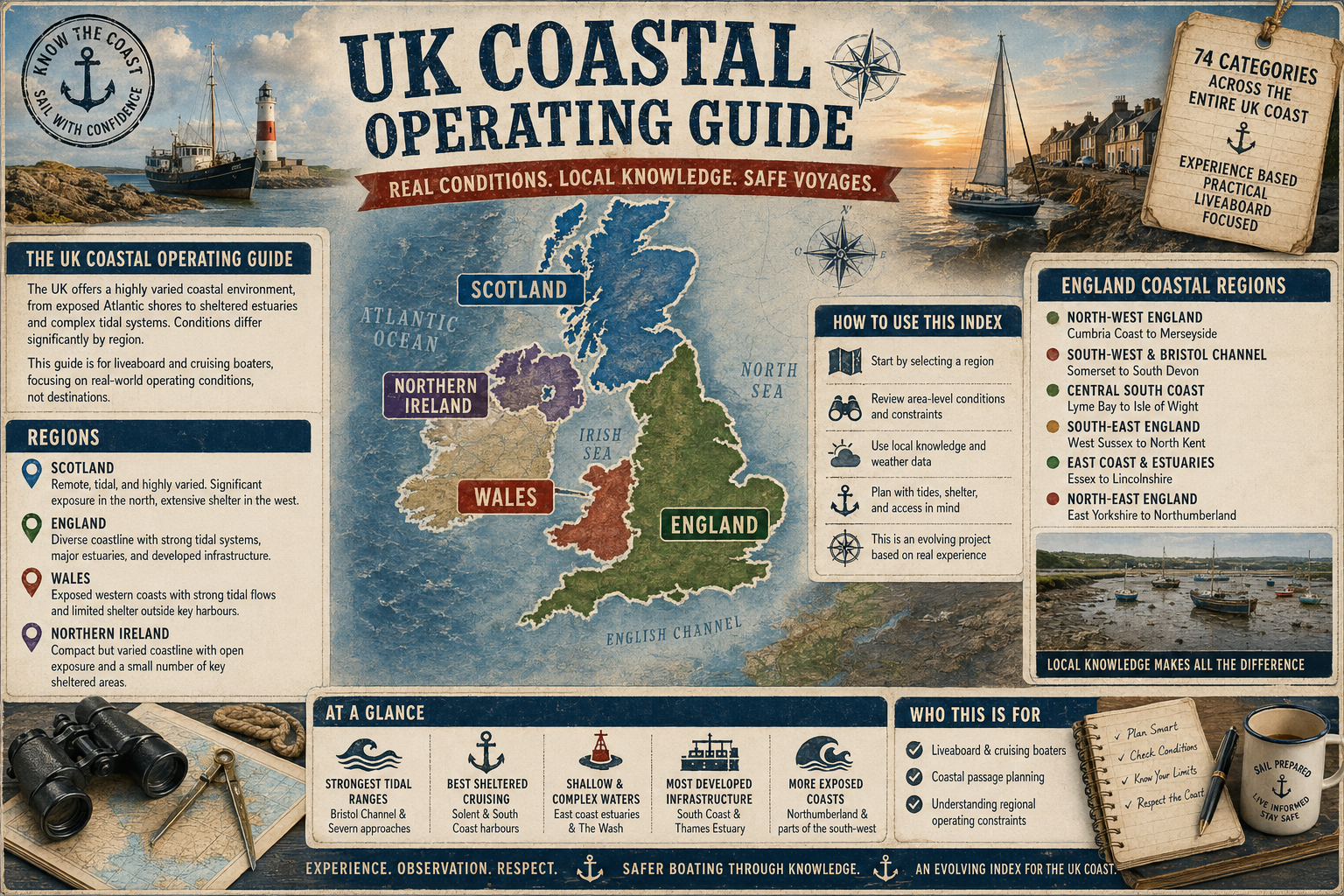
- The UK Coastal Operating Guide
- Coastal Traditions & Maritime Culture of Britain and Northern Ireland
- Coastal Myths & Legends of Britain & Northern Ireland
Comments