



Weymouth & Portland Coast - Area 28
Overview
The Weymouth and Portland coast lies on the south coast of England in Dorset, forming part of a varied shoreline that includes sheltered bays, exposed headlands, and long stretches of shingle beach. The area is influenced by prevailing south-westerly weather systems and can experience relatively calm periods interspersed with more exposed conditions.
It is a transitional coastal environment where built-up harbour areas sit alongside more open and natural coastal formations, with sea state and wind exposure changing noticeably over short distances.
Local Operating Context (for Liveaboard Boaters)
This stretch of coast can present a mix of sheltered and exposed waters depending on position and weather direction. Conditions may change quickly with passing fronts, particularly around headlands and along open shoreline.
Tidal range and local currents can be relevant in planning movements, especially where water is constrained between landforms or near harbour entrances. Visibility is generally good but can reduce during rain or sea mist.
Shoreline access varies, with some developed waterfront areas and other sections that are steep, rocky, or shingle-based. Anchorage and holding characteristics are highly dependent on local seabed conditions and exposure.
Navigation close to shore requires awareness of offshore structures, shallows, and changing sea states, particularly during unsettled weather.
Typical Conditions
- Moderate swell in exposed areas, particularly with south-westerly winds
- Generally calmer waters in more enclosed bays
- Occasional strong tidal influence near constricted channels
- Variable visibility in wet or misty conditions
Access & Shelter
- Shelter improves significantly in more enclosed coastal indentations
- Open sections of coast can be exposed to wind and swell
- Harbour-adjacent waters tend to be more protected but busy
- Shingle and rocky shorelines limit natural landing points in places
Shore Interaction
- Some developed waterfront areas allow straightforward shore access
- Other stretches are less accessible due to natural coastal formations
- Tidal timing can influence ease of landing or transfer
- Coastal paths and settlements are present but unevenly distributed
Risk Factors
- Exposure to wind and swell around headlands
- Rapidly changing conditions with weather shifts
- Shallow areas and submerged features near shore
- Strong tidal streams in constrained channels
Overall Character
The Weymouth and Portland coast is a mixed maritime environment where sheltered and exposed conditions exist in close proximity. It is generally navigable with appropriate caution, but requires attention to local weather and tidal context.
Notable Locations
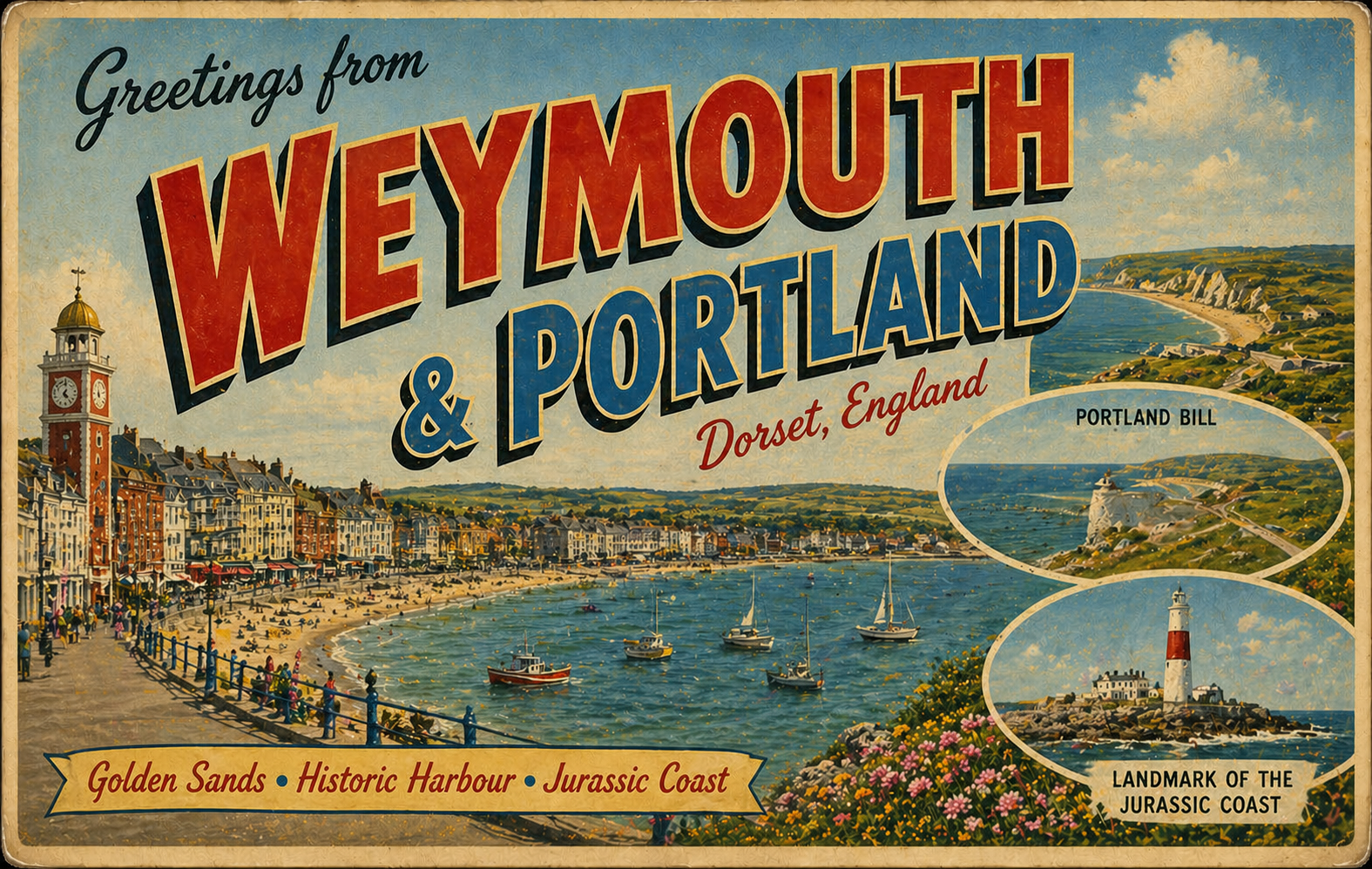
Weymouth Bay – a broad bay area that can offer comparatively sheltered conditions depending on wind direction.
Portland Bill – a prominent headland exposed to strong tidal flows and Atlantic swell influence.
Chesil Beach – a long shingle barrier beach that affects local sea conditions and sheltering patterns.
Portland Harbour – a largely enclosed harbour area offering reduced exposure compared with surrounding waters.
Practical Mooring & Anchorage Locations
Weymouth Harbour
- Type: Harbour / Marina
- Shelter: Protected from south-westerly, westerly, and southerly winds within the inner harbour
- Exposure: Uncomfortable in strong easterly winds; swell penetration can occur near the entrance
- Key Constraints: Tidal access through harbour entrance; strong tidal flow on approach; busy commercial and leisure traffic
- Traffic Level: High
- Liveaboard Suitability: High
- Notes: Well-established harbour with extensive berthing options and services. Can be congested during peak season and events.
Portland Harbour
- Type: Harbour / Anchorage
- Shelter: Good protection from most wind directions except strong easterlies
- Exposure: Choppy conditions possible in strong easterly winds and across long fetch inside harbour
- Key Constraints: Large commercial and training vessel movements; designated anchoring areas; tidal considerations near entrances
- Traffic Level: Medium
- Liveaboard Suitability: High
- Notes: One of the largest man-made harbours in the UK with ample swing room. Generally reliable for extended stays.
Portland Marina
- Type: Marina
- Shelter: Well sheltered from all directions within Portland Harbour
- Exposure: Minimal internal exposure; occasional wash from passing vessels
- Key Constraints: Lock/gate access not applicable; berth availability and marina regulations; tidal considerations for approach within harbour
- Traffic Level: Medium
- Liveaboard Suitability: High
- Notes: Modern marina facilities with good long-stay infrastructure. Popular with cruising and liveaboard vessels.
Newtons Cove
- Type: Anchorage / Small Cove
- Shelter: Moderate shelter from northerly and westerly winds
- Exposure: Open to southerly and easterly swell; uncomfortable in strong onshore winds
- Key Constraints: Limited holding area; shallow margins; proximity to cliffs and shoreline; tidal influence on available space
- Traffic Level: Low
- Liveaboard Suitability: Low
- Notes: Suitable only in settled conditions for short stays. Holding and space are limited for larger vessels.
Castle Cove (Weymouth)
- Type: Anchorage / Mooring Area
- Shelter: Partial shelter from north-westerly and northerly winds
- Exposure: Exposed to southerly swell and easterly winds
- Key Constraints: Small usable area; local moorings present; limited swinging room; tidal depth variation
- Traffic Level: Low
- Liveaboard Suitability: Medium
- Notes: Often used by local sailing vessels in settled weather. Not suitable in prolonged onshore wind conditions.
Weymouth Bay
- Type: Anchorage
- Shelter: Varies; better protection from northerly winds depending on position in bay
- Exposure: Exposed to south-westerly and southerly swell; can become uncomfortable in unsettled weather
- Key Constraints: Holding ground variability; open roadstead conditions; exposure to passing weather systems; shipping and leisure traffic
- Traffic Level: Medium
- Liveaboard Suitability: Medium
- Notes: Anchorage is highly weather-dependent and best used in settled conditions. Offers good holding in selected areas but limited long-term comfort.
Marine Safety & Support
HM Coastguard provides search and rescue coordination throughout the area, supported by local Coastguard Rescue Teams and RNLI lifeboat stations where established. Emergency medical facilities and essential services are generally available in the principal coastal towns and regional centres serving the area.
Coastal Guardians & Local Support
The coastal community is strengthened by organisations that share practical knowledge, support visiting boaters and help maintain the quality of information within the UK Coastal Operating Guide.
The following Coastal Guardian positions are currently available or reserved.
*** Please note: Only five (5) Guardian berths are available in this coastal area ***
⚓ Example Marine Engineering & Vessel Support
Location • Marine Engineering • Repairs & Servicing
This position is reserved for a recognised local marine engineering business providing servicing, repairs and technical support to cruising and liveaboard vessels operating within this coastal area.
Best for: Vessel maintenance and engineering support
⚓ Example Chandlery & Marine Supplies
Location • Marine Supplies • Equipment & Gear
Reserved for a local chandlery or marine supplier helping visiting boaters obtain equipment, safety gear and essential stores for safe coastal cruising.
Best for: Cruising equipment and essential stores
⚓ Example Boatyard & Marine Services
Location • Marine Services • Specialist Support
This position is reserved for a local boatyard or marine service provider offering lifting, storage, maintenance and specialist support for vessels visiting the area.
Best for: Boatyard facilities and vessel maintenance
⚓ Example Marina, Harbour & Visitor Facilities
Location • Visitor Facilities • Practical Support
Reserved for a local organisation providing practical services that support visiting boaters and contribute to the wider maritime community.
Best for: Practical local boating support
⚓ Example Local Maritime Services & Coastal Knowledge
Location • Coastal Knowledge • Marine Information
This position recognises an organisation whose local knowledge and practical contribution help strengthen the quality of information available to visiting mariners.
Best for: Local knowledge and community support
Status:Five (5) Berths Available. Reserved for Coastal Guardians Only
Additional marine businesses, marinas and specialist services are listed within the Ship's Office.
UK Public Services & Infrastructure
Public services, healthcare, emergency response and essential facilities are available throughout the UK coastline. Provision is generally strongest in larger towns and regional centres, while remote rural and island areas may offer more limited local access.
Practical Notes for Boaters
This section will be developed over time based on direct experience and relevant contributions. The focus is on practical usefulness rather than completeness.
From the Project
Observations and notes from the ongoing boat conversion and coastal exploration project will be added here as they become available.
Related Knowledge Base
- Coastal erosion processes
- Sedimentary rock formations
- Harbour types and access
- Tidal patterns and coastal conditions
Status
This is part of a growing coastal index. Content will be expanded over time as the project develops.