



Lobster Fisheries and Small Harbour Traditions
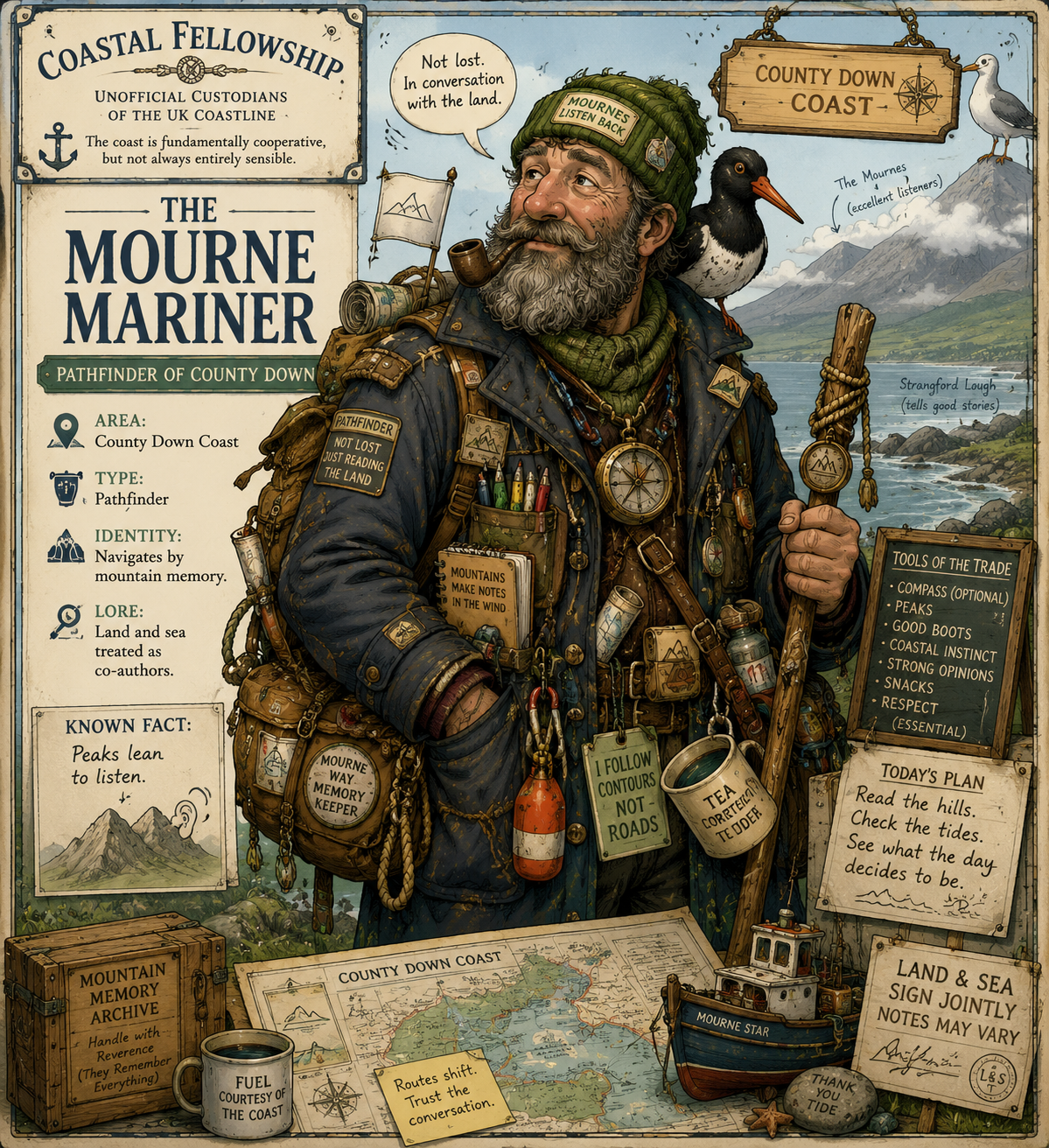
The coast of County Down faces the northern Irish Sea and is characterised by a series of small harbours, fishing settlements and tidal inlets extending from Belfast Lough southwards towards Carlingford Lough. Maritime life has long been shaped by local fishing grounds, exposed sea conditions and the practical requirements of maintaining access to comparatively small ports. Among the most persistent coastal associations are lobster fisheries and the working traditions of harbour communities, both of which continue to influence the character of the shoreline. While practices vary between districts, a strong continuity of seafaring activity remains evident.
Fishing has formed an important part of the local maritime economy for centuries. Inshore grounds off the Ards Peninsula and along the outer coast have supported lobster and crab fisheries, often operated by small family-owned vessels working from ports such as Portavogie, Ardglass and Kilkeel. These fisheries developed alongside herring, whitefish and shellfish industries which expanded and contracted according to changing markets, stocks and regulations. Harbour infrastructure reflects these working origins, with quays, fish markets and maintenance facilities remaining central features of several settlements. Although modern vessels and equipment have replaced earlier methods, the seasonal rhythm of fishing activity continues to shape daily harbour life.
Local maritime culture has also been influenced by coastal trade and communications. Before modern road transport became dominant, small craft carried goods between ports around the Irish Sea, linking County Down with neighbouring coasts in Ireland, Scotland and north-west England. Ferry connections across the northern Irish Sea reinforced these maritime links, particularly through Belfast Lough. While commercial shipping is now concentrated in larger ports, memories of coastal trade survive in harbour records, local knowledge and the continued importance of navigation within busy inshore waters.
Harbour customs remain among the most visible expressions of coastal continuity. Fishing vessels commonly operate from long-established berths where practical knowledge of local tides, weather and sea conditions is passed between generations. The tidal streams around the entrance to Strangford Lough are especially notable and have long required careful local judgement. Elsewhere, harbour routines continue to revolve around landings, gear maintenance and the management of shellfish pots. Such activities are generally informal working traditions rather than ceremonial customs, but they contribute significantly to the maritime identity of the coast.
Regattas and boating events have formed part of the social life of several coastal communities. Their character varies by locality, ranging from sailing competitions and rowing events to broader harbour gatherings associated with the summer season. These occasions traditionally provided opportunities for seafarers, fishermen and local residents to meet within a maritime setting. While some events have evolved into wider community celebrations, their origins remain closely connected with local waters and the skills of those who worked them.
Lifeboat service provides another enduring element of coastal culture. Stations along the County Down coast developed in response to the hazards of the Irish Sea, where strong winds, changing weather and rocky headlands have frequently challenged small craft. Volunteer lifeboat crews have occupied a respected position within many communities, reflecting a longstanding expectation of mutual assistance at sea. This tradition remains active through modern rescue organisations and continues to form part of local maritime identity.
The coastline is also associated with distinctive maritime food traditions derived from local catches. Lobster, crab, prawns and other shellfish remain important products of the inshore fishery. Although commercial distribution now extends far beyond the region, local consumption of seafood continues to reflect the availability of seasonal catches landed at nearby ports. Such practices are practical continuations of working fisheries rather than separate cultural observances.
Modern economic conditions, regulatory changes and evolving fishing methods have altered many aspects of life along the County Down coast. Nevertheless, lobster fishing, harbour-based employment, volunteer maritime service and local boating activity continue to provide visible links with earlier patterns of coastal occupation. The result is a coastline where maritime culture remains closely connected to everyday working practices, preserving a strong sense of continuity between historic seafaring traditions and the present-day use of its harbours and coastal waters.
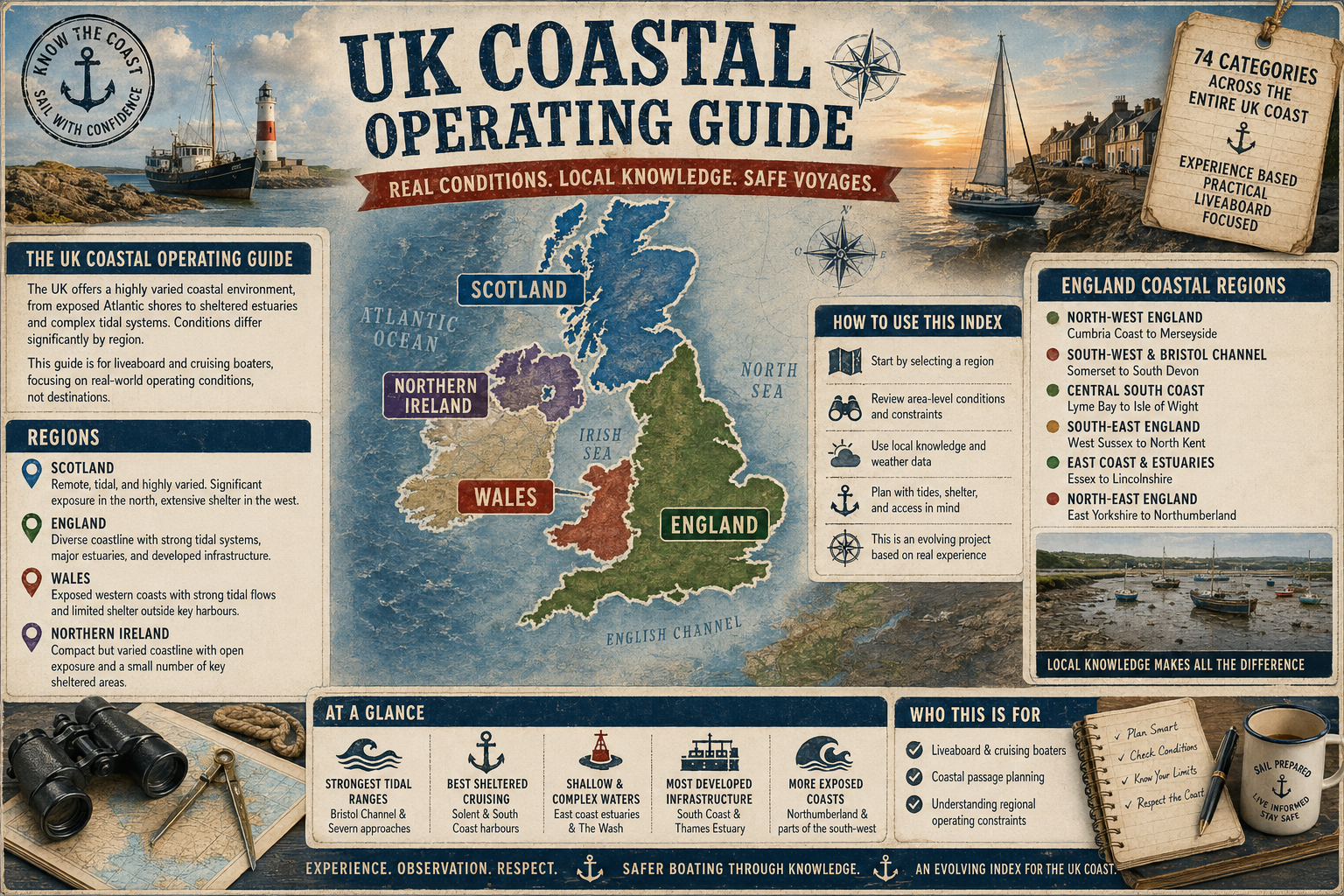
- The UK Coastal Operating Guide
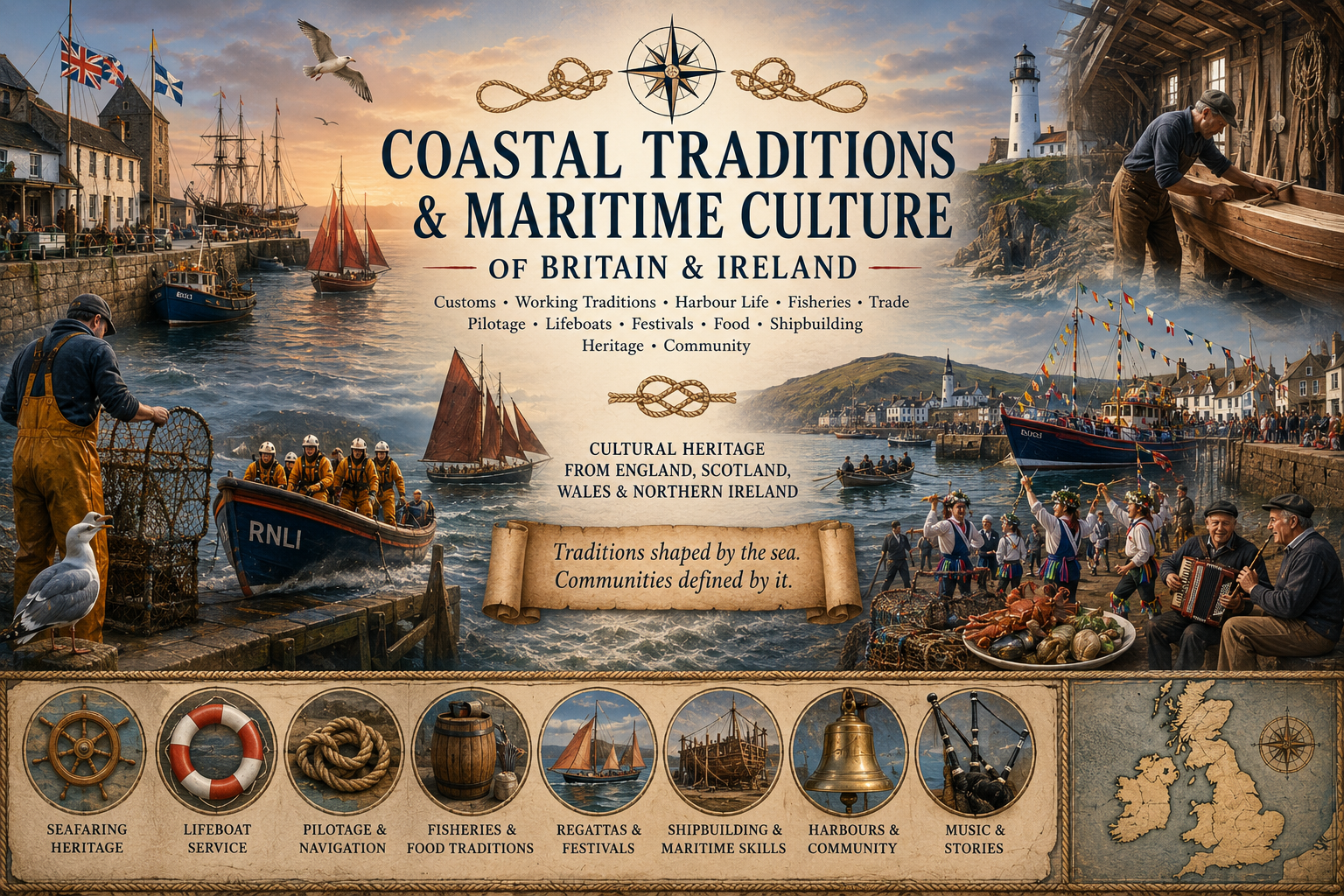
- Coastal Traditions & Maritime Culture of Britain and Northern Ireland
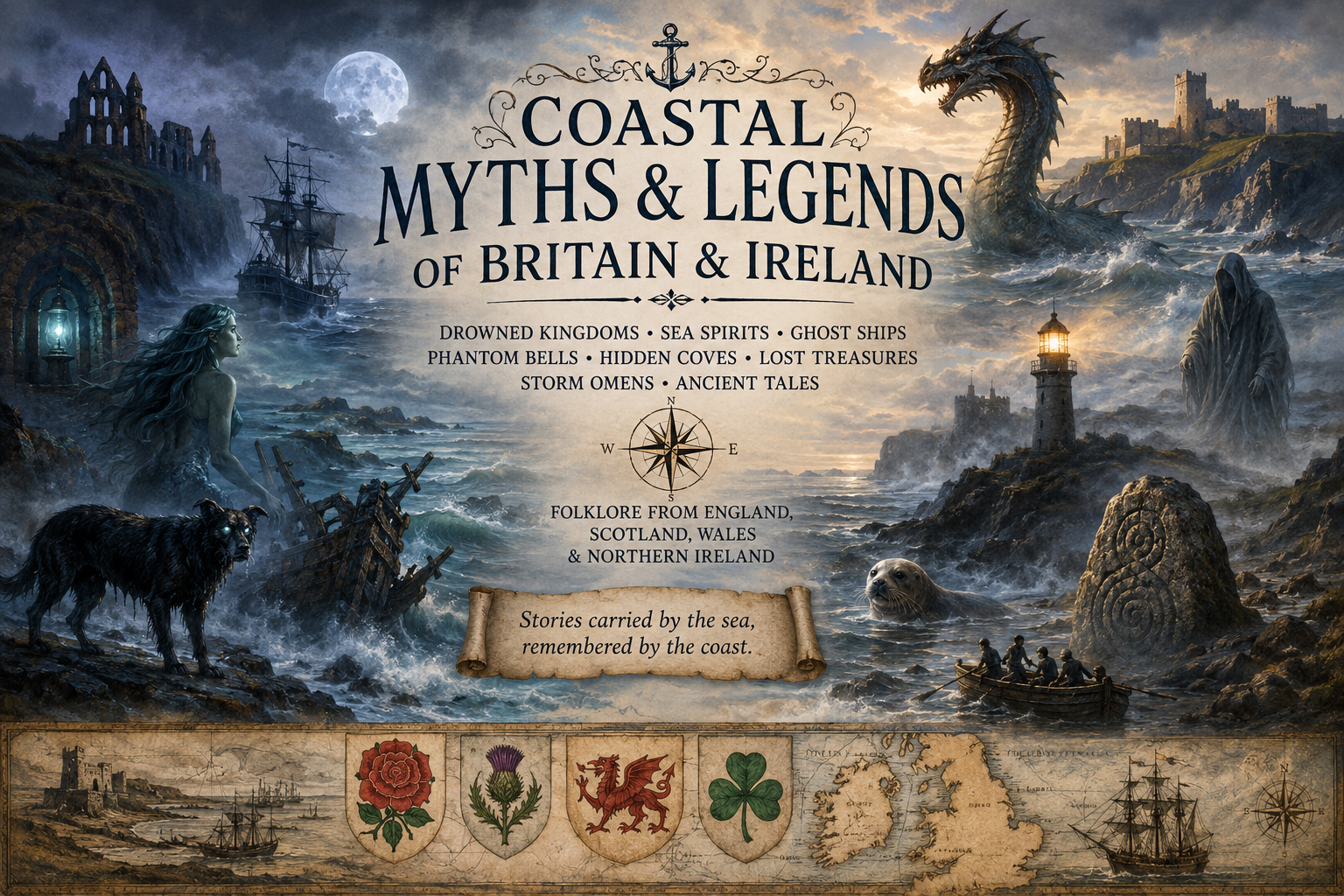
- Coastal Myths & Legends of Britain & Northern Ireland
Comments