




Salmon Rivers & Fishing Port Traditions
The maritime culture of the Moray Firth is closely associated with its salmon rivers, fishing harbours and working coastal communities. The principal rivers entering the firth include the Spey, Findhorn, Lossie and Deveron, each historically supporting salmon fisheries alongside other forms of estuarine and coastal fishing. Along the shore, ports such as Buckie, Lossiemouth, Burghead, Findochty, Portknockie, Cullen and Macduff developed around fishing, boatbuilding, fish handling and coastal trade. These activities have altered considerably, but the working character of several harbours remains evident.
Salmon fishing has particular cultural importance. The Spey and other rivers flowing into the Moray Firth supported long-established net and coble fisheries, with fishing rights, seasonal working patterns and local knowledge of river mouths and tidal waters forming part of coastal life. Salmon were also taken by fixed-net methods at suitable parts of the shoreline and estuaries. Much of this activity has declined or ceased, owing to changes in fisheries management, conservation requirements, economics and the wider restructuring of the fishing industry. The surviving terminology, buildings and local knowledge nevertheless provide a tangible connection with earlier river and shore fisheries. Practices varied between rivers, and should not be treated as uniform throughout the firth.
The fishing ports of the north-east shore provide a second major strand of the region's maritime tradition. Herring and other pelagic fisheries formerly supported substantial fleets, while line fishing and the catching of whitefish, haddock, cod and shellfish remained important at different periods. Small harbours were adapted to the needs of creel boats, fishing vessels and shore-based fish handling. Buckie in particular became an important centre for fishing and boatbuilding, while neighbouring settlements developed closely related working waterfronts. The construction, repair and maintenance of wooden fishing boats were once familiar coastal trades, with boatyards and local craftsmen serving fleets operating in the firth and further offshore.
Harbour practice remains an important part of local coastal identity. Boats still use the smaller harbours for creel fishing and other inshore work, although fleet sizes and methods are much reduced from earlier periods. Landing, handling and marketing catches continue to connect the harbour directly with the local economy. At larger ports, modern fishing activity sits alongside leisure craft, commercial shipping and marine services. The distinction between working harbour and visitor harbour is therefore not absolute, and local conditions can change considerably with weather, tides and fishing activity.
The Moray Firth also has a long association with lifesaving and lifeboat work. RNLI stations around the firth reflect the continuing requirement for organised rescue in waters affected by strong winds, tidal streams, shoaling and rapidly changing conditions. Lifeboat service is part of the practical maritime culture of communities including Buckie and Lossiemouth, where voluntary crews have historically been drawn from people familiar with local waters. The tradition is maintained through modern rescue craft, training and station operations rather than as a purely commemorative practice.
Food traditions retain a more domestic expression of the fishing economy. Smoked and cured fish, locally landed seafood and dishes associated with fishing communities form part of the coastal food culture, although recipes and preparation methods vary between households and districts. Cullen skink, associated particularly with Cullen on the Moray coast, is the best-known surviving example, based on smoked haddock and other locally familiar ingredients.
Navigation and local movement have also shaped the firth. Estuarine passages, harbour entrances and ferry crossings require close attention to tide, wind and sea state. The Cromarty Firth, adjoining the western part of the wider Moray Firth system, retains a working ferry connection between Cromarty and Nigg, while commercial and fishing traffic continues to use the firths according to present-day requirements.
Today, the Moray Firth presents a mixture of reduced traditional fisheries, active inshore operations, maintained harbours and modern marine services. Salmon fishing survives under a much more regulated framework than in earlier generations, while fishing communities continue to retain practical knowledge of tides, weather, harbour conditions and local grounds. The continuity is therefore less a matter of unchanged custom than of working practices, maritime skills and coastal institutions adapting to present conditions.
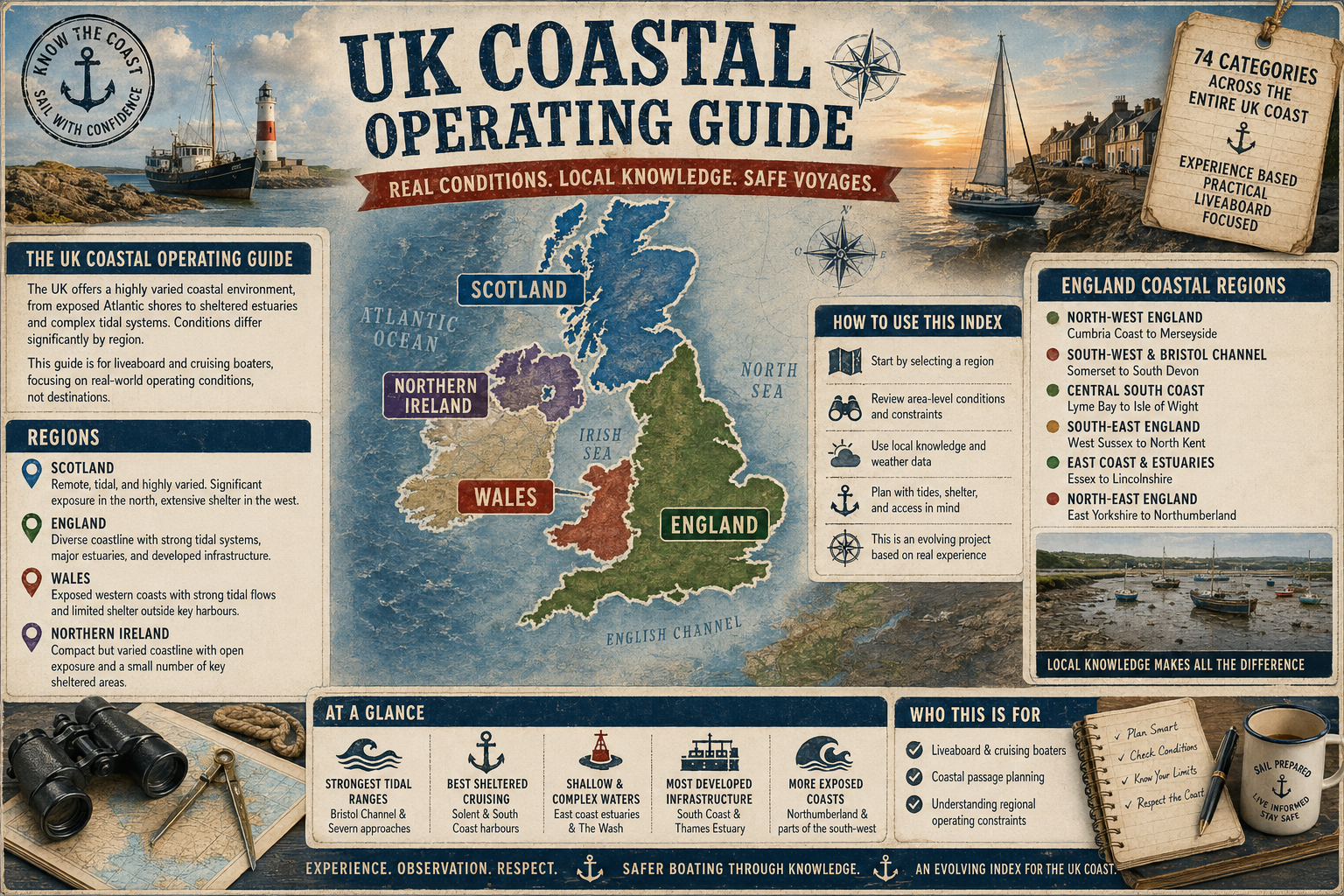
- The UK Coastal Operating Guide
- Coastal Traditions & Maritime Culture of Britain and Northern Ireland
- Coastal Myths & Legends of Britain & Northern Ireland
Comments