




Lifeboat Stations, Fishing Coves & Sea Pilgrimages
North Pembrokeshire has a long association with small-scale fishing, coastal trade, lifesaving and passage by sea. The principal maritime settlements are St Davids, Solva and Porthgain, with smaller landing places along the St Davids Peninsula and St Brides Bay. Offshore, Ramsey Sound is subject to strong tidal streams, while the entrances to the smaller inlets are affected by tide and Atlantic swell. These conditions have shaped the use of local harbours and the work of those who went to sea from them.
Fishing was historically carried out from coves and small harbours rather than from a large commercial port. Solva remains a small tidal harbour, with inshore fishermen using the waterway alongside other small craft. Porth Clais, formerly the port of St Davids, also retains a limited association with inshore fishing. At Porthgain, fishing became particularly important after the decline of the quarrying industries. Crab and lobster fishing have been among the principal local fisheries, continuing a working use of the harbour after its industrial traffic had ceased.
Commercial activity was once more varied. Solva handled coastal trade and provided a sheltered landing within St Brides Bay, while Porth Clais served St Davids for the import of goods and limestone. Lime was burned in kilns beside the harbour. Porthgain developed on a different basis, first exporting slate and later handling bricks and crushed stone. The large hoppers beside its harbour were used to load road stone directly into vessels. Quarrying and shipping declined during the twentieth century, with the Porthgain works closing in the 1930s. The surviving harbour structures and industrial remains are therefore part of the working maritime landscape rather than merely decorative remnants.
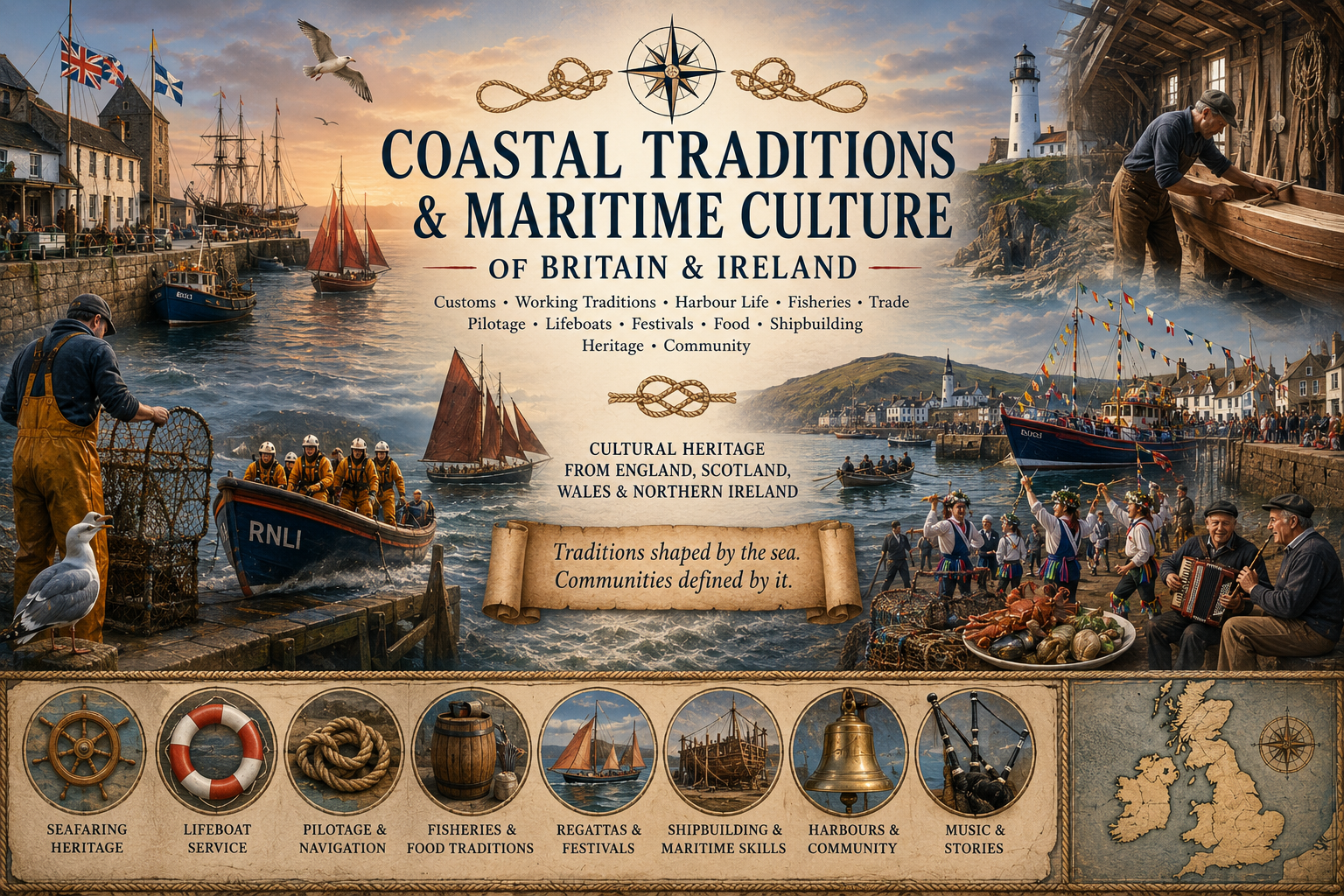
Seamanship and lifesaving form an important part of local coastal identity. The St Davids lifeboat station was established in 1869 at the request of local inhabitants, and early crews included local fishermen. Its work has been particularly demanding around Ramsey Island, St Davids Head and the reefs and tidal races of the surrounding coast. A major rescue occurred in November 1954, when the St Davids lifeboat recovered 35 survivors from the tanker World Concord in heavy seas. The present station at St Justinians became fully operational in 2016 and continues to provide all-weather and inshore lifeboat cover. Volunteer service remains a living community practice, rather than solely a matter of maritime commemoration.
The sea also forms part of the religious traditions associated with St Davids. Porth Clais served as a landing place for pilgrims travelling to the shrine of St David at the cathedral. From the harbour, pilgrims could continue on foot towards St Non's Chapel and holy well before reaching St Davids. The extent and precise organisation of medieval pilgrimage routes cannot always be established, but the association between Porth Clais, maritime arrival and pilgrimage is well documented locally. The harbour was also a trading port, so religious travel formed one element of a wider pattern of coastal movement.
Modern maritime activity is smaller in scale but remains visible in the working use of Porthgain and Solva, inshore fishing, small-boat launching and the continued operation of the St Davids lifeboat station. Tidal awareness remains essential in Ramsey Sound and the approaches to the smaller harbours. Taken together, fishing, quarry shipping, harbour work, lifesaving and pilgrimage provide a continuity between the older working coast and present-day maritime practice, with the surviving harbours and active crews retaining a practical connection with the sea.

Comments