

The Isles of Scilly form a compact archipelago lying off the western approaches to the English Channel, where maritime movement between islands and the mainland has long defined daily life. Coastal traditions here are shaped less by large harbour infrastructure than by small working quays, shallow-draught vessels and a persistent dependence on sea transport. The sheltered anchorages around St Mary’s and the surrounding islands remain central to both public services and commercial activity, with inter-island ferry services providing the principal link between scattered settlements and outlying islands.
Historically, the islands’ maritime activity has been closely tied to inshore fishing, coastal trading and pilotage through waters that, while relatively sheltered compared with the Atlantic approaches, contain numerous reefs, shoals and shifting sands. Navigation between the islands requires local knowledge of tides, channels and landing places, and this practical seamanship has long been a defining feature of Scillonian maritime culture. Small craft operating between islands traditionally adapted to short sea passages, seasonal weather patterns and the limitations imposed by exposed landing points.
Fishing practices in the Isles of Scilly have typically been small-scale and closely linked to local consumption and nearby markets. Lobster, crab and line-caught fish have formed a consistent part of the working economy, with vessels operating within short distances of the islands rather than venturing into deep-water grounds. The rhythm of work is strongly tide-dependent, and harbour activity at St Mary’s and secondary landings reflects shifting conditions rather than fixed schedules. Alongside fishing, maritime transport of goods, including provisions and light cargo, has remained an essential function of local craft.
The island group also developed a modest but notable association with wreck and salvage activity in earlier periods, given the navigational hazards of the western approaches. While large-scale wrecking practices are not a defining modern feature, the historical presence of ship losses around the outer reefs contributed to local seamanship traditions and an awareness of sea conditions that remains embedded in pilotage practice. Lifeboat services, particularly those operated from St Mary’s, form an important continuity of maritime safety culture, reflecting both the exposure of the islands to Atlantic weather systems and the reliance on sea access for medical and logistical needs.
Seasonal maritime activity continues to shape the islands’ economy, with inter-island ferries and supply vessels maintaining essential links throughout the year. Small ports and landing stages on islands such as Tresco, St Martin’s and Bryher remain dependent on weather windows and tidal access, reinforcing a working relationship with the sea that is still largely practical rather than ceremonial. Boat handling skills, including beach landings and short-haul transfers, remain in everyday use and are passed on through operational necessity rather than formal instruction.
There is also a limited but notable tradition of horticultural shipping, particularly associated with the export of early-season flowers grown on some of the islands. While not a dominant maritime industry, this activity reflects the continued role of small-scale maritime freight in supporting island livelihoods. Combined with passenger transport and fishing, it contributes to a multi-purpose use of local vessels that is characteristic of the archipelago.
In the present day, the maritime culture of the Isles of Scilly remains closely aligned with essential services and inter-island connectivity rather than large commercial operations. The persistence of ferry routes, inshore fishing practices and small harbour working patterns ensures a continuity of practical seamanship shaped by geography rather than institutional preservation. Although modern navigation systems and improved vessels have altered operational conditions, the underlying dependence on sea access and local knowledge of waters remains unchanged.
The result is a coastal culture defined by function, where maritime activity is not a separate heritage layer but an ongoing requirement of daily life. The Isles of Scilly thus retain a distinct position within British coastal waters, where inter-island movement, harbour work and small-scale fisheries continue to structure both economy and settlement in a direct and enduring relationship with the sea.
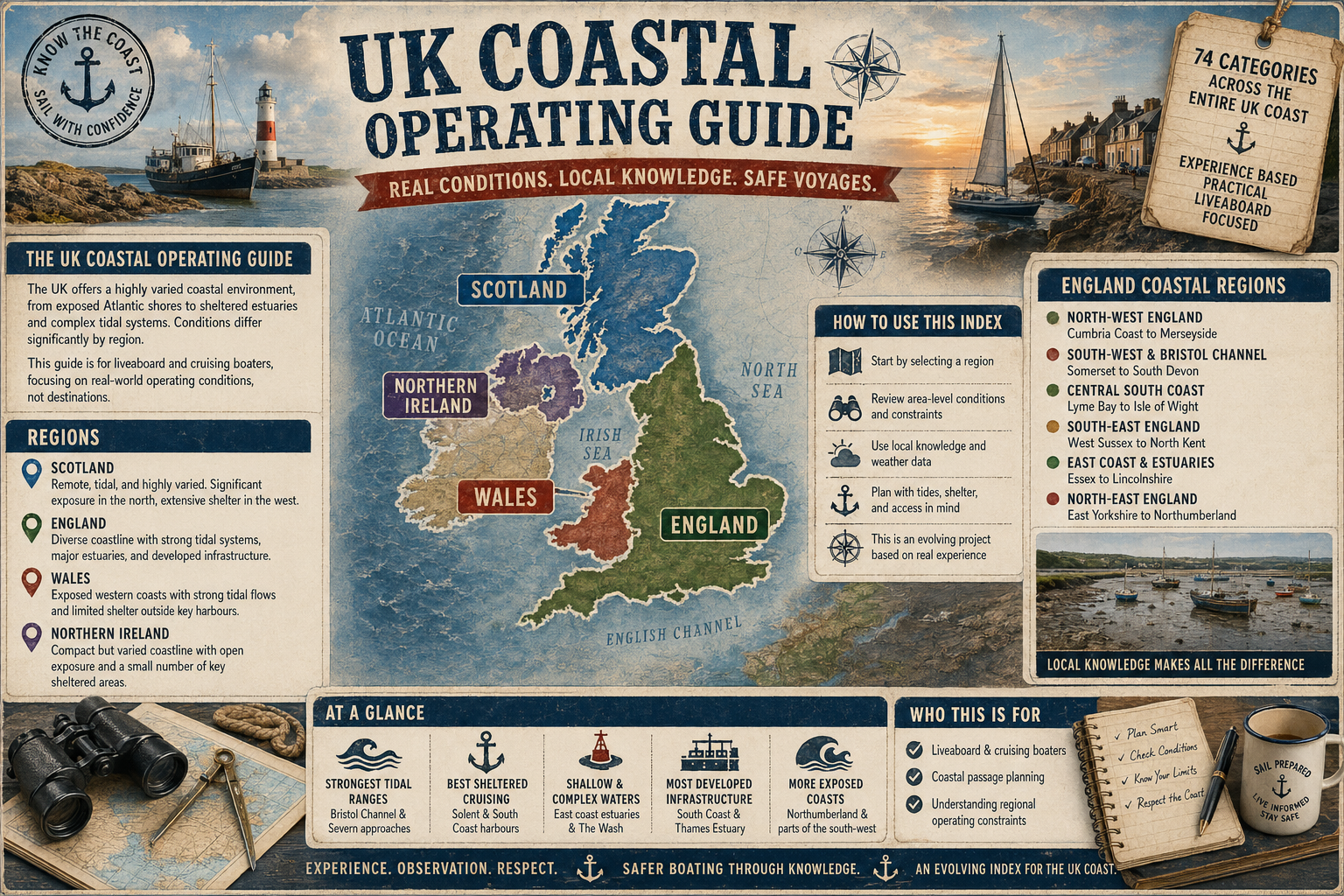
- The UK Coastal Operating Guide
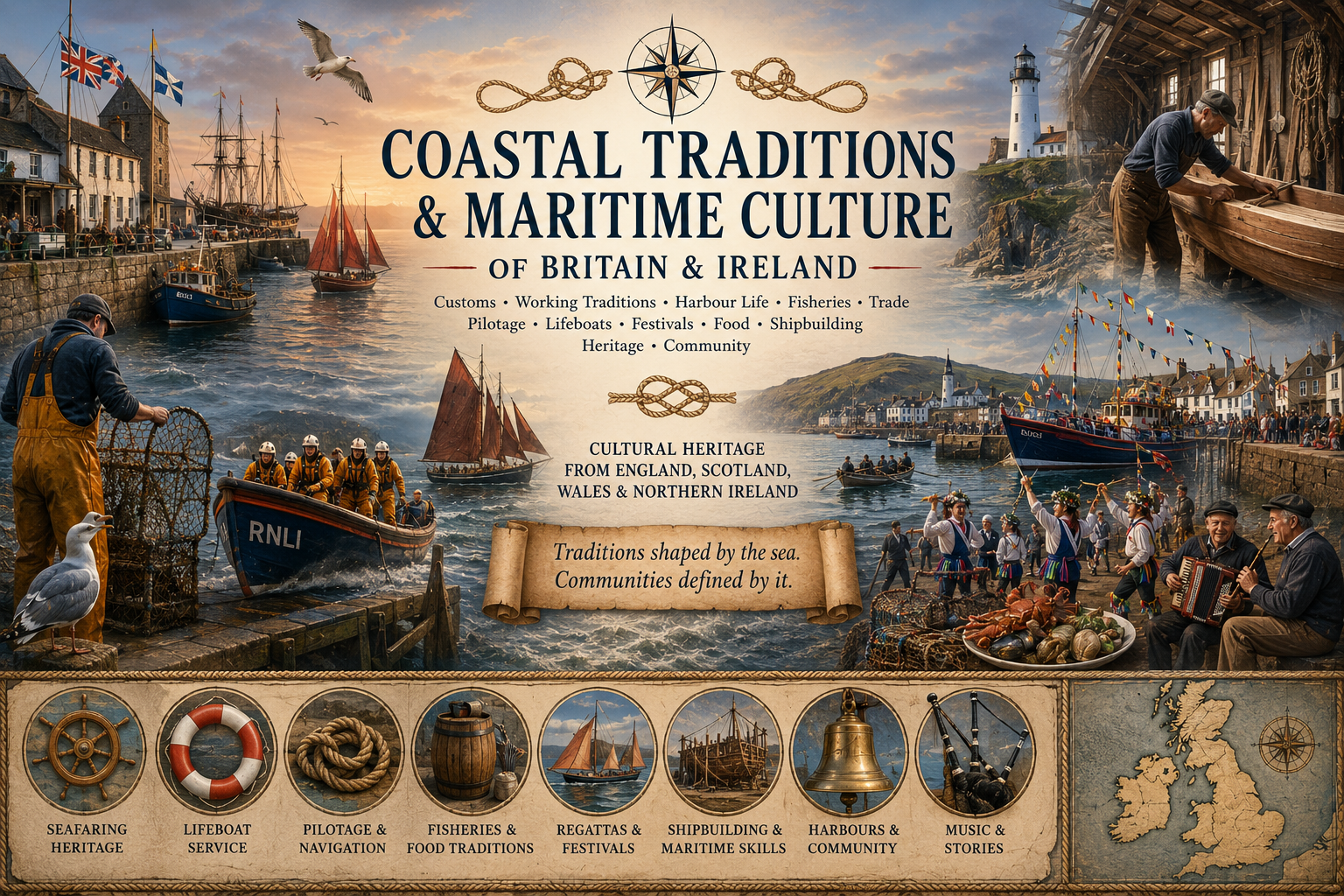
- Coastal Traditions & Maritime Culture of Britain and Northern Ireland
- Coastal Myths & Legends of Britain & Northern Ireland


Comments