




Yachting Traditions and Historic Naval Anchorages
The West Solent has long been defined by the practical demands of sheltered tidal waters lying between the western approaches to the Solent and the Needles Channel. Its maritime character differs in several respects from other parts of the Solent, with traditions centred upon deep natural anchorages, estuarial navigation, yacht seamanship and the continued use of working harbours rather than large commercial ports. Strong tides, narrow channels and changing banks have encouraged a local knowledge that remains evident among harbour users and yacht crews. While recreational sailing is now the dominant activity, many present-day practices retain clear links with earlier patterns of navigation and coastal employment.
Historically the western entrance to the Solent formed an important waiting area for vessels entering or leaving the sheltered waters of the central Solent. Anchorages off Hurst, Yarmouth Roads and adjacent channels were used according to wind and tide, while the approaches to the Needles demanded careful judgement before the age of modern navigation. Naval vessels also made use of these waters when assembling or awaiting favourable conditions, reflecting the strategic importance of the western entrance to the Solent throughout several centuries. Although major naval administration lay further east, the West Solent remained an important supporting anchorage where the influence of naval practice was regularly encountered.
The estuaries opening into the West Solent supported a varied maritime economy. Lymington developed as both a fishing and trading harbour, with regular movement of small coastal craft carrying agricultural produce, timber and other local goods. Oyster fishing was once an established occupation within the Lymington estuary, although stocks and methods altered considerably over time. Salt production around the marshes remained economically significant until the nineteenth century, leaving visible traces along parts of the shoreline. Smaller inlets and creeks, including Newtown Creek, served local fisheries, modest commercial traffic and sheltered moorings, their shallow approaches favouring vessels adapted to drying harbours and tidal conditions.
Boatbuilding and repair have formed a continuous element of maritime life around the West Solent. Local yards traditionally constructed and maintained fishing boats, sailing craft and harbour launches suited to sheltered but strongly tidal waters. During the twentieth century this work increasingly served private yachts alongside commercial vessels, reflecting the area's gradual transition from a mixed working coastline towards one in which recreational sailing assumed greater importance. Even so, many yards continue to combine modern yacht maintenance with traditional woodworking and practical marine engineering, preserving skills that remain relevant to locally based craft.
Yachting traditions are especially well established within the West Solent. The sheltered waters between Hurst Narrows and the western reaches of the Solent have long provided favourable conditions for club racing, cruising and seamanship training. Local sailing clubs maintain calendars of races whose origins often extend back many decades, while visiting yachts continue established customs of waiting upon the tide before rounding Hurst or passing through the Needles Channel. Regattas are generally organised by individual clubs and harbour communities rather than as a single regional event, so customs naturally vary between ports and organisations.
Harbour practice retains a distinctly local character. Careful attention to tides, mooring etiquette and narrow fairways remains part of everyday navigation, particularly within Lymington River and the approaches to smaller creeks. Seasonal movements of yachts produce familiar rhythms, with spring commissioning, summer cruising and autumn lay-up continuing much as they have for generations, albeit supported by modern facilities. Ferry services linking Lymington with Yarmouth also maintain a long-established pattern of regular cross-Solent communication, reflecting practical transport needs as much as leisure travel.
Fishing survives on a smaller scale than formerly but continues to contribute to the working identity of parts of the coastline. Shellfish remain locally important where conditions permit, while commercial and recreational anglers make regular use of the tidal channels and adjacent banks. Lifeboat services, harbour authorities and volunteer organisations likewise contribute to the area's maritime continuity, combining modern safety responsibilities with traditions of local seamanship and mutual assistance that have long characterised these waters.
Although recreational boating now dominates much of the West Solent, the area's maritime culture remains firmly connected to its navigational setting. Historic anchorages, tidal estuaries, working boatyards and long-established sailing practices continue to shape daily activity on the water. The result is a coastline where modern yachting exists alongside enduring harbour customs and practical seafaring knowledge, preserving a distinctive maritime identity that remains closely tied to the western entrance of the Solent.
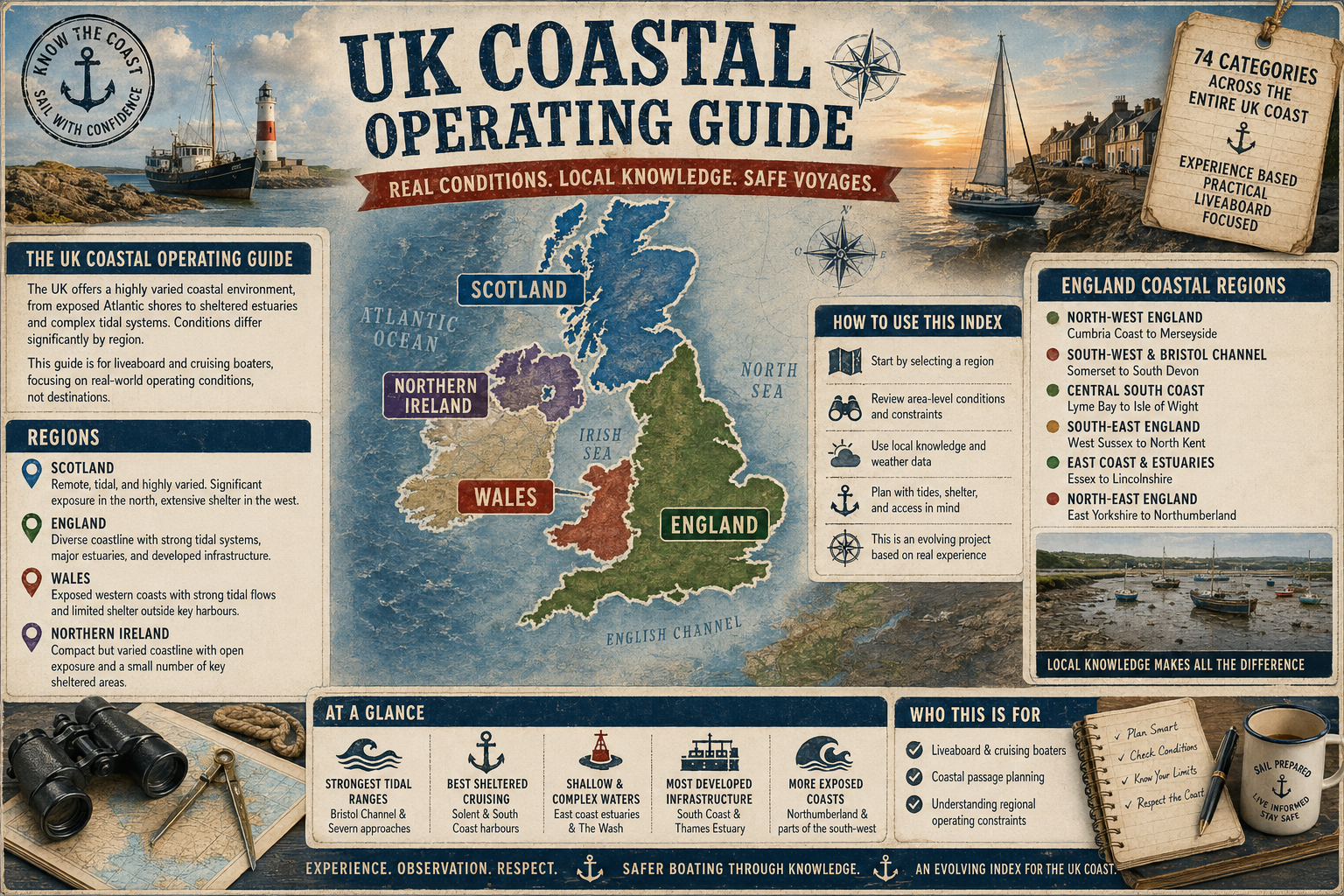
- The UK Coastal Operating Guide
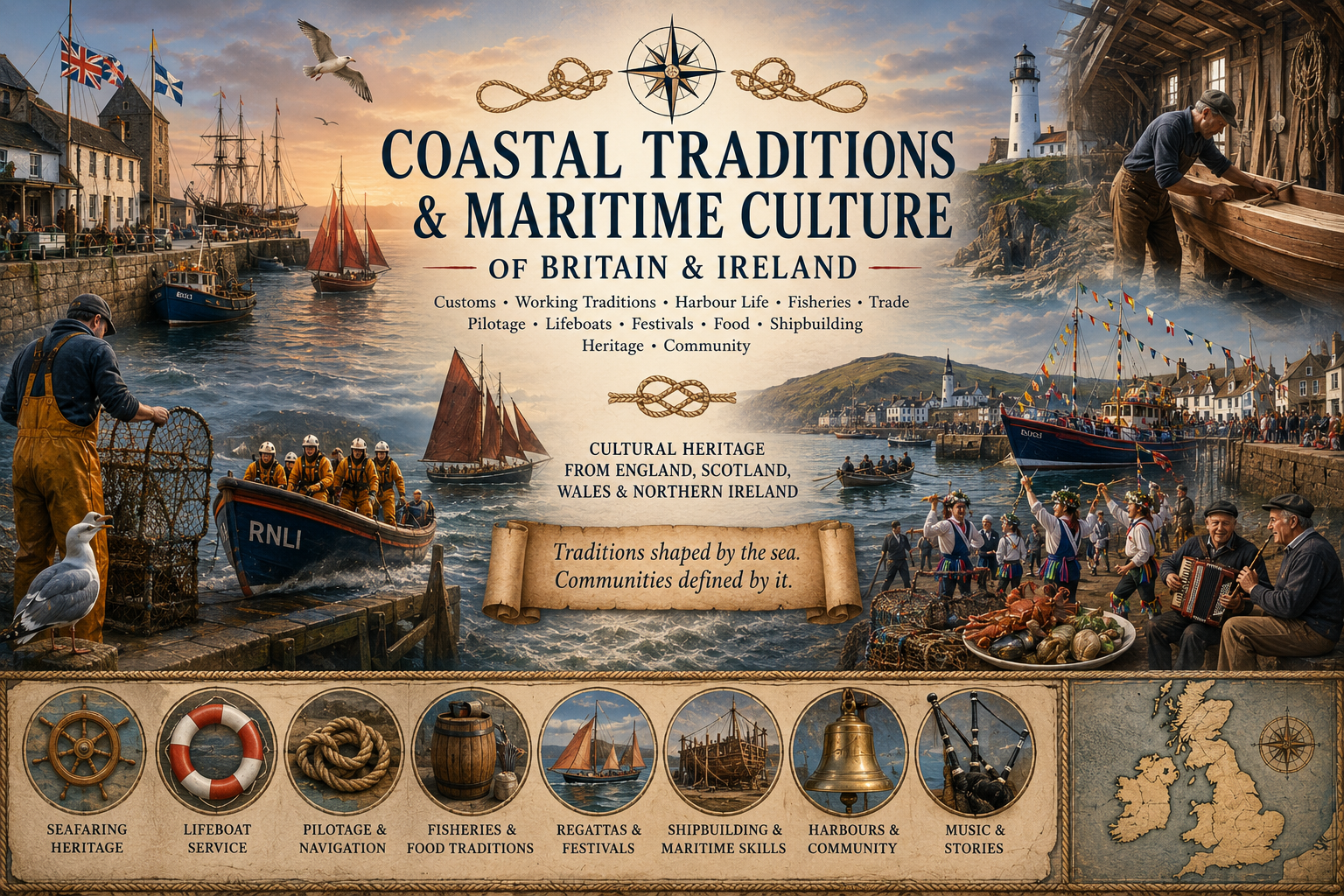
- Coastal Traditions & Maritime Culture of Britain and Northern Ireland
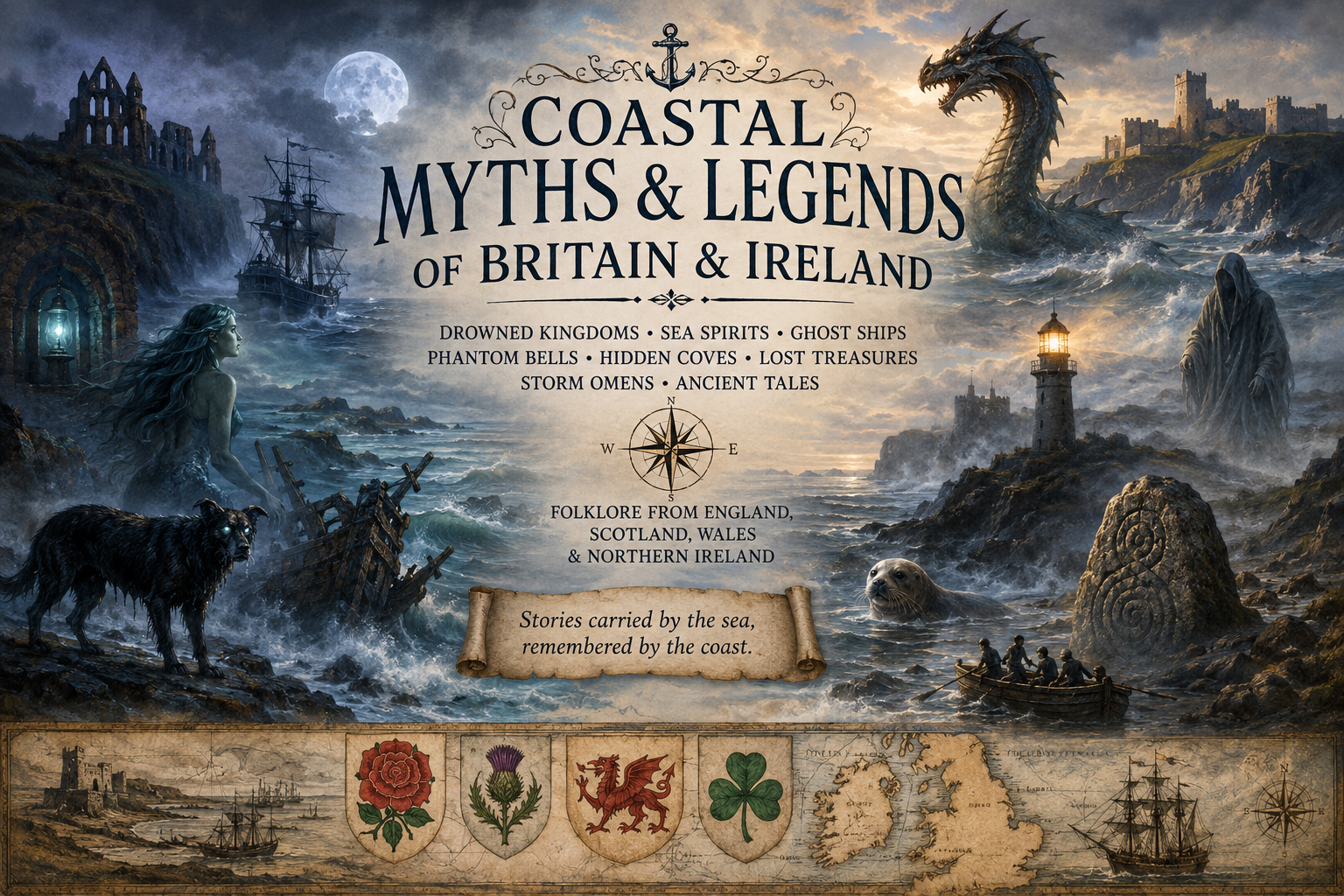
- Coastal Myths & Legends of Britain & Northern Ireland
Comments