



Wirral and Dee Estuary
Overview
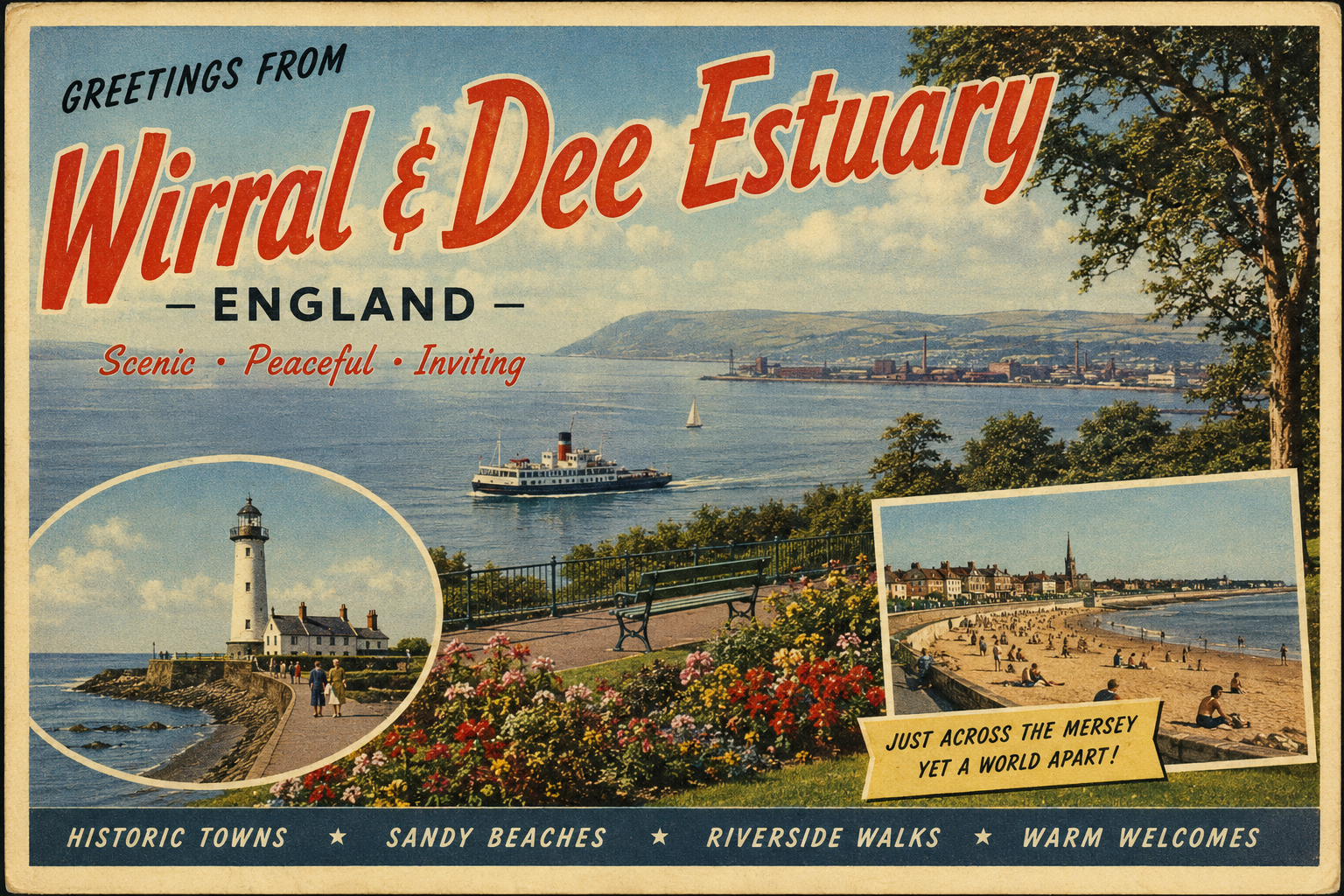
The Wirral and Dee Estuary form a broad coastal area on the north-western edge of England, bounded by the Irish Sea and characterised by extensive tidal flats and shifting channels.
The estuary itself is wide and shallow in many areas, with significant tidal variation influencing both navigation and accessibility. The coastline includes a mix of open frontage and more enclosed inlets.
Local Operating Context (for Liveaboard Boaters)
Navigation within the Dee Estuary requires attention to tidal states, as large areas may dry at low water and channels can alter over time. Depth consistency is limited outside marked routes.
The Wirral coastline facing the Irish Sea can be exposed to prevailing westerly winds, particularly in unsettled weather patterns. Conditions may change quickly with wind against tide.
Access to shore varies, with some stretches offering limited landing opportunities due to mudflats and gradual gradients. Timing with tides is often necessary for practical access.
The area is generally quiet in terms of marine traffic compared to more commercial estuaries, though local movements and recreational craft may still be present.
Typical Conditions
- Large tidal range with extensive drying areas
- Prevailing westerly and south-westerly winds
- Choppy conditions possible in exposed coastal sections
- Variable visibility in mist or coastal haze
Access & Shelter
- Limited natural deep-water shelter within the estuary
- Some protection may be found in upper estuary channels depending on tide
- Open coastal stretches offer minimal shelter in strong onshore winds
- Careful route planning required for entry and exit at different tidal states
Shore Interaction
- Access often constrained by mudflats and shallow gradients
- Landing points may depend heavily on tidal timing
- Settlements are present along parts of the coast but not always directly accessible from the water
- Walking distances from landing areas can be variable
Risk Factors
- Shifting sandbanks and channels within the estuary
- Grounding risk at low tide
- Exposure to wind-driven waves along open coast
- Strong tidal flows in constricted sections
Overall Character
The area presents a quiet and environmentally significant coastal landscape, where boating activity is shaped by tidal movement and shallow waters. It tends to suit cautious navigation and flexible planning.
Notable Locations
-
West Kirby – Coastal town adjacent to the estuary, with access influenced by extensive tidal flats.
-
Hilbre Islands – Small tidal island group, accessible at low tide and exposed to changing conditions.
-
Parkgate – Historic estuary-side settlement overlooking marsh and mudflat areas.
-
Hoylake – Open coastal frontage facing the Irish Sea, where conditions can be more exposed.
Practical Mooring & Anchorage Locations
West Kirby Marine Lake
- Type: Marina / Tidal Marine Lake
- Shelter: Well sheltered from westerly and south-westerly winds within the lake
- Exposure: Exposed during transfers at high water; unusable at low tide when drained
- Key Constraints: Fully tidal system with restricted entry/exit windows; shallow drying outside maintained basin
- Traffic Level: Medium
- Liveaboard Suitability: Low
- Notes: Primarily used by dinghies and small craft. Not suitable for conventional liveaboard deep-draught vessels.
Hoylake (Roadstead)
- Type: Anchorage
- Shelter: Limited shelter; partial protection from southerly winds only
- Exposure: Highly exposed to westerly and north-westerly winds and Irish Sea swell
- Key Constraints: Extensive tidal flats; anchorage only viable in specific tidal windows; holding over sand
- Traffic Level: Low
- Liveaboard Suitability: Low
- Notes: Generally used only in settled weather or as a short-term stop. Conditions can deteriorate quickly with wind against tide.
Hilbre Islands
- Type: Anchorage
- Shelter: Very limited; partial lee in specific tidal states from certain wind directions
- Exposure: Exposed to all directions in strong winds, particularly west through north-west
- Key Constraints: Fully tidal access with strong currents; drying banks and shifting channels; requires precise timing
- Traffic Level: Low
- Liveaboard Suitability: Low
- Notes: Primarily a short-stay or transit anchorage. Not suitable for extended anchoring due to exposure and tidal constraints.
Flint Harbour
- Type: Harbour
- Shelter: Good shelter from prevailing westerly and south-westerly winds within basin
- Exposure: Exposed on approach channel at certain tidal states; strong tidal flows in estuary
- Key Constraints: Tide-dependent access; drying limitations in parts of the harbour; commercial activity may restrict space
- Traffic Level: Medium
- Liveaboard Suitability: Medium
- Notes: Established small harbour with local usage. Suitable for cautious, tide-aware operations.
Mostyn Docks
- Type: Harbour / Commercial Port
- Shelter: Strong shelter within dock basin
- Exposure: Exposure on approach channel in strong tidal and wind-against-tide conditions
- Key Constraints: Commercial port operations; restricted access; strong currents in the Dee estuary channel
- Traffic Level: High
- Liveaboard Suitability: Low
- Notes: Primarily industrial port environment. Leisure use is limited and subject to permission and operational constraints.
Connah’s Quay Dock
- Type: Harbour / Industrial Dock
- Shelter: Good shelter within dock area
- Exposure: Exposed approach via tidal Dee estuary channel with strong currents
- Key Constraints: Industrial operations; restricted leisure access; significant tidal range and fast flows
- Traffic Level: High
- Liveaboard Suitability: Low
- Notes: Functional commercial environment with limited recreational suitability. Access is constrained by port activity and tidal timing.
Operational Support Infrastructure (Public Services)
Healthcare
Healthcare services are available within nearby towns and urban centres on the Wirral, though access from the water may require overland travel.
Emergency Services
Emergency response is coordinated through regional services, with coverage extending across coastal and estuarine areas. Response times may vary depending on location and conditions.
Postal Services
Postal facilities are available in surrounding settlements, generally requiring shore access and short inland travel.
Civic Services
Local authorities provide standard civic services within the Wirral area, though direct access from estuarine locations may be indirect.
Visitor Information
Visitor information can typically be found within nearby towns, offering general guidance on the coastal environment and access considerations.
Practical Notes for Boaters
This section will be developed over time based on direct experience and relevant contributions. The focus is on practical usefulness rather than completeness.
From the Project
Observations and notes from the ongoing boat conversion and coastal exploration project will be added here as they become available.
Related Knowledge Base
- Coastal erosion processes
- Sedimentary rock formations
- Harbour types and access
- Tidal patterns and coastal conditions
Status
This is part of a growing coastal index. Content will be expanded over time as the project develops.