
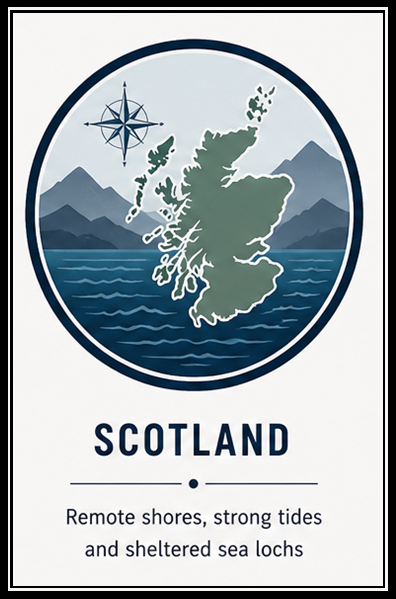
Scotland offers one of the most varied and demanding coastal environments in the UK, from exposed North Sea cliffs to deeply sheltered west coast sea lochs and island chains. Conditions are often shaped by strong tides, rapidly changing weather, and significant geographic exposure.
This section is designed for liveaboard and cruising boaters seeking practical, experience-based information. Each area provides operational context rather than travel guidance, helping you assess suitability, risk, and day-to-day usability afloat.
How to Use This Section
Each coastal area page includes:
- Overview of coastal character and exposure
- Typical weather and sea conditions
- Shelter and harbour access considerations
- Shore access and infrastructure notes
- Key operational risks
Content is experience-led and will expand over time as more observations are added.
Coastal Regions
Northern Scotland
- Shetland – Highly exposed North Atlantic island group with strong tides and limited sheltered anchorages outside harbours
- Orkney – Tidal-dominated waters with powerful currents and a mix of exposed passages and sheltered inland areas
- North Highland – Remote and exposed north coast with heavy swell and very limited natural shelter
- Caithness & Wick – Open and often harsh coastline with strong tidal influence and few reliable refuge points
North-East Coast
- Moray Firth – Large, semi-sheltered inlet offering more moderate conditions and improved harbour access
- Aberdeenshire Coast – Generally exposed North Sea coast with regular harbour spacing but limited natural shelter
- Angus Coast – Open and lightly indented coastline with few sheltered options outside main harbours
- Firth of Tay – Tidal estuary with sheltered inner waters and more constrained access points
- Firth of Forth – Wide estuarine system with strong tides, extensive infrastructure, and varied shelter options
West Coast & Islands
- Wester Ross – Deeply indented coastline with sea lochs providing excellent natural shelter and remote cruising
- Skye & Lochalsh – Complex coastal area with strong tidal flows and a mix of exposed passages and sheltered lochs
- Outer Hebrides – Atlantic-facing island chain with high exposure, swell, and limited all-weather refuge
Argyll & Inner Hebrides
- Argyll North (Oban) – Well-sheltered cruising area with numerous anchorages and manageable tidal conditions
- Argyll South (Mull / Jura / Islay) – Varied conditions with strong tides in channels and good shelter in surrounding waters
- Firth of Lorne – Tidal-influenced inland sea with a balance of shelter, exposure, and navigational complexity
South-West Scotland
- Firth of Clyde North – Sheltered and accessible waters with strong infrastructure and relatively moderate conditions
- Firth of Clyde South – More open than the north, with increasing exposure but still supported by key harbours
- Solway Firth (Scottish side) – Shallow and dynamic estuarine environment with strong tides and shifting channels
At a Glance
- Most Exposed: Shetland, North Highland, Caithness & Wick
- Strongest Tides: Pentland Firth and surrounding waters
- Best Natural Shelter: West coast sea lochs and Argyll regions
- Most Developed Access: Firth of Forth and Clyde areas
- Most Remote Cruising: Outer Hebrides and far north-west coast
Who This Is For
- Liveaboard and long-term cruising boaters
- Skippers planning coastal passages in Scottish waters
- Those prioritising shelter, access, and real-world conditions
This is part of an evolving coastal index. Content will continue to develop based on direct experience and contributions, with a focus on practical usability.
Comments